It has been a hot minute since I’ve posted … I’ve been embroiled in a landlord/tenant matter, wherein I repossessed my home from crappy tenants and have spent the better part of the last 6 weeks renovating it – they left it in such a shambles (ugh) … I’ll post on that separately, they completely ruined the house.
However, while I’m in here, in Dauphin, Manitoba, renovating the house, getting it ready to sell, I wanted to pick up the story of the Lees. If you haven’t read the blog on the oddity of the Pastor Lee House in Haldimand County, Ontario or watched the YouTube video, click here (blog) and here (video) for some background on relatedness. It’s such an interesting story, they were such an eccentric family or maybe Gordon more so.
While exploring their abandoned house, my urbex partner, Thomas, randomly found a photo of Gordon in Dauphin as a child. I took it to be a sign that I needed to continue researching this family. I mean, what are the odds that in an abandoned house with tons of stuff strewn all over the place, thousands of photos and slides messed about the 2 story home, that had been abandoned for years, that he would come across a photo taken in Dauphin and take a snapshot of it? He wasn’t aware that I had lived in Dauphin from 2015 to 2017, nor that I was heading back to town to repossess my home. Honestly, I didn’t even know he had found the photo until he sent me his shots and videos from the explore to create the content! Ironic? Serendipitous? Coincidence? I’ll let you decide …
What we know so far …
From prior research and our explorations:
In or around 1943, they were either living in or visiting Dauphin, Manitoba — but why?
- Esther Gladstone Lee graduated from Moody Bible Institute, Chicago, in August 1923.
- Arthur Lee served in the military and later became a Reverend.
- They purchased the Haldimand County home in 1948.
- They had three children, plus another son, Walter, who tragically died at age 5 in 1938 (location Africa, unverified).
That’s what I’m going to try to find out while I’m here.
Here’s what I was able to newly locate …
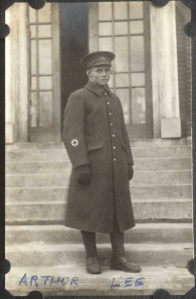
Arthur Lee: Military Service and Life
- Birth: August 11, 1897, Brockville, Ontario, Canada.
- Military: Joined the Canadian Expeditionary Force on October 28, 1915, age 19. Listed next of kin: mother Maggie (née McVish) and James Lee (Mount Dennis, Toronto). Height: 5’7.5”, Methodist. Served with the 11th Field Ambulance, Canadian Army Medical Corps.
- Service Timeline: Left Halifax 22 May 1916 aboard the Caronia; arrived England 29 May 1916; reached France 11 Aug 1916; demobilized in Toronto, May 1919.
- Post-War: Graduated from McMaster University in 1924, became a Reverend, and travelled to Africa for missionary work.
Note: Reports of him teaching in Slave Lake, Alberta, in the 1960s are unverified.
More research has led me to locate a document from the Library and Archives of Canada. For greater details, see this link here.
Esther Gladstone Lee
- A search of my Ancestry account shows that Esther’s father was George Easton Gladstone (b. 26 Oct 1858, Ayr, Waterloo County, Canada – d. 24 Mar 1928, Gentry, Missouri, USA).
- Her mother appears to have been Ella (maiden name currently unknown; b. 6 Oct 1870, Gentry, Missouri – d. 24 Jul 1948, Gentry, Missouri). Esther herself was born on November 3, 1893, in Gentry, Missouri.
- By 1920, the U.S. Census records had her living in Washington, D.C., listed as a “roomer.”
- She went on to graduate from Moody Bible Institute in Chicago in August 1923.
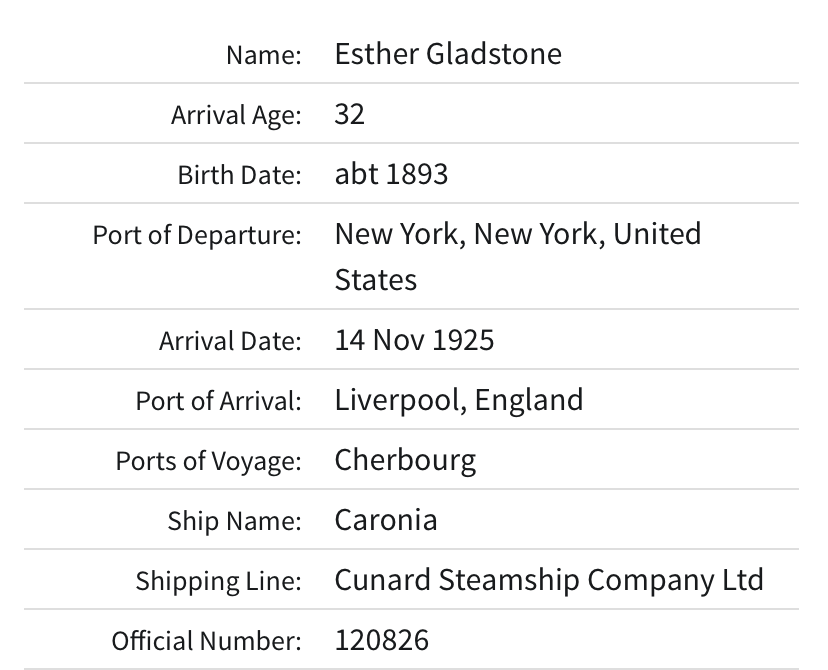
- Missionary Work: On or about November 7, 1925, Esther departed for Africa as part of a missionary group, Sim International. I have a newspaper lead that they were doing missionary work in Nigeria; unfortunately, the article is too small to be legible.
I was able to confirm this by locating the Caronia‘s ship manifest, which confirms the 32-year-old was a missionary, heading to Minna, Nigeria.

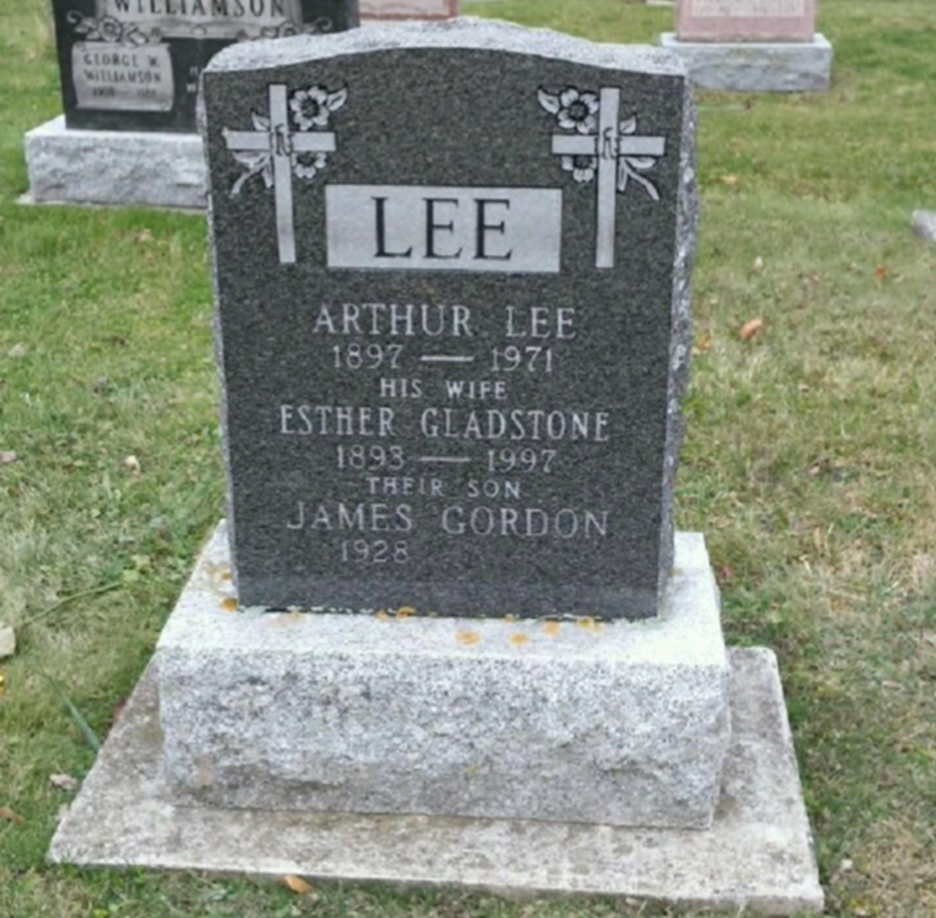
There are multiple secondary accounts (e.g., Talking Walls Photography) stating that Arthur and Esther were married in Africa in August 1927. However, the original source of that claim is another blogger’s narrative, not a primary document or archival record that we can independently verify online.
Available newspaper clippings show the Lees back in North America by 1930, several years after their mission departure.
(While the precise date of their return is not documented in official passenger lists online, the newspaper evidence makes the return timing credible.)
I was also able to locate on Ancestry, information that Arthur and Esther, in fact, had another son, Walter, who passed away in 1938 at the age of 5 of spinal meningitis (18 Nov 1932 – 19 Apr 1938). It’s said that he passed away in Africa; this part I am unable to confirm for myself.
Some secondary accounts suggest Arthur may have worked as a teacher in Slave Lake, Alberta, in the 1960s and retired in 1965. At this time, no official employment or church records have been located to confirm this detail. However, we have it confirmed that in 1948, the Lees had purchased their home in Haldimand County, Ontario. So, how does all of this fit together? I have no confirmation that he taught in Slave Lake as of yet.
According to some local histories and urbex accounts, Rev. Lee served as pastor in Baptist churches in both Manitoba and Ontario. Official denominational directories confirming specific appointments have not been found online, so this remains plausible but currently unverified.
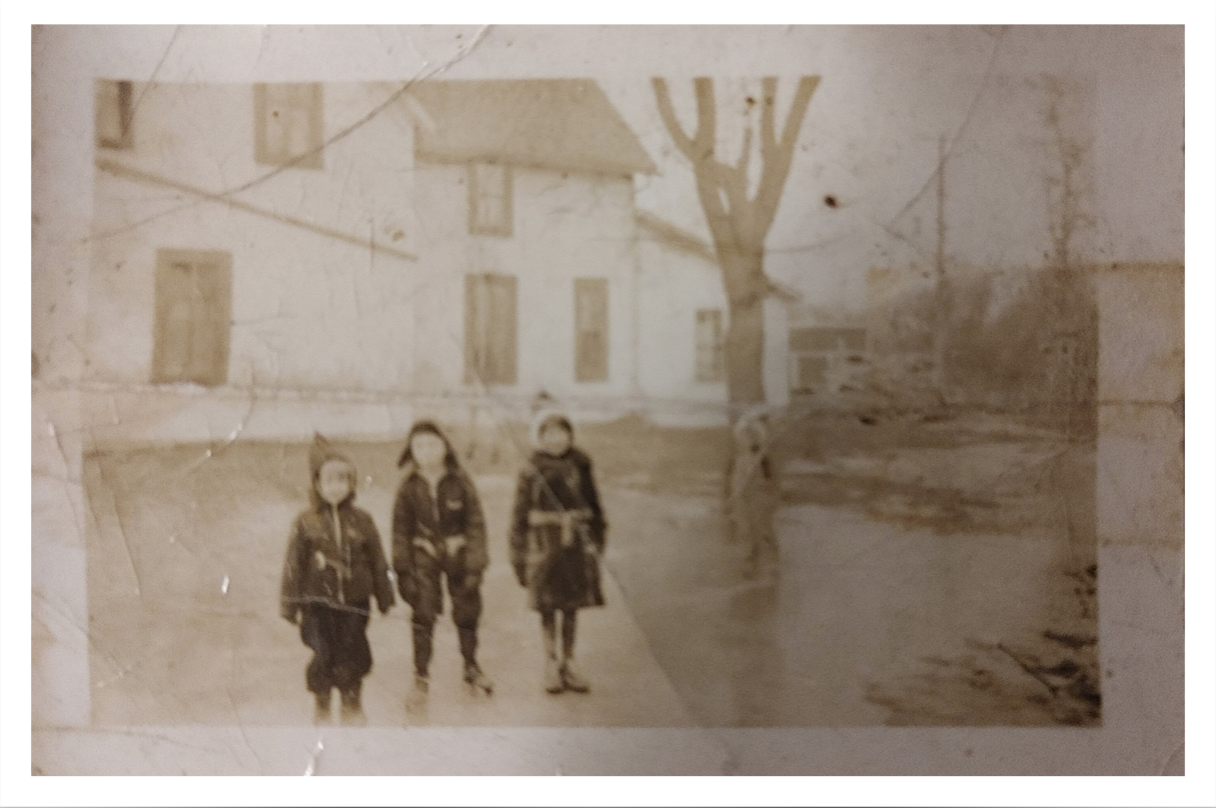
We also have this to go on … the photo that Thomas found during our exploration of the Pastor Lee house.
Before we delve into this further … Dauphin facts:
- Dauphin has a population of 8,457 as of the 2016 Canadian Census, with an additional 2,388 living in the surrounding Rural Municipality of Dauphin, for a total of 10,845 in the RM and City combined. Dauphin is Manitoba’s 9th largest community and serves as a hub to the province’s Parkland Region.
- You can get anywhere in town in about 5-7 minutes, unless the train comes through.
- It is actually situated on the 100th meridian, for anyone who finds that as fascinating as I do.
- It’s known as the “City of Sunshine”
- Norwex’s Canadian Head Office is located here.
- It’s home to Canada’s National Ukrainian Festival and Dauphin’s Countryfest, Canada’s longest-running country music festival.
- It lies along the Vermilion River just west of Dauphin Lake, and is 323 kms northwest of Winnipeg.
- Dauphin is near Duck Mountain Provincial Park and Riding Mountain National Park, just west of Lake Manitoba and Dauphin Lake and south of Lake Winnipegosis.
- The French trader and explorer Pierre Gaultier de Varennes, sieur de La Vérendrye, named the nearby lake Dauphin in 1741 in honour of the heir to the French throne, the Dauphin of France (Prince of Wales)
- The province was founded on parts of the traditional territories of the Assiniboine, Dakota, Cree, Dene, Anishinaabeg and Oji-Cree peoples, and on the homeland of the Métis Nation.
- As of the 2016 census, Manitoba had 1,278,365 residents, making it the fifth most populous province or territory in Canada (I came here from Toronto; the GTA alone has 6,254,571).
- Dauphin was incorporated as a city in 1998.
Ok, so now that you have some tidbits of info on the “city” itself, you get that it’s small and it would have been much smaller in 1943 when the photo was taken. I was unable to locate the population of Dauphin back in the 1940’s, but Manitoba’s entire population was only 921,686 in 1961.
Pinpointing the Location in Dauphin
The handwriting at the back of the photo says this … “Donald Lee in centre with girls at Mrs Chase’s (not in view) house on First Street north of railroad, across street from station. Dauphin, Manitoba, about 1943. Looking west towards Vermillion River.”
Ok, so let’s look at this map I created …
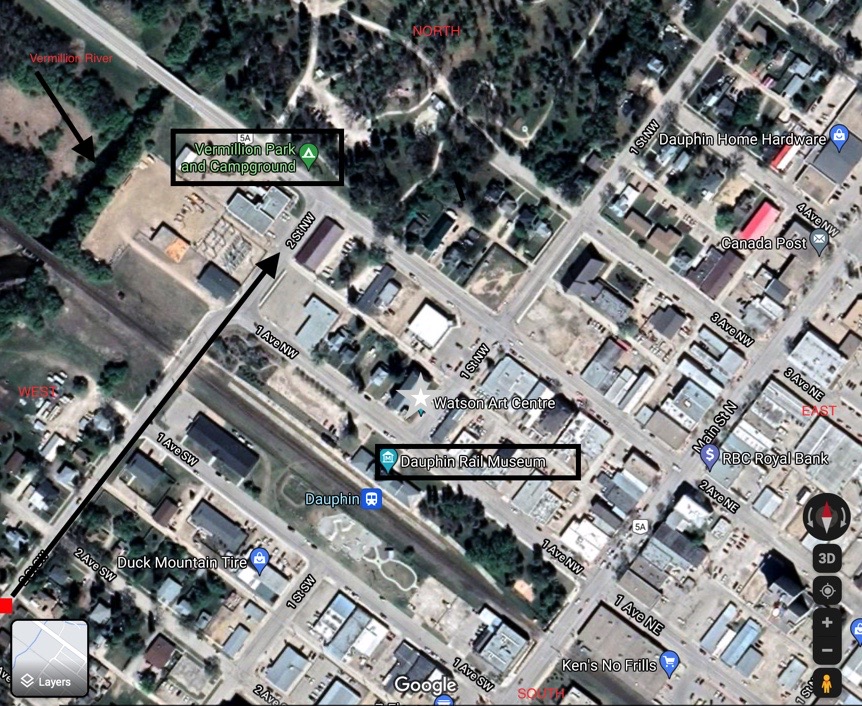
Using the details written on the back of the photo, we can narrow down where the Lee family may have been in Dauphin, Manitoba:
- The Train Station: Today, this is the Dauphin Rail Museum, a fixed landmark that helps anchor the location.
- Vermillion River: The photo mentions looking west toward the river, which is visible today near Vermillion Park & Campground.
- 1st Street: Esther didn’t specify NW, but based on her notes, “north of railroad, across street from station,” it’s likely the block she meant. This is the only 1st Street in that part of town; the other street with a “First” name is 1st Avenue.
Putting all these clues together, the house in the photo is likely near the star I marked on the map next to the Watson Art Centre, directly north of the railway tracks and across from the train station. From that block, the westward view aligns with the direction toward the Vermillion River, making this the most plausible location based on the historical photo.
I actually live only three blocks from where this photo was likely taken. Literally, I walk down 2nd Ave SW (following the arrow on the map) until I hit 1st Ave SW, then turn right toward the train station. The very first right in front of the station is 1st St NW. Vermilion Park sits right at the end of 2nd Ave SW, which matches the westward orientation toward the Vermilion River described on the back of the photo.
So that’s exactly where I’m going to begin my search. I plan to walk the blocks around 1st Ave SW, 1st St NW, 2nd Ave SW, and 2nd St NW, looking westward toward the river, piecing together clues and comparing what’s there now to what the 1943 photo may have shown.
I know this area well, and while it’s possible the actual house no longer exists or has been altered so much it’s unrecognizable, it’s the best lead we have based on the photo caption and the geography of this part of Dauphin.
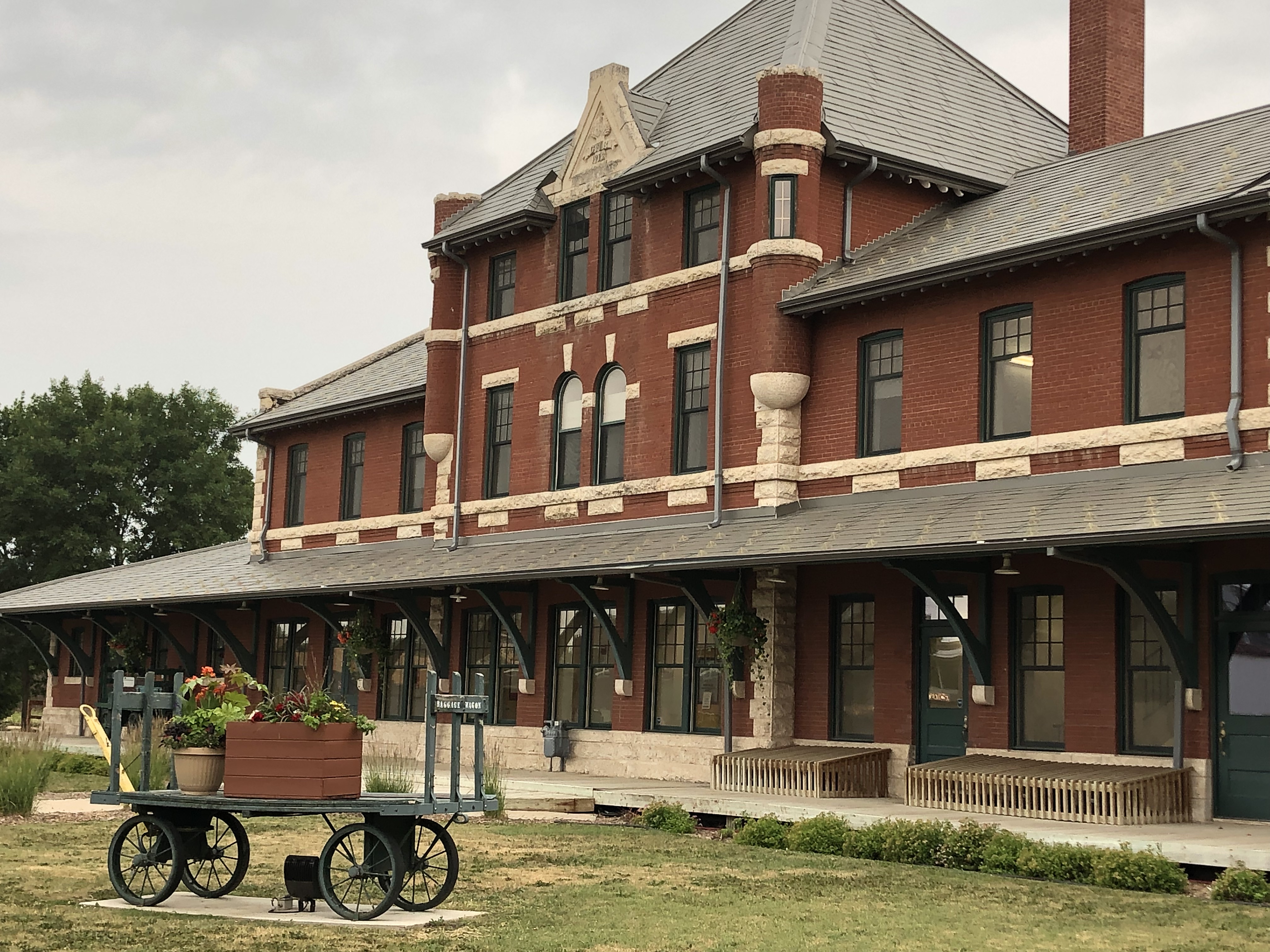
Ok, so here are some photos I took for a point of view and real-life perspective.
This is the Dauphin Train Station, which was built in 1912, and was standing while the Lees were here in 1943.
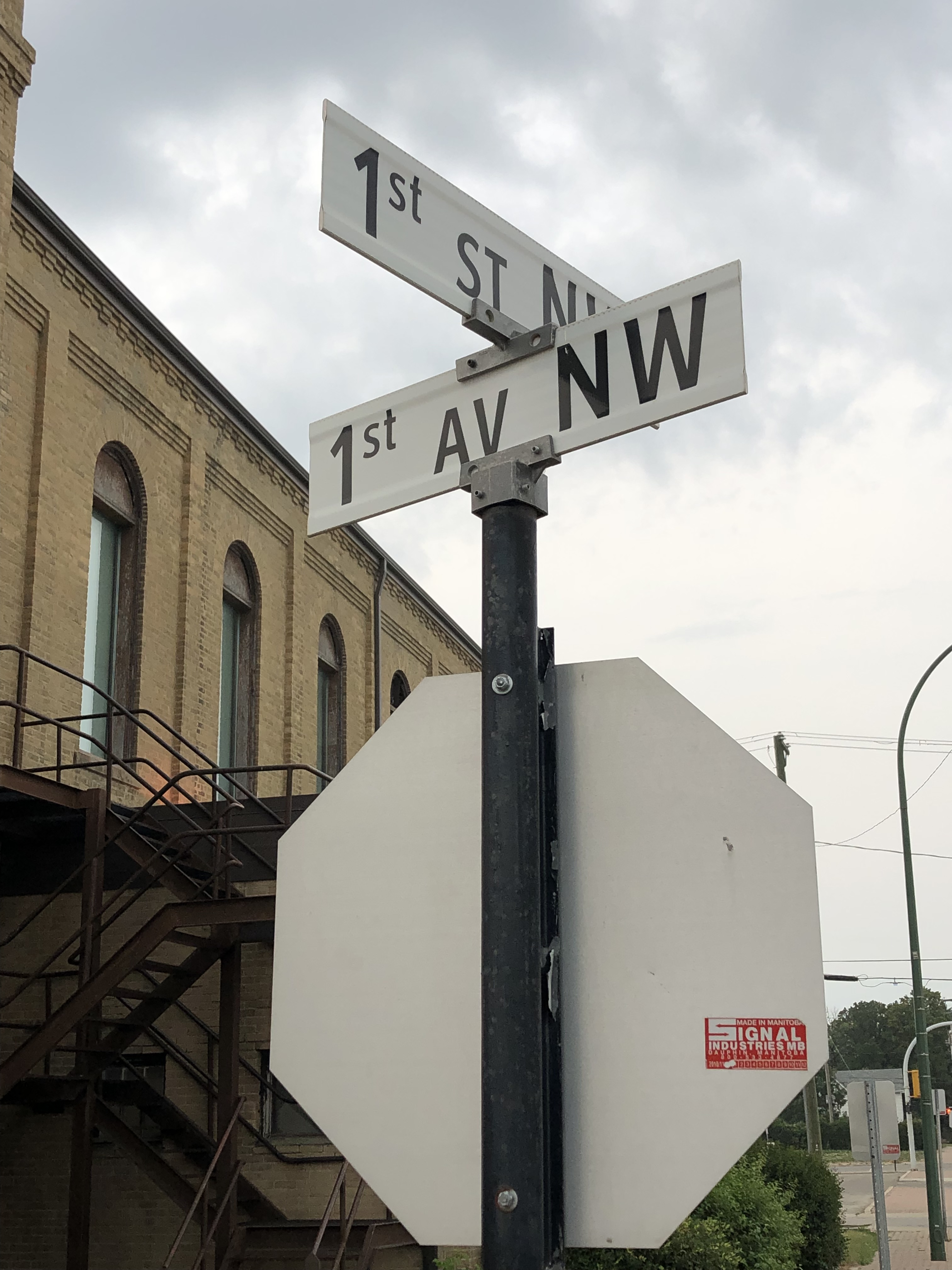
Immediately in front of the train station is the intersection of 1st Ave NW and 1st St NW.
Below you can see the Watson Art Centre, which is directly in front of the train station. It was established in 1905 and was the old fire hall, so that building existed when the Lees would have been here. The photo was taken standing in front of the train station, looking westward toward Vermillion River.
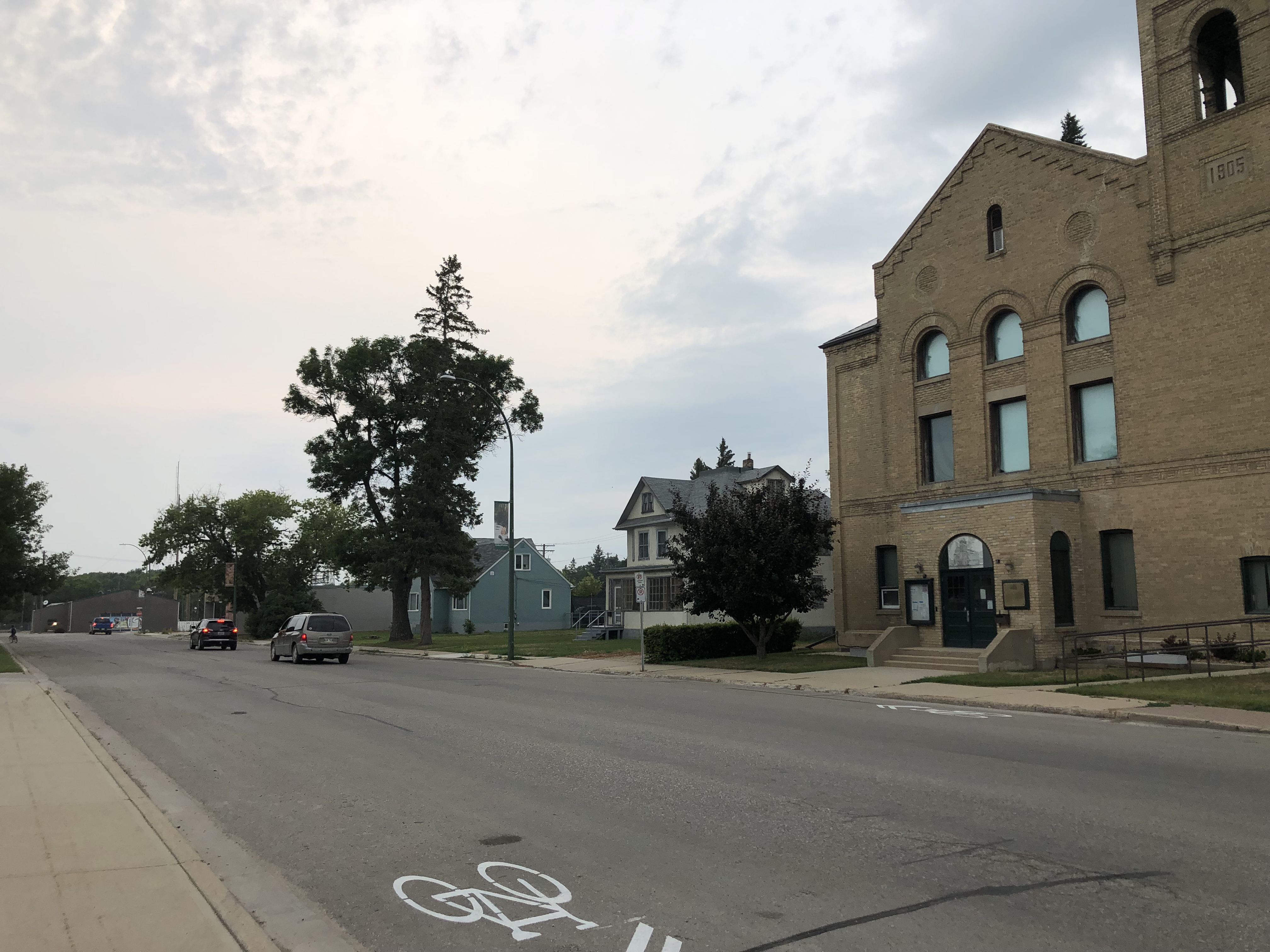
I looked at the houses to see if they resembled the house in the photo, or if there was any possibility that the house could have been updated or added onto. I paid particular attention to the east side of 1st St NW because the photo says that the children were looking westward toward Vermillion River. However, upon further reflection, it’s not immediately clear if the children or the photographer is looking west.
This house has the most resemblance. I initially took the photo as if the children were looking westward toward Vermillion River.
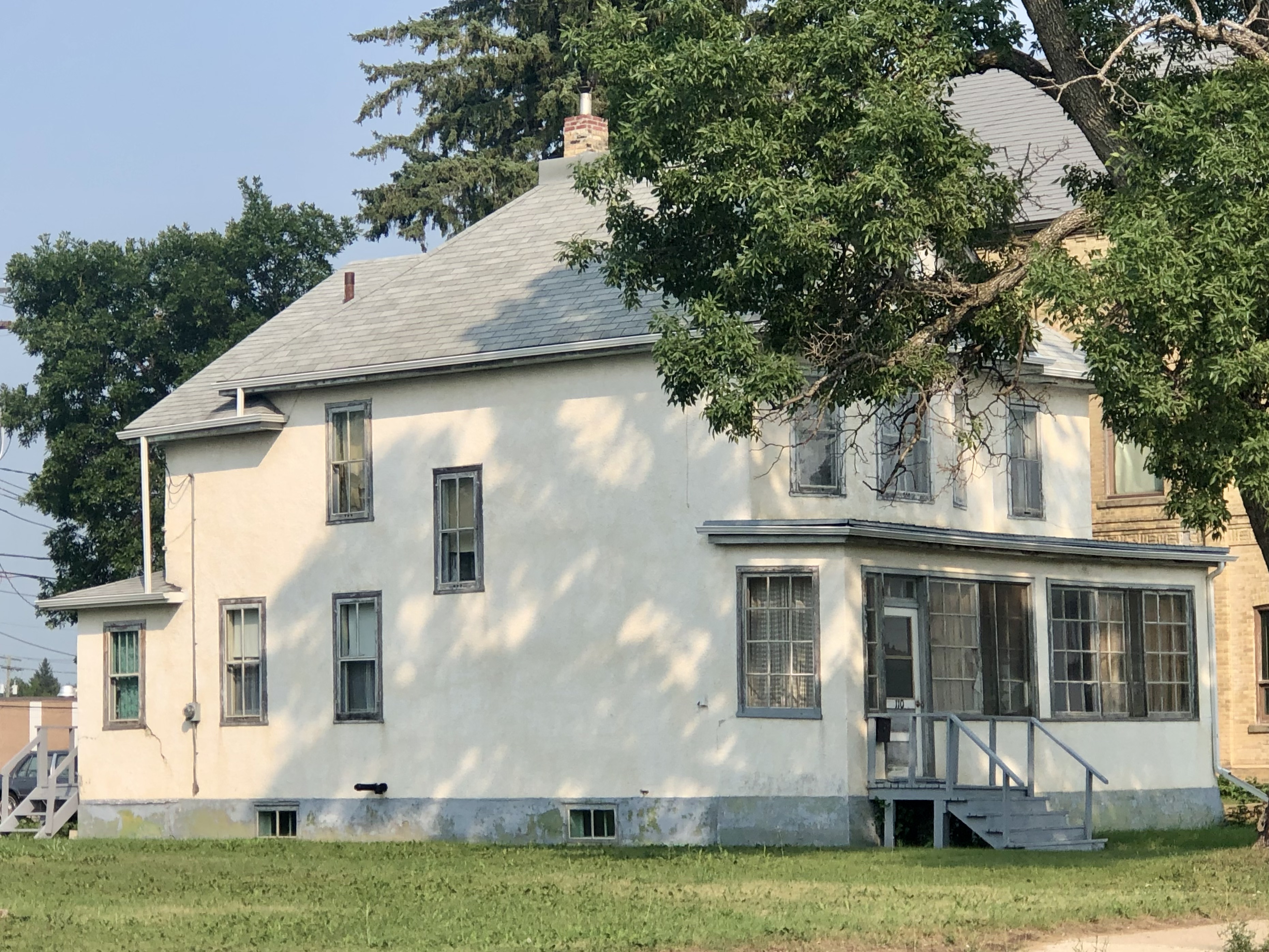
Then I took the photo from the east side as if the photographer was looking westward toward the Vermillion River.
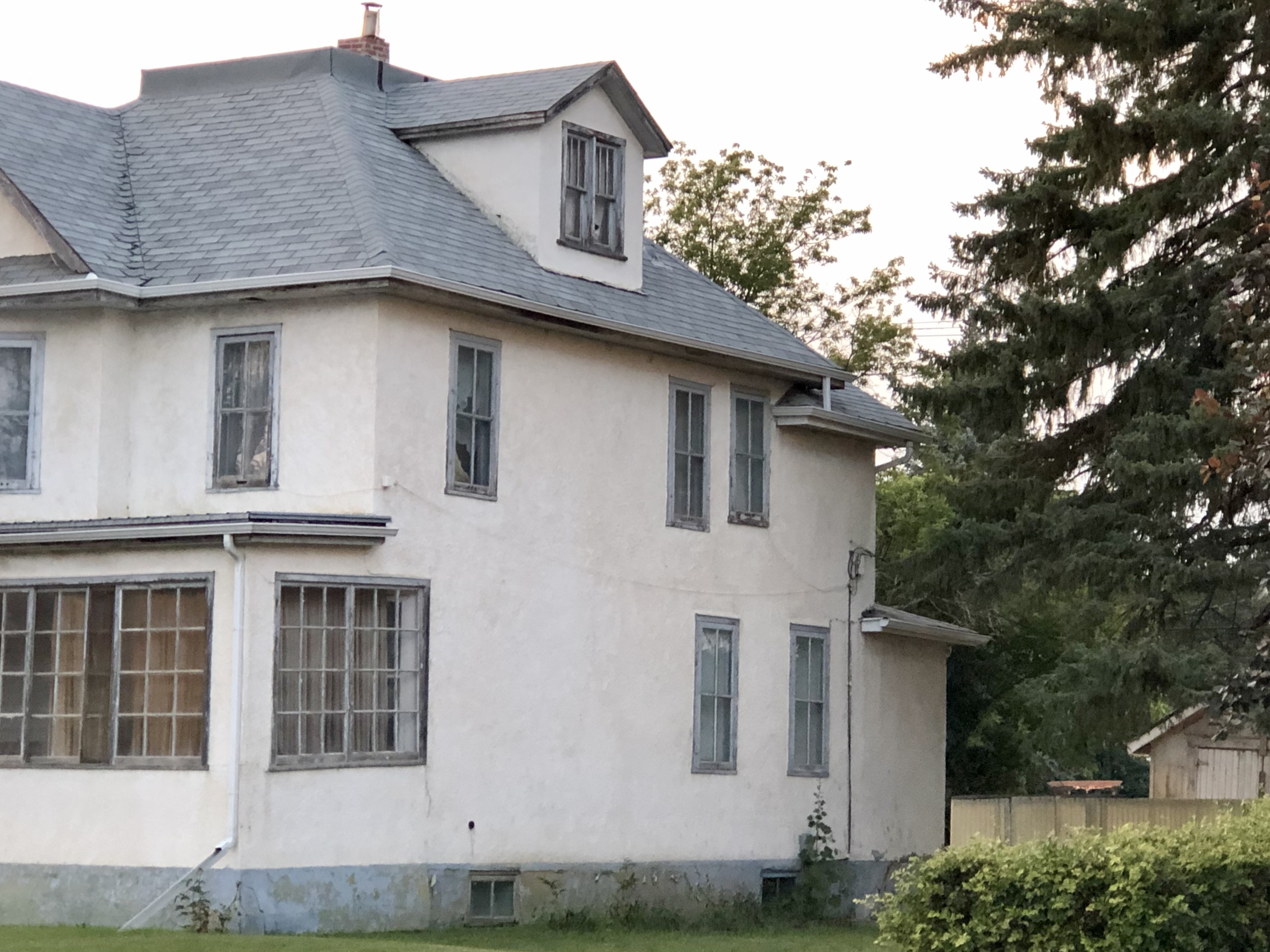
After a side-by-side comparison, it does not appear to be the house in the 1943 photo, even accounting for upgrades and improvements. The window placements are off.
Now, it wouldn’t have been uncommon for prairie houses to be similar and side by side, especially in a railroad town like Dauphin. Residential blocks around the train station historically had rows of houses built close together, often with a pair or ‘twin’ style common in early 20th‑century development.
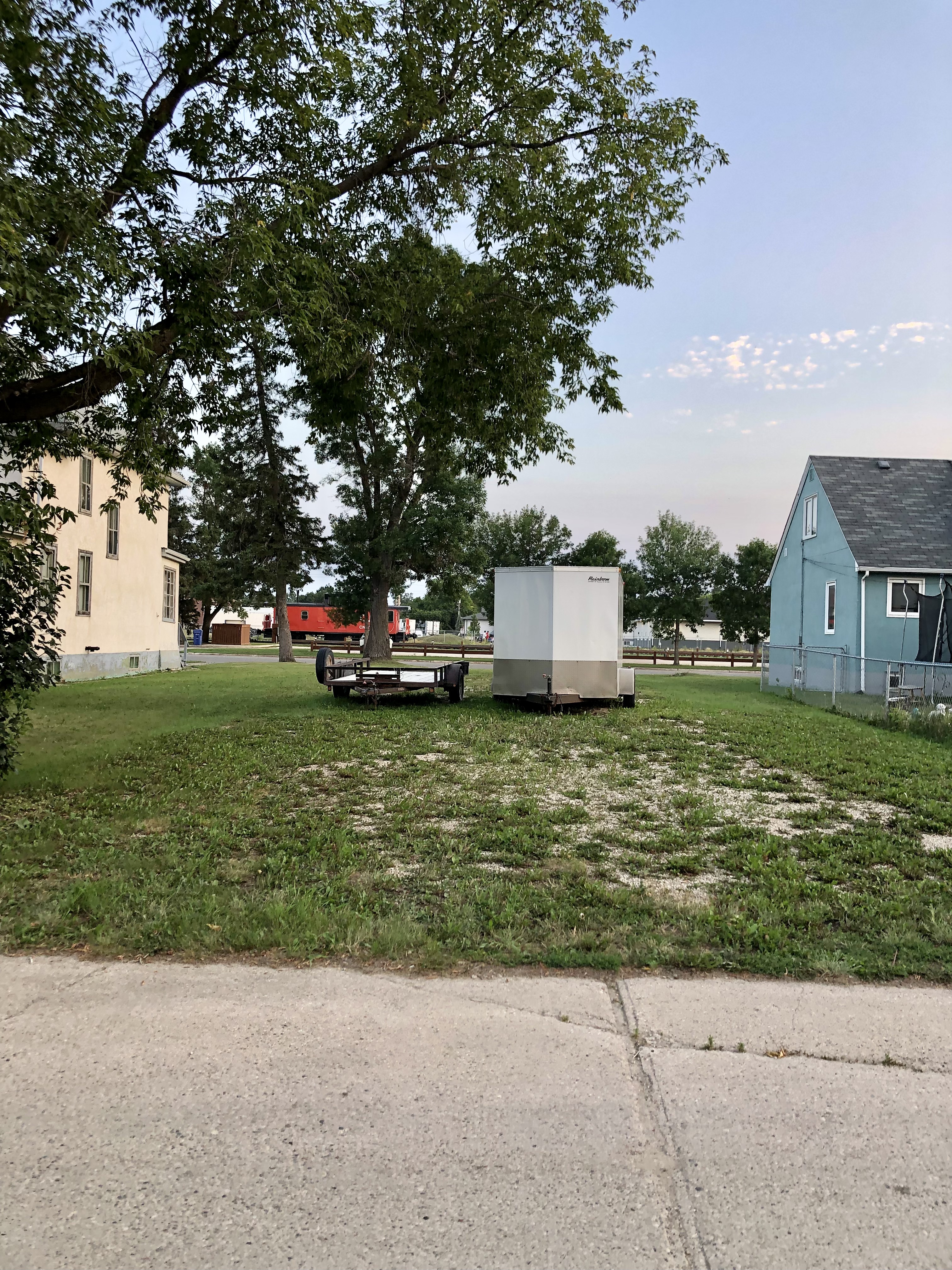
When I compared the likely candidate house to others on the block, I noticed a vacant lot immediately beside it — a space where a structure may once have stood. While there is no freely accessible historic map online that shows a house there, residential fire insurance plans and property maps from the mid‑20th century do exist for Dauphin, meaning a house could very well have once been on that lot. Confirming that definitively would require accessing those archival maps or land title records.
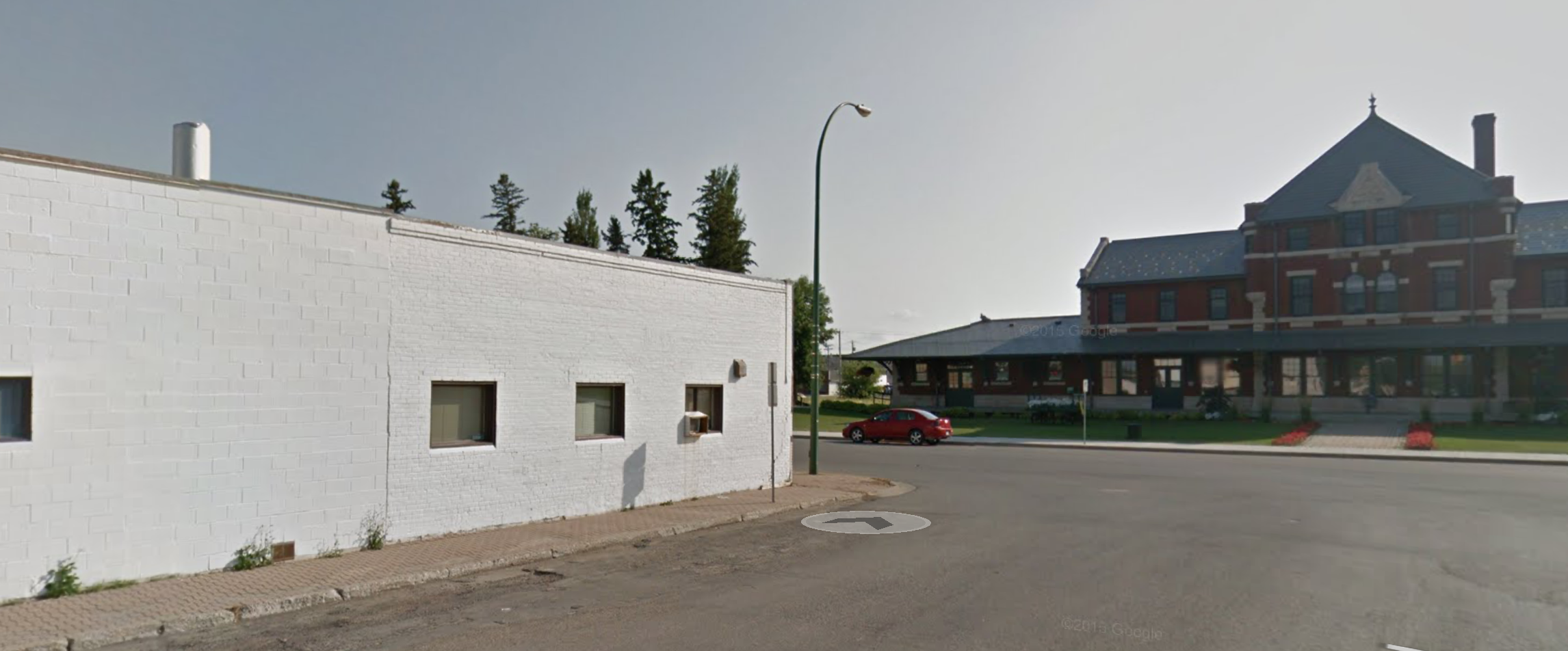
Immediately across the street from the train station is a white building, which is definitely not the house in the picture. Maybe the house was situated there prior?
It is not stated how far down the street the house it, just that it’s north of the tracks, across the street from the station, so I was assuming relatively close to the station … however, just to be certain I went down to the end, until I hit River Rd. and only found 1 possibility but I don’t think it’s it, it was further down than I expected it to be and it doesn’t seem to match.
There were also 2-3 vacant plots and a new building where Ashcroft Vision Care is now, and the newer built Baptist church (from the 1 that was on Main St), which was built on 1st St SW and 3rd Ave NW in 1960 (below 1st photo).
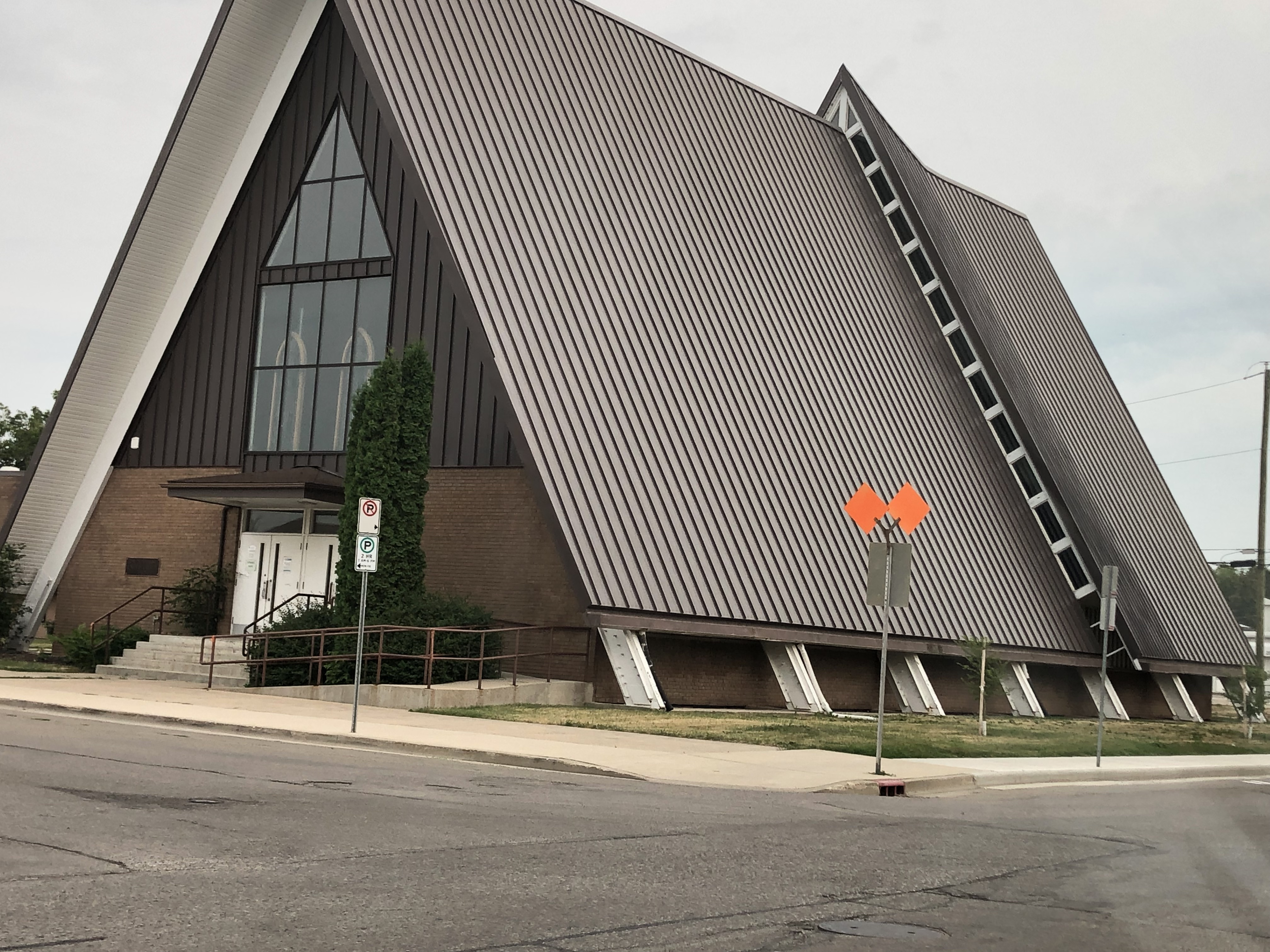
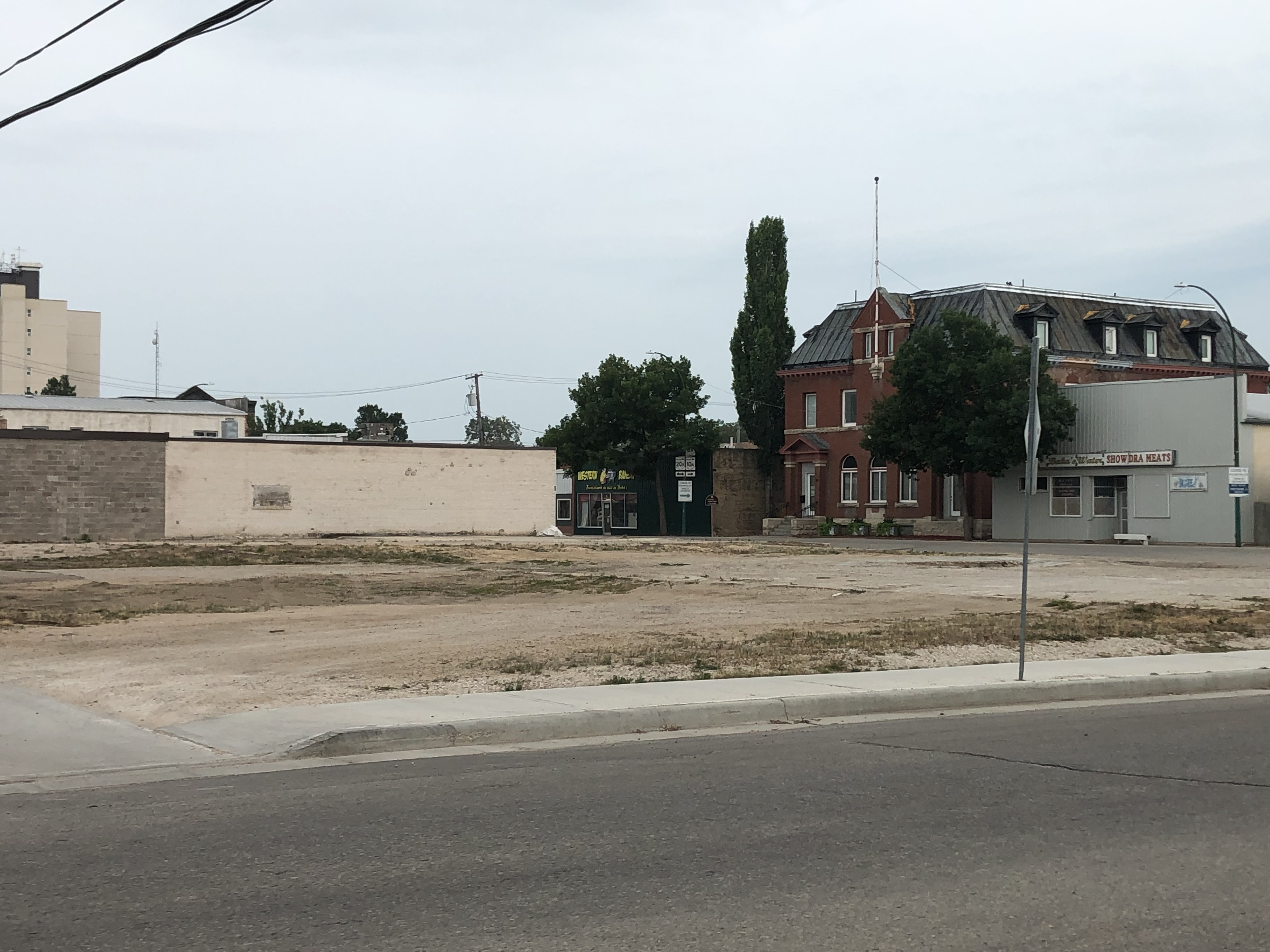
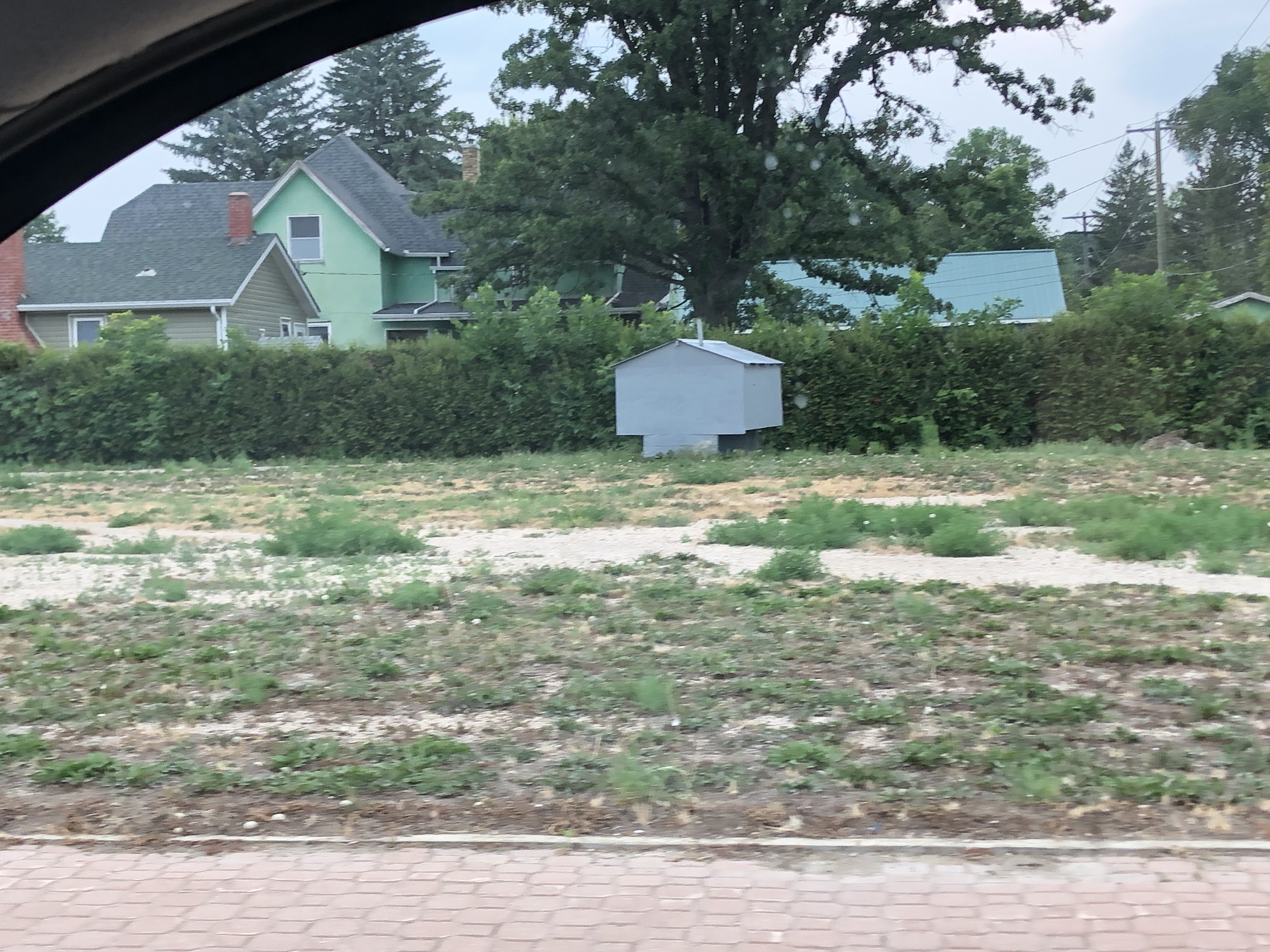
Maybe the house was on 1 of these lands? So, that’s a dead end, folks … for now. I’ll keep digging.
The (re)search goes on and on and on …
Ok, I’m back to doing more research …. using my ancestry.ca account and doing some general Google searches to see what I can come up with.
I was able to locate an account that has some interesting information linked to Esther herself, but encapsulates both her and Rev. Lee (the reason being is that the person who was doing the research was investigating Esther’s time at Moody Bible College).
I found a few newspaper clippings to be of interest:
7 Aug 7 1930 – Albany, Missouri
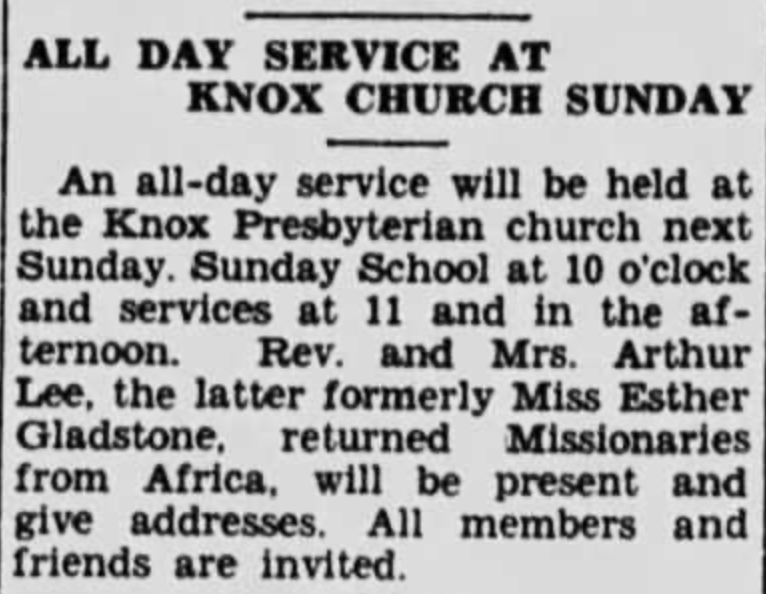
20 Dec 1934 – Albany, Missouri
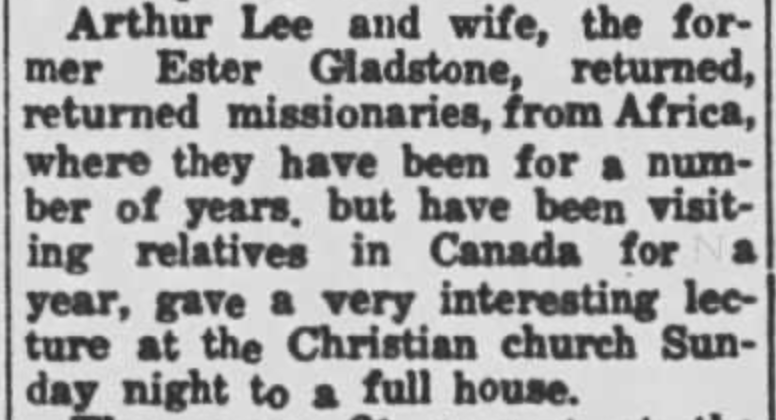
20 Dec 1934 – Albany, Missouri
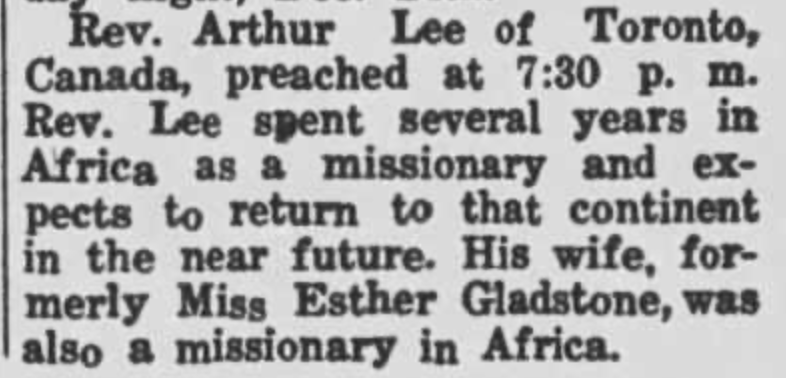
Note: Albany is a city and the county seat of Gentry County, Missouri, USA. The population was 1,730 at the 2010 census. Esther was born in Gentry, Missouri. I’m guessing that Albany was her hometown, the reason being that they consistently refer to her as “formerly Miss Esther Gladstone”, likely so those reading the newspaper would recognize her by her maiden name and come out to hear them speak.
Trying to fill in the gap …
Those newspaper clippings were still a full 9 years before the photo in Dauphin was taken … what did they do in those 9 years? Did they return to Africa for another mission, as one of the clippings would suggest?
I decided to check to see if Dauphin had a Baptist Church back in 1943, and run on the basis that the other blogger’s notation was fact … that Rev. Lee preached in Manitoba. I’m running into a bunch of dead ends, no harm in trying. I know there’s a church now on 3rd Ave NW, but did one exist then? The answer is yes, it did, but it was in a different location, on Main Street. Dauphin has had a Baptist church for the last 120 years.
Maybe I can contact the church to see if they have a list of all the Pastors?
Mrs. Chase, who and where are you? …
I decided to try and see if I could track down Mrs. Chase, as was documented and not in view on the back of the photo. All I knew was that her name was Mrs. Chase. I knew she was married because of the Mrs., and that her last name was Chase and nothing else. I was able to find 2 male Chases with wives in the 1940 Canada Voters list for Dauphin … a Mrs. Earle Chase and a Mrs. Darwin Chase, but no addresses.
Maybe I can hit up the land registry office?
Does anyone know anything?
I have a neighbour, Amy, who’s been around town for many years – maybe she knows something about Pastor Lee, Esther or Mrs. Chase? Let’s ask Amy and see. Stay tuned!
Ok, so, as of today (31 Jul 2021), that’s what I’ve been able to dig up on the Lees. As I mentioned above, this is going to be an ongoing updated blog, so be sure to check back often.
HELP — Also, I’m open to help, if anyone knows how I can dig further into this or has any clues or tips — comment below.
I find the story of the Lees fascinating for some reason, and I feel compelled to know more about them.


 My Tiny World Corner
Leave a comment