In this first installment of a three-part series, I invite you to join me on an extraordinary ancestral journey through the lives of my 6x great-grandfather, my 5x great-grandfather, and my 5x great-grand-uncle. These men were staunch supporters of King George III during the American Revolution, and their loyalty would be tested in ways that would shape our family history for generations.
My original blog post, dated February 10, 2018, generated a flurry of views and comments. I am grateful to all those who reached out, sharing how my research had aided their own family-tree explorations. For me, genealogy is more than a hobby—it’s a passion, a way to honor my ancestors, and a lens through which I can explore history in a deeply personal way. This series delves into the stories of The Loyalist, The Spy, and my 5x great-grandfather Joseph Hicks. I have spent countless hours tracing their movements, military service, and the hardships they endured during the American Revolution, trying to imagine what their lives looked like 246 years ago. These are my kin, my bredren, and it is a tribute to their bravery and perseverance. Without their sacrifices, I would not exist. Their legacy lives on through me and through this work, which preserves their memory for future generations.
Here is a quick guide to our family tree so you can see how I am related to these ancestors:
- Edward Hicks Sr. (1736–1778) – 6x great-grandfather
- Joseph Hicks (1767–1813) – son of Edward Sr., my 5x great-grandfather
- Sarah Hicks (1775–1872) – daughter of Joseph
- Olive Moore (1821–1871) – daughter of Sarah
- George Richards (1859–1942) – son of Olive
- Ambrose Richards (1887–1957) – son of George
- Benjamin Richards (1916–1977) – son of Ambrose
- Patrick Richards (1954–2014) – son of Benjamin
- Benjamin Richards (1916–1977) – son of Ambrose
- Ambrose Richards (1887–1957) – son of George
- George Richards (1859–1942) – son of Olive
- Olive Moore (1821–1871) – daughter of Sarah
- Sarah Hicks (1775–1872) – daughter of Joseph
- Joseph Hicks (1767–1813) – son of Edward Sr., my 5x great-grandfather
With that context in mind, let’s dive into the story of The Loyalists, The Spies, and the American Revolution.
As a Canadian, my knowledge of American history had been somewhat limited on the topic. We do take a fair amount of American history in grade 11 world history. I’ve watched countless documentaries on the period. I’ve spent hours wandering through Fort York in Toronto, Ontario, and Fort Malden in Amherstburg, Ontario. A visit to these historical sites brings to life the struggles and triumphs of those who fought. Amherstburg, overlooking the Detroit River’s mouth at Lake Erie, is where Fort Malden was established in 1796 after losing in the American Revolutionary War. And, as I’ve mentioned, I have spent countless hours trying to really understand this period and how it affected my neighbours to the South and my family here in Canada.
From 1775 to 1783, the 13 American colonies fought for their independence from Great Britain. The revolution was ignited by the colonists’ opposition to excessive taxation and interference in their politics by the British Parliament, which they saw as unfair and oppressive. It was a brutal and bloody struggle for power within the Colonies. It tore families apart, pitting brother against brother and turning once peaceful streets into battlegrounds. France, Spain, and the Netherlands supported the colonists’ quest for freedom. Patriots supported independence and believed they were fighting for freedom from the tyranny of Britain, while Loyalists regarded themselves as law-abiding citizens who would not support rebellion.
Sympathy for the Crown was a dangerous sentiment. During the Revolution, more than 450,000 Loyalists served Britain in specially created provincial militia corps, such as the King’s Royal Regiment and Butler’s Rangers. They were accompanied by several thousand Indigenous allies. Many other Loyalists spent the war in strongholds like New York City and Boston, or in refugee camps.
Who Was The Loyalist?
He was my 6× great-grandfather, Edward Hicks Sr., born on May 2, 1736, in Suffolk, New York, USA. At the age of 22, he married Elizabeth Levina Cornell on January 19, 1758, in Hempstead, New York. Elizabeth—often called Levina—was the daughter of Samuel Mott Cornell and Hannah Cornwall, a family with deep roots in Long Island.

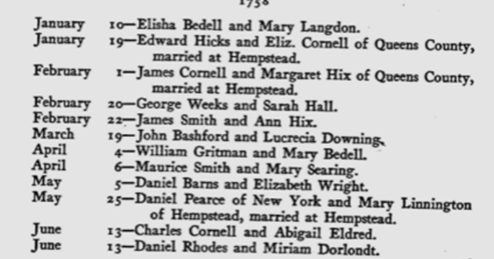
Together, Edward and Levina raised a large family of eight children, many of whom would follow in their father’s Loyalist footsteps, eventually resettling in what is now Ontario, Canada. Their children were:
- Benjamin Hicks (1759–1835), born in Long Island, New York, and died in Marysburgh, Prince Edward County, Ontario, Canada.
- Edward Hicks Jr. (The Spy) (1760–1832), born in Albany, New York, and died in Marysburgh, Prince Edward County, Ontario, Canada. Edward Jr. earned the nickname “The Spy” for his daring role during the American Revolutionary War, where he served as a Loyalist informant and courier, risking his life to protect his family and the Crown.
- Mary Hicks (1762–1804), born in Albany, New York, and died in Athens, Leeds, Ontario, Canada.
- David Hicks (1765–?), born in Albany, New York. Records of his later life are sparse, but he likely remained close to the family’s Loyalist community in Ontario.
- Joseph Hicks (1767–1815), born in Albany, New York, and died in Marysburgh, Prince Edward County, Ontario, Canada. Joseph is my 5× great-grandfather, continuing the family’s Loyalist legacy in Ontario.
- Daniel Hicks (1769–1821), born in Albany, New York, and died in Hallowell, Ontario, Canada.
- Elizabeth Hicks (1771–1807), born in Albany, New York.
- Joshua Hicks (1774–1838), born in Sugar Run, Bradford Township, Pennsylvania, and died in Marysburgh, Prince Edward County, Ontario, Canada.
Edward Hicks Sr. was not just a Loyalist; he was a man of faith and principle. A devout member of the Religious Society of Friends (Quakers), he was known for his gentle demeanor, steadfast moral convictions, and unwavering dedication to his beliefs. In every community he joined, Edward earned a reputation as a pillar of integrity and trust, balancing loyalty to the Crown with his commitment to peace and family.

Edward Hicks Sr.: A Lifeline Through Land, Settlements, and Loyalty
The life of my 6× great-grandfather, Edward Hicks Sr. (1736–?), can be traced through meticulous land records and historical accounts, revealing not only his movements but also the broader story of Loyalist migration and settlement in North America. Here is what I have uncovered so far:
1760 – Union Vale, New York
On January 28, 1760, Edward Hicks Sr. leased a farm of 117 acres on Lot 9 of the Beekman Patent, in what is now the town of Union Vale, Dutchess County, New York. He appears on local assessment lists from June 1760 through June 1763, confirming his presence and activity in the area. This farm represents one of his earliest recorded landholdings and marks him as a settler of note in the Hudson Valley region.
1765 – New Hampshire Land Grants
Edward Hicks Sr., along with George Hicks, obtained land under the New Hampshire Land Grants, reflecting the westward expansion and land speculation occurring in the mid-18th century. These grants often led to disputes with New York authorities, demonstrating the complexities of colonial land claims.
1766 – Petition to King George III
In November 1766, Edward Hicks Sr. and George Hicks petitioned King George III from Pownal, Bennington, New Hampshire (later part of Vermont). Petitions to the crown were serious affairs, reflecting both the ambition of early settlers and their need to secure official recognition for land claims and legal protection.
1768–1772 – Land Sales in New York
Edward began selling portions of his holdings in New York, documenting his entrepreneurial and strategic approach to land management:
- November 10, 1768: Sold 45 acres in the 4th Division, Lot #34 to George Gardner for 8 pounds.
- December 13, 1769: Sold land to Caleb Morgin of Pownal and the Province of New York for 100 pounds.
- September 10, 1772: Sold 45 acres in 2nd Division, Lot #39, to Caleb Morgin, land not yet laid out but belonging to the right of Derrick Webb.
These transactions show Edward’s active engagement in the land market and his efforts to consolidate or liquidate assets as he prepared for the next phase of his life.
1775 – Relocation to Sugar Run, Pennsylvania
By 1775, Edward Hicks Sr. relocated to the mouth of Sugar Run, in what would later become Wilmot Township, Bradford County, Pennsylvania. This move may have been motivated by opportunities for new settlement and land acquisition, as well as by increasing unrest in New York with the looming revolution. He is noted as making a possession at the mouth of Sugar Bend, establishing his claim to the land.
1776 – Assessment in Westmoreland, Connecticut
Edward appears on the assessment list of the Upper River District, County of Westmoreland, Connecticut, illustrating the fluidity of colonial borders and the mobility of settlers at the time. Families like the Hicks were constantly negotiating legal, geographic, and political boundaries.
1777 – Sale of Remaining Holdings
On April 1, 1777, Edward sold the remaining land to Prince Bryant and Benjamin Eaton, completing his divestment in New York and signaling a full commitment to his new life in Pennsylvania. This period marks a transition in Edward’s life from New York landowner to frontier settler and Loyalist.
Before open warfare erupted, Edward Hicks Sr.’s home was known as a safe house for Loyalists (Tories). Family tradition and period accounts suggest that travelers loyal to the Crown used the Hicks property as a waypoint while moving from Philadelphia into the interior and possibly toward the Ohio Valley. This would have made the family a visible target for Patriot militias and likely contributed to their later capture.

Officer Commanding Butler’s Rangers
Edward Hicks Sr., Benjamin, and Edward Jr. — Loyalists in Butler’s Rangers
Edward Hicks Sr., his sons Benjamin Hicks and Edward Hicks Jr., were committed Loyalists devoted to King George III during the turbulent years of the American Revolution. They served in Butler’s Rangers, a Loyalist provincial corps raised by American Loyalist John Butler to fight for the Crown in frontier warfare across upstate New York and Pennsylvania.
Butler’s Rangers was formed in 1777 after Butler was authorized to raise a regiment of Loyalist riflemen and scouts, originally authorized as eight companies of light infantry and rangers. The unit grew to several hundred men and fought in many of the most significant frontier engagements of the war. Their tactics included unconventional warfare, scouting, raids, reconnaissance, and joint operations with Indigenous allies.
Butler’s headquarters were at Fort Niagara (near present‑day Niagara‑on‑the‑Lake, Ontario), positioning the Rangers to operate along the river valleys of northern New York and into Pennsylvania. The frontier war in which they fought was vicious, with deep personal and community consequences.
Service and Pay Rolls — What Surviving Records Show
Surviving muster and pay roll documents from the British Library list each of the Hicks men among the ranks of Butler’s Rangers:
- Edward Hicks Sr. is listed as a Private in Captain Walter Butler’s Company, receiving pay of £30.8 at 2 shillings per day for service from December 25, 1777, to October 24, 1778.
- Benjamin Hicks appears as a Private in Captain William Caldwell’s Company of Butler’s Rangers, also paid £30.8 at the same rate for service from December 25, 1777, to October 24, 1778.
- Edward Hicks Jr. is also listed with Caldwell’s Company, paid for the same period; records note that he was taken prisoner on January 3, 1778, later returned, and present at muster on November 5, 1779, with recorded pay of £377.3 reflecting casualty or prisoner pay adjustments
Additionally, a List of Persons in the Hands of the Congress belonging to the Corps of Rangers, Royalists and their Families (January 1778) includes “Edward Hicks” and “Edward Hicks Junr” taken on the Susquehanna, suggesting both father and son were captured together at that time.
These records provide rare documentary evidence of Loyalist service for your ancestors in one of the most active and controversial frontier units of the war.
Butler’s Rangers and Frontier Warfare
Butler’s Rangers was not a conventional European‑style regiment. It specialized in irregular warfare, including raids, ambushes, and scouting, often in difficult terrain where Native allies provided invaluable skills and local knowledge. The unit was approximately 500–600 men strong by 1783 and fought in engagements that shaped the northern theatre of the war.
General George Washington, commander‑in‑chief of the Continental Army, was deeply opposed to such Loyalist networks — seeing them as dangerous facilitators of enemy movement and organization.
Among their most notorious actions were:
- Battle of Wyoming (July 3, 1778) — A combined force of Rangers and Indigenous warriors ambushed Patriot militia in the Wyoming Valley of Pennsylvania. Historical accounts describe heavy Patriot casualties and the capture of Forty Fort, later referred to by some as the “Wyoming Massacre” due to the number of dead and scalped, particularly among militia forces.
- Cherry Valley Massacre (November 11, 1778) — A mixed force, including Loyalists under Captain Walter Butler and Seneca and Mohawk warriors, struck the settlement of Cherry Valley, New York. Many settlers, including women and children, were killed, fueling Patriot outrage and leading to retaliatory campaigns.
- Other engagements included the Battle of Newtown (1779) during the Sullivan Expedition, where Butler’s Rangers and their Native allies were defeated by Continental forces, and the later Battle of Johnstown (1781) involving Ranger units.

The Frontier War and the Battle of Wyoming: Edward Hicks Sr and Jr
While the exact activities of Edward Hicks Sr. and his sons remain partially undocumented, it is clear that they were caught in the violent frontier conflict that erupted in 1778. Seneca chiefs Sayenqueraghta and Cornplanter actively encouraged Seneca and Cayuga warriors to participate in raids against Patriot settlements, while Mohawk leader Joseph Brant recruited Mohawk fighters and Loyalist volunteers to join him. By April 1778, the Seneca were conducting raids along the Allegheny River and the West Branch of the Susquehanna River, destabilizing frontier communities. In late May, Brant raided Cobleskill in Tryon County, New York, demonstrating the strategic coordination between Indigenous leaders and Loyalist forces.
In early June, John Butler, Sayenqueraghta, and Brant met at Tioga Point (the confluence of the Chemung River and North Branch of the Susquehanna River) to plan their campaigns. While Butler and the Senecas plotted a major assault on the Wyoming Valley, Brant returned to Onaquaga to prepare raids on New York settlements.
By June 27, 1778, Major Butler led 110 Rangers and 464 Indigenous warriors toward the Wyoming Valley. The Indigenous contingent was largely Seneca and Cayuga, led by Sayenqueraghta, Cornplanter, and Fish Carrier, with smaller groups of Munsee Delaware, Onondaga, and Tuscarora also participating. Patriot settlers were first alerted to their approach when 12 local workers at a field and nearby tannery were attacked.
On July 1, Fort Wintermoot surrendered without resistance, followed the next day by Fort Jenkins, both under terms promising the safety of inhabitants. Fort Forty-Fort, however, refused to surrender. Despite his officers’ counsel to remain inside the fort, subordinate leaders, including Lazarus Stewart, demanded confrontation. By mid-afternoon on July 3, roughly 375 Patriot militia and Continental troops sallied from the fort. Unbeknownst to them, Indigenous scouts had monitored their every movement.
Major Butler ordered Fort Wintermoot burned as a deception tactic, then positioned his forces in an open woodland — Rangers on the left, Indigenous warriors on the right. When the Patriots advanced within 100 yards, they were flanked by Seneca and Cayuga warriors. Following a devastating volley, the Indigenous fighters attacked with mauls, tomahawks, and spears. The battle lasted barely 30 minutes, devolving into a chaotic rout. Only about 60 Patriots escaped, including Lieutenant Colonel Butler and Colonel Nathan Denison. Many were killed or scalped immediately; some were taken captive and later tortured or executed. Major Butler reported 227 scalps and five prisoners taken by Indigenous allies, while Denison counted 302 killed.
The summer of 1778 was marked by endless raids through the Mohawk Valley by Loyalists and Indigenous allies. In November 1778, a force under Walter Butler — John Butler’s son — attacked Cherry Valley, New York, killing many civilians. Contemporary accounts note that Brant intervened to save some non-combatants, reportedly saying, “…that child is not an enemy to the King, nor a friend to Congress.”
In response, George Washington ordered a punitive expedition against pro-British Indigenous nations. Generals John Sullivan and James Clinton, supported by Colonel Daniel Brodhead and 4,600 Continental troops, advanced on Iroquois settlements to achieve “total destruction and devastation” of those allied with the British. The campaign dealt a substantial blow to Indigenous resistance.
After the Wyoming campaign, Butler’s Rangers from the Susquehanna were reportedly granted permission to return home to secure their families. One account states:
“The men marched up the river about eighty miles, and took sundry Tories, and happily contented the Tioga Indians (the Seneca People) and entirely disbanded the conspirators.”
At the following session, the assembly resolved that:
“Richmond Berry, Philip Buck, Thomas Silk, Edward Hicks, Edward Hicks, Jr., John Young, Jacob Bowman, Adam Bowman, Jr., Jacob Bruner, John Henry Short, Henry Hover, Nicholas Phelps, Nicholas Phelps, Jr., John Phelps, Jacob Anguish, George Kentner, and Frederick Frank, who were taken in arms against the United States by the militia of Westmoreland, and sent to the deputy commissary general of prisoners of this State, are ordered to be received and treated as prisoners of war, provided that nothing in the aforesaid order shall be construed to excuse said prisoners from any treasonable offense against the laws of other States.”
From this, we can likely confirm that Edward Hicks Sr. and Edward Hicks Jr. were captured by the Westmoreland Militia and held at Minisink Prison, although the exact date is unknown.
Edward Hicks Sr. was tried and sentenced to death as a traitor. While some sources suggest 1779, family tradition and the timing of Levina’s remarriage on September 5, 1779, suggest 1778 as the more likely year. Reports even indicate that Edward Jr. witnessed his father’s execution outside the prison.
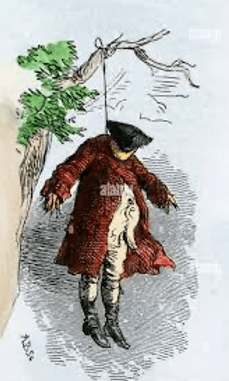
Questions remain: What became of Edward Jr. after his capture? Was he court-martialed or sentenced to death? Did your 5× great-grandfather Joseph Hicks and his family successfully flee to Canada after Edward Sr.’s execution? How did the Hicks family navigate the chaos of war to survive?
So much remains to uncover — the story continues in Part II.
References / Footnotes for Part I
- History of Bradford County, PA. Chapter 3: Settlements in Bradford County previous to the Battle of Wyoming, July 8, 1778, pp. 67–68.
- History of Bradford County, PA. Chapter 3: Settlements in Bradford County previous to the Battle of Wyoming, July 8, 1778, pp. 67–68.
- The Exchange Niagara Falls. Butler’s Rangers.
- The Exchange Niagara Falls. Butler’s Rangers.
- Pay Rolls of Butler’s Rangers 1777–1778.
- Pay Rolls of Butler’s Rangers 1777–1778.
- Pay to Rangers taken prisoner and casualties.
- In 1787, George Washington was elected president of the convention that wrote the U.S. Constitution. Two years later, he became America’s first president.
- Smith, Page. A New Age Now Begins: A People’s History of the American Revolution (Vol. One), McGraw-Hill, 1976, pp. 229–230.
- Smith, Page. A New Age Now Begins: A People’s History of the American Revolution (Vol. One), McGraw-Hill, 1976, pp. 230–234.
- Memorial of Col. Nathan Denison to the Connecticut Assembly, January 1778.
- “A List of Prisoners in the hands of the Congress belonging to the Corps of Rangers Royalist and their Families,” listing Privates of the Corps of Rangers taken on the Susquehannah, January 1778.
- Great Britain, British Library, Additional Manuscripts, No. 21765, folios 64–65.
- Revolutionary War Records – Butler’s Rangers payrolls, Haldimand Papers, British Library. https://sites.google.com/site/niagarasettlers/soldiers-and/soldiers-h
- Overview of Butler’s Rangers, UELAC. https://uelac.ca/loyalist-books/butlers-rangers-annotated-roll/
- Battle of Wyoming, 1778. https://en.wikipedia.org/wiki/Battle_of_Wyoming
- Raiding campaigns along Susquehanna and Mohawk Valleys, 1778. https://revolutionarywar.us/campaigns/1778-1782-northern-theater/
- Haldimand Papers, Loyalist safe houses and frontier operations. https://www.uelac.org/Friends-Loyalist-Collection-BrockU/butlernominalroll.html
- Sullivan-Clinton Campaign (1779), Continental Army retaliation. https://en.wikipedia.org/wiki/Sullivan_Expedition


 My Tiny World Corner
Leave a comment