The enigmatic case of Lizzie Borden has captivated countless people, including myself, throughout the years. It remains a prominent topic in American popular culture, holding its place in our collective imagination. The layers of intrigue and unanswered questions surrounding the story continue to draw in new generations, leaving them entranced by its enduring mystery.
Most of us are familiar with the haunting popular skipping-rope rhyme:
“Lizzie Borden took an axe
and gave her mother forty whacks.
When she saw what she had done,
she gave her father forty-one”.
I started working on my family tree again after months of hiatus. I’ve made so many incredible discoveries over the years. If you’re interested in reading more about my ancestry, such as my connections to King Louis VIII of France, Explorer Louis Joliet, The Loyalist, the Spy and the American Revolution, my connection to the Salem Witch Trials, Reverend Obadiah Holmes, even aviatrix Amelia Earhart and many more, click the links.
My 2nd great-grandmother Eva Beaulieu was born in Taunton, Massachusetts, and later in life returned to Canada – to read more on Eva and Louis Allard, click here.
As I delved deeper into my family history, I made an intriguing discovery: my ancestor Georgina and her husband Napoleon once resided in the quaint town of Fall River, Massachusetts. As a self-proclaimed Lizzie Borden enthusiast, my mind couldn’t help but wonder – were they there at the same time as the infamous murders? Could they have unknowingly crossed paths with the infamous family? Could my 3x great-grandparents have been in Fall River on that fateful August 4th day in 1892? My mind raced with possibilities as I pored over old records and maps, trying to piece together their movements. I imagined the streets of Fall River bustling with life and intrigue. I couldn’t help but wonder how my ancestors were part of it all.
Fall River, Massachusetts
Throughout its existence, the city of Fall River, Massachusetts, has been shaped by its cotton textile industry. Starting as a small settlement under the Plymouth Colony, it eventually became the largest producer of textiles in the United States during the 19th century.
On February 26, 1803, “Fallriver” was officially incorporated as a town. A year later, on June 1, 1804, it was renamed “Troy”. This name was used for three decades before finally being changed back to “Fall River” on February 12, 1834, this time separating the words.
In its early days, the town was home to only about two dozen families, including prominent names such as Borden and Cook. The community also included families with surnames like Durfee, Buffington, and Davol (a name that personally resonates with me through my family history – more research to be done).
By 1868, Fall River was the leading textile city in America.
Between 1871 and 1872, 22 new mills were built throughout the city, while some of the older mills expanded. The city’s population increased by an astounding 20,000 people in these two years.
By 1876, the city had 1/6 of all New England cotton capacity and one-half of all print cloth production. “Spindle City”, as Fall River became known, was second in the world to only Manchester, England!
To house the thousands of new workers, mostly Irish and French Canadian immigrants, over twelve thousand units of company housing were constructed. Unlike the well-spaced boarding houses of early Lowell and Lawrence or the cottages of Rhode Island, worker housing in Fall River consisted of thousands of wood-framed multi-family tenements, usually three-story “triple-deckers“. The economics of the triple-decker are simple: the cost of the land, basement, and roof are spread among three or six apartments, which typically have identical floor plans. The three-decker apartment house was seen as an alternative to the row housing built in other cities in the Northeastern United States.
Ma Famille Française a Fall River, Mass
Napoleon Beaulieu 1851-1889
3rd great-grandfather
and
Georgina Prêtaboire 1855-1892
3rd great-grandmother
What brought my family to immigrate from Québec to New England?
My research revealed a rapidly changing landscape in the United States, one that offered enticing opportunities for young French Canadians seeking new beginnings. As the country continued to industrialize at a rapid pace, new factories began to emerge in states such as Vermont, New Hampshire, Massachusetts, Maine, Rhode Island, and Connecticut. These bustling hubs of industry demanded a large workforce, particularly in the field of cotton production at textile mills. The allure was undeniable – these factories promised higher wages than those back home in Canada. But it wasn’t just the monetary benefits that drew in the French-Canadian immigrants. The geographical proximity to their homeland also played a major role in their decision to emigrate. The New England states were just a stone’s throw away from Lower Canada, making it an accessible and desirable destination. And with advancements in technology making travel more efficient and convenient, this migration became even more feasible and appealing.
The mass migration of French Canadians to the New England region was a significant and enduring phenomenon. Over ninety years, from 1840 to 1930, approximately 900,000 individuals journeyed in search of employment opportunities. As they settled into their new lives, they formed tight-knit French Catholic communities, affectionately known as “Little Canadas,” in cities such as Lowell, Massachusetts; Manchester, New Hampshire; and Lewiston, Maine. The distinct dialect of French spoken by these immigrants, now referred to as New England French, continues to be heard in pockets of the region even today. Their cultural influence can still be seen in the customs, cuisine, and traditions of these areas.
So, it appears my family likely left Canada in search of work and opportunity in New England.
Lizzie Borden at Fall River, Mass
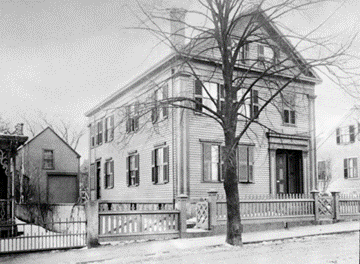
Lizzie Borden (1860 –1927), a woman of notorious reputation, became the subject of a highly publicized trial after being accused of the gruesome 1892 axe murders of her father and stepmother in Fall River. The scene of the crime was their home, situated at 230 2nd Street, its walls now forever stained with blood and tragedy.
Her father, Andrew Borden, was a successful property developer. His shrewd business sense led him to become a director of multiple textile mills, and he also owned a vast amount of commercial property. His name carried weight and influence among the upper echelons of society.
It’s said that Lizzie had immense pride in the Borden family, being largely responsible for the launch and development of the cotton cloth industry in Fall River. She was amazed that it was because of their efforts that she could count forty-three busy cotton mills and hundreds of supporting businesses in 1892. Lizzie was sparedfrom working in the mills. Oh no, this was not for her – she was, after all, a Borden. The clattering of the shuttles banging back and forth in the loom room made the noise almost unbearable, to say nothing of the indoor hot and humid conditions, both winter and summer, necessary for cotton cloth manufacture. That was for my stock.
The Events of Thursday, August 4, 1892
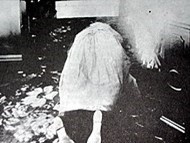
Although Lizzie and her older sister Emma were responsible for cleaning the guest room, Abby took on the task of making the bed on this particular morning, sometime between 9:00 a.m. and 10:30 a.m. The investigation revealed that when she was attacked, she was facing her killer. She received the first blow to the side of her head with a hatchet, which left a deep cut above her ear and caused her to fall onto the floor face down. As she lay there, her killer delivered seventeen more brutal blows to the back of her head, ultimately leading to her death.
When Andrew arrived home sometime around 10:30 a.m. from his walk, he found himself unable to unlock the door with his key. Frustrated, he knocked and was greeted by the maid, Maggie Sullivan. She let him in and helped him take off his boots before he lay down on the sofa for a nap. However, pictures taken at the crime scene show Andrew wearing his boots, contradicting Sullivan’s statement. During her testimony, she claimed to have been resting in her room on the third floor after cleaning windows when Lizzie called out for her just before 11:10 a.m., saying, “Maggie, come quickly! Father’s dead. Someone came in and killed him.”
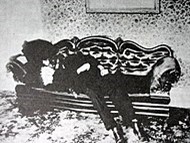
Andrew was found slumped over on the couch in the sitting room downstairs, his body bearing ten to eleven brutal wounds from what detectives believed to be a hatchet-like weapon. The fact that one of his eyes had been cleanly split in two indicated that he was likely asleep when the attack occurred. The wounds were still bleeding, indicating that they had happened recently. Based on their estimates, Andrew’s death had taken place around 11 o’clock in the morning.
In 1893, Lizzie stood trial for the ghastly murders of her father and stepmother. After a trial, she was ultimately acquitted of the charges. Despite this verdict, she remained under heavy suspicion and scrutiny, with many still considering her to be the prime suspect in the heinous crimes that had shocked the community. Her name was forever tarnished by the events, and whispers followed her wherever she went.
Facts and Timeline Review
Did they live in the same Town?
The 1880 US Federal census (enumerated on June 8, 1880) confirms that my 3xGGM, Georgina, was keeping house, and my 3xGGF Napoleon was working at a cotton mill. Napoleon’s brother Charles (also from Québec) was living with them, and he too was working at a ‘cotton mill.’
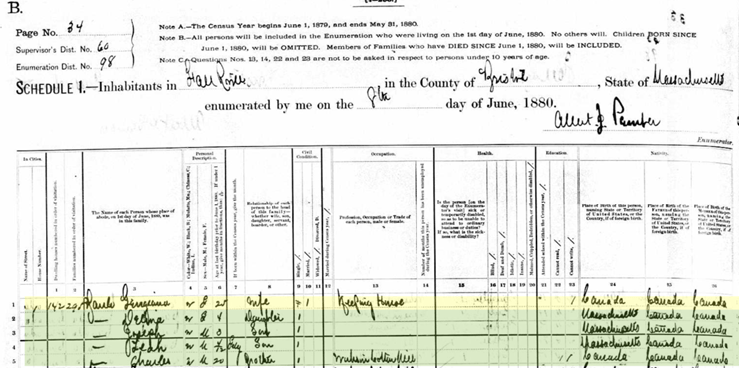
142 Flint St. no longer appears to exist.
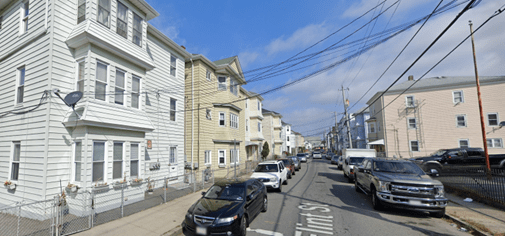
Above is a Google Maps shot of Flint St. as of September 2019. The buildings on the street coincide with them, appearing to be wood-framed multi-family three-story “triple-decker” tenements to house mill workers.
I located the 1880 census for Andrew, Abby, Emma, Lizzie and their maid Mary Grein (from Ireland) in Fall River.

You will note that the address on the census(top right) is noted as 92 2nd St. The house number was changed to 230 in 1896.
After scouring the censuses, it is confirmed that Lizzie Borden and her family, along with my 3x great-grandparents, resided in Fall River, Massachusetts, during the year 1880.
What was the population of Fall River in 1880?
After extensive research, I discovered that the bustling town of Fall River in 1880 was home to a population of 48,961 individuals.
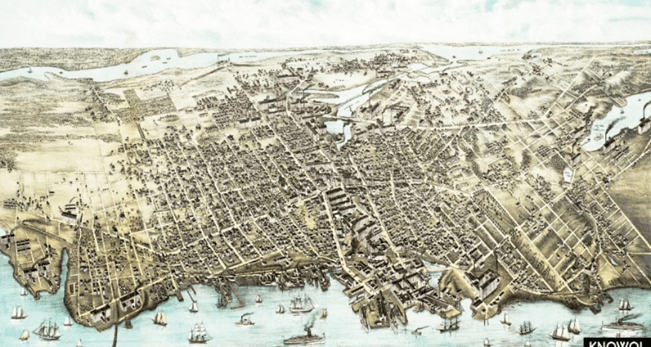
The map displayed below showcases the city of Fall River, Massachusetts, as it appeared in 1877 – three years before the federal census of 1880 was conducted. The buildings and streets are illustrated, giving us a glimpse into life in this growing industrial centre.
Was it possible for them to have crossed paths at some point?
It’s highly unlikely that they ran in the same ‘circles’ given their vastly differing social statuses, but how closely did they live to one another? Did they walk the same bustling streets, lined with vendors selling their wares and street performers entertaining the passing crowds? Did they step into the same quaint shops, filled with the smells of freshly baked bread and fragrant spices? Could they have nodded politely at one another as they brushed shoulders in the busy thoroughfare, lost in their own thoughts amidst the hustle and bustle of city life?
Not being able to place the exact house number of Georgina and Napoleon’s residence on Flint St., I did a Google Maps search from the Borden residence on 2nd Ave to the Flint St general area.
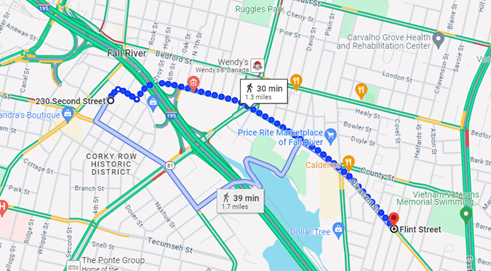
Based on the city’s current layout, their residences are separated by approximately 2.41 km of walking distance. Despite the seemingly short distance, it was enough to partition them into different neighbourhoods and social circles. Andrew himself was known for his semi-frugal ways despite his wealth. The Borden house, situated in a prosperous area, was surrounded by other well-to-do families. However, Andrew’s cousins, who undoubtedly shared in his fortune, resided in an even more exclusive neighbourhood known as “The Hill”. This area, with its grand homes and manicured gardens, was reserved for the wealthiest residents of Fall River and was located further away from the bustling industrial areas of the city. “The Hill” was prime land overlooking Mount Hope Bay. At the bottom of the hill stood the granite textile mills and neighbourhoods.
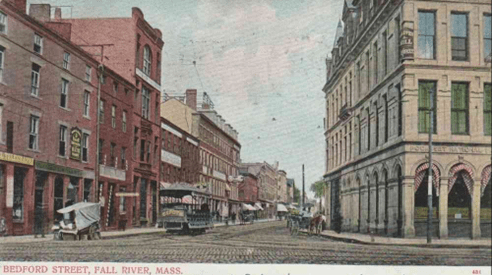
As the 1880s dawned upon Fall River, it was a city transformed. A bustling metropolis, filled with modern wonders like streetcars, telephones, and electric service. The first streetcar rails were laid in 1880, a sign of progress and growth. At first, these cars were pulled by strong horses, but by the early 1890s, the system had been electrified, adding a new level of efficiency to its operation. By 1900, the entire city was connected and accessible by these buzzing streetcars, symbolizing the reach and development of this vibrant community.
Could Napoleon have worked for Andrew Borden?
Since Andrew Borden owned cotton textile mills in Fall River, could it be possible that Napoleon and his brother Charles (my 3rd great-granduncle) worked for the infamous Andrew Borden?
My mind raced with possibilities as I delved deeper into this intriguing family connection.
In 1880, we know that:
- Napoleon and Charles were both working at a “cotton mill”
- Napoleon and Charles were living on Flint St. with Georgina
- Mills built tenements to house their workers. They appeared to live in tenement housing
- Andrew Borden owned many cotton mills in Fall River
Questions:
- How many mills were in operation in 1880 in Fall River?
- Which ones are closest to Flint St.?
- Which mills did Andrew own?
- Could Napoleon and Charles have worked for Andrew Borden?
- What were the working conditions in the mills?
How many mills were in operation in 1880 in Fall River?
Through research, I discovered that by 1879, Fall River had around 23 textile mills in operation, built between 1845 and 1879. I used 1879 as a cut-off since my ancestors were employed in mills during the June 7, 1880, federal census.
Mapping these mills against Flint Street, where my family lived, I identified several within walking distance:
- Pleasant Street: Union Mills 1 & 2, Durfee Mills 1 & 2
- County Street: Stafford Mill 1
- Quequechan Street: Wampanoag Mill 1
- Quarry Street: Barnard Mills
This proximity meant that mill work was likely accessible on foot, an important factor in the daily lives of mill workers and their families.
Which mills did Andrew own?
Andrew Jackson Borden, despite his prominence in Fall River, was not one of the city’s major textile tycoons. While he was a respected senior partner at Borden, Almy & Co., president of Fall River Savings Bank, and held board positions in several mills — including Globe Yarn Mill Company, Troy Cotton & Woolen Manufacturing Company, and Merchants Manufacturing Company — he did not personally own or manage a workforce in any major mill.
His cousins, Richard and Jefferson Borden, were the industrial giants of the family, dominating textile manufacturing and shipping. Andrew came from a more modest branch of the Bordens; his father worked as a fish peddler. Yet, Andrew’s influence and investments still placed him at the centre of Fall River’s economic and social life.
Could Napoleon Have Worked for Andrew?
At this point, there is no direct evidence that my ancestors, Napoleon and Charles, worked for Andrew himself. It is plausible they were employed at mills connected to the broader Borden family network, but we cannot confirm direct employment under Andrew. The search for more records continues.
What were the working conditions like in the mills?
Millworkers spent 14-hour days in humid, lint-filled buildings. Many died of pneumonia and other respiratory diseases. Saddled with low pay, long hours, and poor housing, thousands of immigrant millworkers — Irish and French-Canadian among them — went on strike multiple times over the years for better wages and a 10-hour workday. Mill owners responded by cutting wages and firing workers.
I imagine working in a textile mill during the 1880s was no easy task. Let me paint you a picture of what life was like for those labouring in these bustling factories:
- Mill workers typically started their day at 6:00 a.m. and toiled until 6 p.m., with only small breaks in between. They worked six days a week, with Sundays as their sole day off.
- The work was repetitive and often monotonous. Employees spent hours engaged in tasks like spinning cotton into thread or weaving thread into fabric. The machinery used in textile mills allowed for mass production, but it required constant attention and manual labour.
- The mills were noisy, dusty, and poorly ventilated. Workers endured the constant hum of machinery, inhaling cotton fibres and other particles. These conditions took a toll on their health over time.
- Despite the gruelling work, wages were meagre. On average, mill workers earned just 12 cents a day in the 1880s.
- Strikes and labour actions were common. Mill owners often responded aggressively, sometimes violently, to demands for better working conditions and fair pay.
- Sadly, child labour was prevalent. Children as young as nine years old worked alongside adults, contributing to their family’s income. Their small hands were well-suited for certain tasks, but it came at the cost of their education and well-being.
In the early 1880s, state and federal investigators said the working and living conditions in Fall River were among the worst in the nation. This saddens me for my family and for the countless others who worked in such harsh conditions.
Conclusion
I close my eyes and can almost feel the energy of Fall River, bustling with activity. The streets are lined with charming homes, each one unique in its own way. Busy businesses hum with the sounds of commerce as people move about their daily lives. The air is filled with a symphony of sounds – the rhythmic clip-clop of horse hooves on cobblestone, the chugging of newly built street cars as they transport passengers across town and the constant chatter of people going about their daily lives.
My mind’s eye takes me to “The Hill,” where stately homes stand tall and proud. Below, I see plumes of smoke rising from the chimneys of textile mills, a reminder of the city’s booming industry.
I see hard-working immigrants such as my kin. Their days were spent enduring long hours of repetitive work and challenging conditions, their way of shaping the Industrial Revolution. I can almost see them now, crowded into tenement buildings, their voices raised in love and laughter despite their struggles. Their conversations are a mix of French and English, a reflection of their blended heritage and their ability to fit in with the Irish immigrants who also call this place home. The lively sounds of jigs and reels echo through the streets, a testament to the influence of their British and Irish neighbours from back home. I hear fiddles and wooden spoons, perhaps they even played harmonicas or hand drums, creating a joyous cacophony that filled the air. On special occasions, I see them coming together en masse to celebrate, singing traditional songs like “Chevalier de la Table Ronde”, popular not only in Acadia and Quebec but also in other French-speaking regions such as Belgium, France, Switzerland, and beyond. In those moments, they were united by their shared culture and language, finding solace and joy in each other’s company.

And amidst it all, there are two families intertwined by history, sharing the same town for a brief moment in time.
NOTES:
By 1882, my family moved 28 km away from Fall River to Taunton, where my GGM Eva Beaulieu was born.
My 3xGGF Napoleon passed away in 1889 in New Bedford.
My 3xGGM Georgina passed away from tuberculosis on July 26, 1892, just 12 days before the haunting double murders in Fall River.


 My Tiny World Corner

Leave a comment