The date was August 14, 2003.
The time is approximately 4:10 PM in the Eastern Daylight Time zone.
I was sitting at my desk in Waterloo, Ontario, Canada, working for Sun Life Financial when suddenly my computer screen went dark. The power had gone out – a not entirely uncommon occurrence. But this time, it wasn’t just a small local outage. This was something much larger and more significant. As I soon learned, this was a widespread power outage that affected parts of the northeastern and midwestern United States, the entire province of Ontario, and even a small portion of Quebec. According to reports, a staggering 508 generating units in 265 power stations across the US and Ontario had all suddenly gone offline. This event would come to be known as the Blackout of 2003 – one of the largest and most impactful power outages in history. In fact, it was only surpassed by a similar incident in Brazil in 1999. To put it into perspective, this blackout’s reach was far greater than the infamous Northeastern Blackout of 1965. It truly was an unprecedented event that left millions without power and caused chaos and confusion throughout the affected regions.
With the end of my workday nearing, I found myself unable to be productive without the ability to use my computer or phone. As I made my way home, surrounded by a sea of fellow commuters. The traffic lights had all been knocked out, and according to the rules of the road, intersections were to be treated as four-way stops. It was also the beginning of the evening rush hour. It caused traffic problems, and civilized chaos was setting in. People leaned on their horns, screamed at those who cut them off, or to “go”. Many really don’t know how to navigate the roads when the lights are out. It is truly amazing how few people actually know how to drive in those circumstances.
What Caused This?
An unfortunate series of events unfolded in Ohio when tree branches, laced with electricity, made contact with power lines. The situation was further compounded by human error, faulty software, and equipment malfunctions. These factors combined to create the most extensive blackout in North American history. The widespread outage, dwarfing even the Northeast blackout of 1965, spanned an estimated 10 million people in southern and central Ontario, and a staggering 45 million people across eight U.S. states. Due to a technical glitch, critical alarms failed to register on the control system at FirstEnergy, leaving them unable to react or warn others until it was too late. As a result, over 100 power plants in Ontario and the northeastern U.S. were forced to shut down in a domino effect. What should have been a localized issue quickly spiraled into the collapse of the entire Northeast regional electricity distribution system, causing chaos and disruption for millions of people.
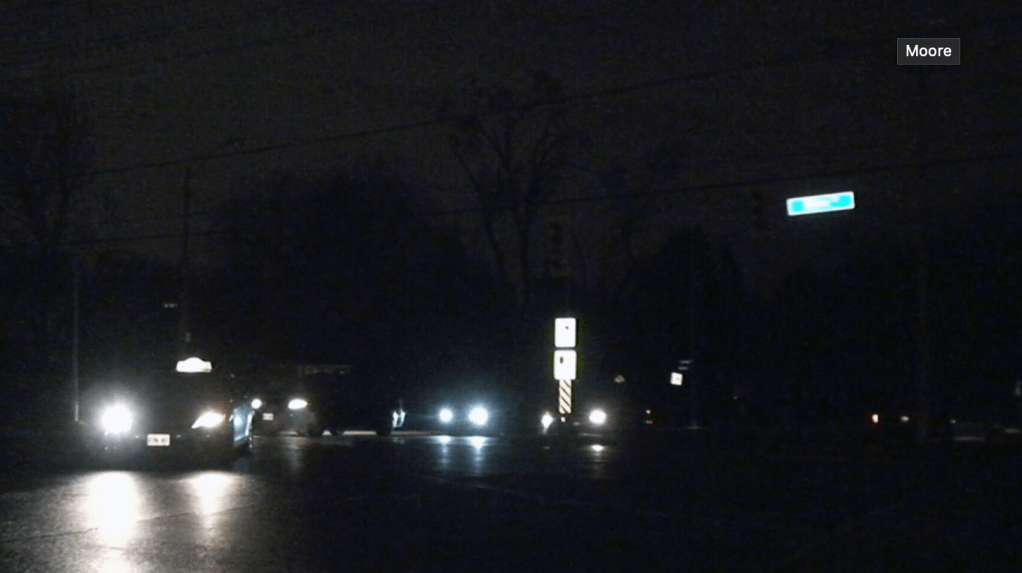
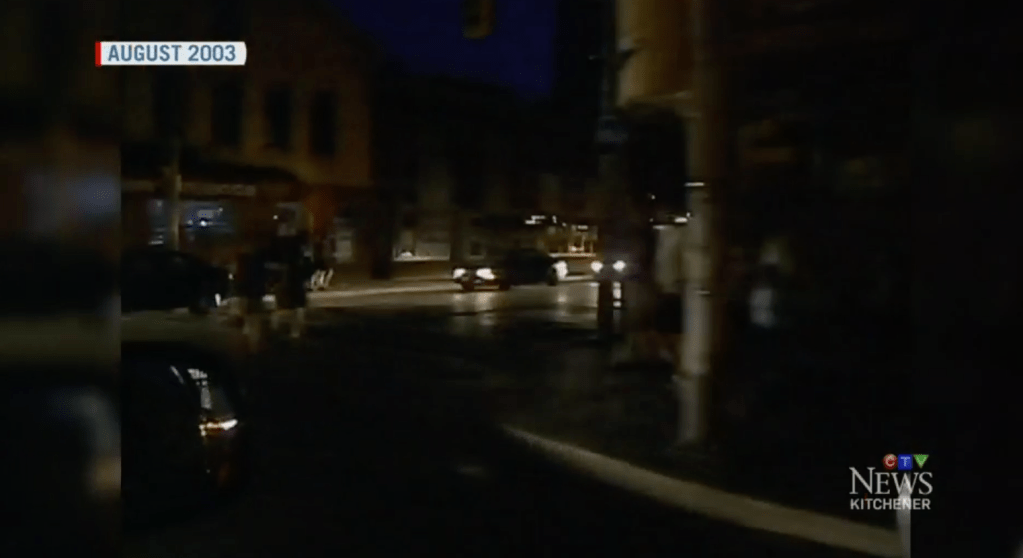
(Photos: Kitchener, Ontario, Canada, 2003 blackout. Photo Source: CTV News)
As I pulled up to the house after a long day at work and an extra-long commute home, I was met by my children and husband sitting out on the front porch. The house was completely powerless, and dinner had turned into a spontaneous BBQ. We rummaged through drawers and cabinets, searching for candles and matches in preparation for an evening without lights or air conditioning.
I was supposed to go out that night with my friend Miranda – we had plans to hit up The Stampede Coral for a much-needed girls’ night out. However, with the power outage, I assumed our plans were ruined. But as luck would have it, The Stampede was connected to a nearby hospital’s emergency generator and was still open for business. So we decided to go ahead with our night out. With no electricity to light my room, I resorted to using the dim glow of my SUV’s sun visor to get ready. It brought back memories of my younger days when I would do whatever it took to have a kid-free night (which now seems like a luxury).
Inside The Stampede, you wouldn’t even know that the city was in total blackout. Country tunes blared from the speakers, cold beers flowed freely, and the atmosphere was electric. And little did we know, but fate had something special in store for us that night – Miranda met her future husband on the dance floor. They say everything happens for a reason, and this blackout just may have been a blessing in disguise for her.
A Canada-U.S. task force probing the blackout estimated Ontario workers lost 18.9 million hours of employment, while manufacturing shipments dropped $2.3 billion
~ Toronto Star, August 22, 2003
Later that evening, then Ontario Premier Ernie Eves declared a state of emergency, instructing nonessential personnel to not go to work the next day. The next day, my husband and I had no work, and the kids had no school. I can’t recall what we did on the day of,f but I can recall being asked by then Premier Eves not to use televisions, washing machines, or air conditioners, if possible.
We were also informed that rolling blackouts could occur for a few weeks.
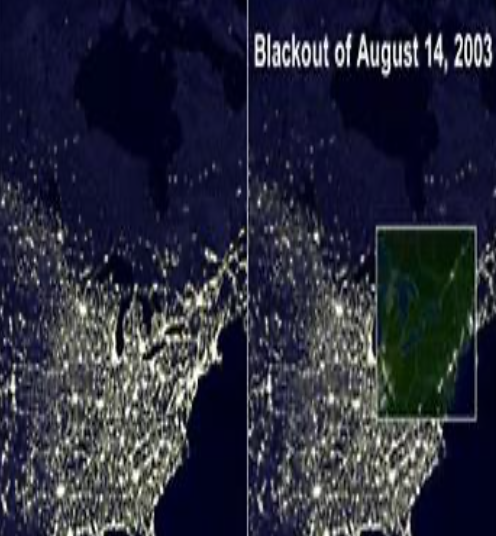
By August 16, 2003, power was fully restored in New York and Toronto, and all areas in between, and with that came the end to our experience of Blackout 2003.
The video below summarizes the events leading up to and during the blackout. Check out Practical Engineering’s YouTube video.
Where were you the day the northeastern seaboard went dark?


 My Tiny World Corner
Leave a comment