This post is an update to genealogy blog #4, which focused on my great-grandfather, Émile Lamothe—whom I always called grand-pépère Lamothe. The original blog, posted on June 3, 2017, has since been deleted, but I’ve recently uncovered new photos and details that I’m excited to share, adding more depth to his story.
Cleophas Émile Lamothe (he went by Émile) was born on June 10, 1897, in Bonfield, Ontario to Marie Louise Charron (38), and Joseph Magloire Lamothe (42). For those of you who don’t know where Bonfield is (and I don’t blame you, I’d be more surprised if you actually knew where it was), it’s a small township in Northeastern Ontario, located on the north shore of Lake Nosbonsing in Nipissing District.
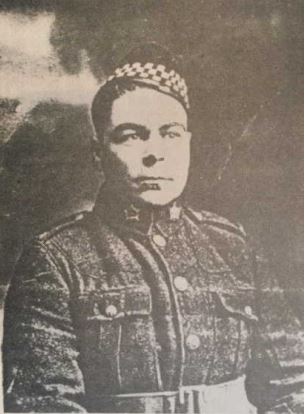
There was no official or standardized system for photographing soldiers during enlistment. Instead, hundreds of thousands of men had their portraits taken privately, usually by local photographers. Most of these photos were captured in small photographic studios, creating personal keepsakes rather than formal military records.
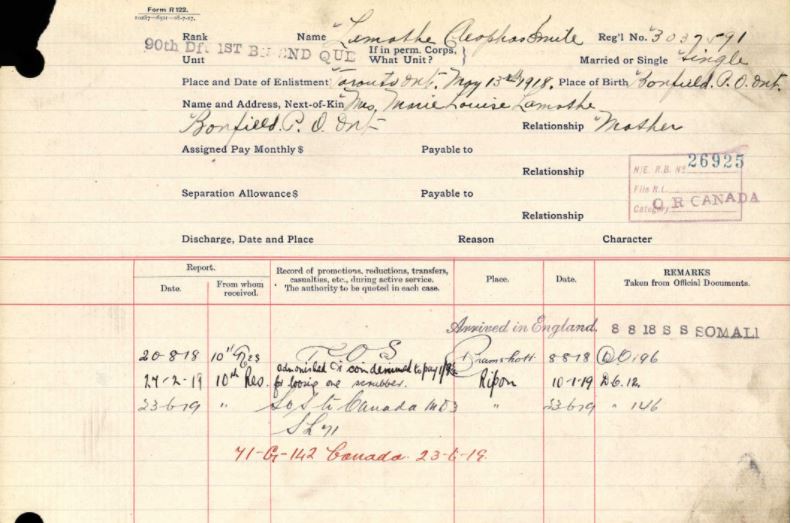
There was some family debate about whether grand-pépère volunteered or was drafted. Research shows that volunteers for the Canadian Expeditionary Force (CEF) ompleted detailed two-sided Attestation Papers at enlistment, listing their personal details, next-of-kin, occupation, prior military service, and physical characteristics, and signed to confirm their willingness to serve overseas. By contrast, men drafted under the Military Service Act (1917) filled out a simpler one-sided form noting only their name, recruitment date, and compliance with registration. Reviewing Émile’s records confirms that he was drafted (as is noted on the Particulars of Recruit below), which aligns with the General Orders for Depot Battalions.
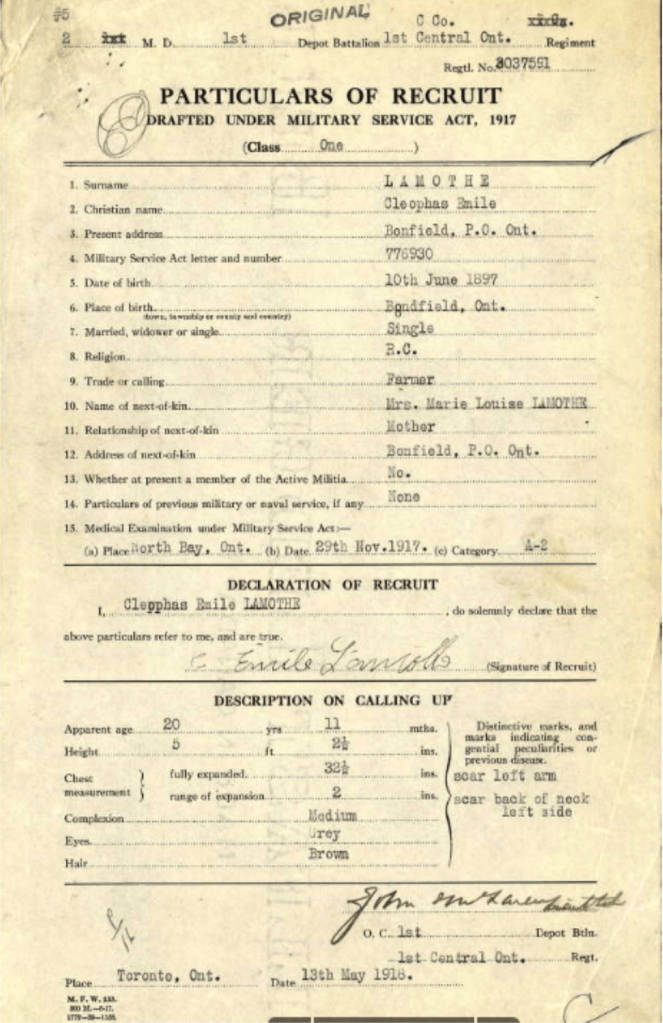
Émile was examined on November 29, 1917, and called up on May 13, 1918, to the 1st Depot Battalion, 1st Central Ontario Regiment, assigned Regimental #3037591, and held the rank of Private. At the time, he was 20 years and 11 months old, stood 5’2.5″, and was a single farmer.
Medical officers assessed recruits to determine their suitability for military duties, using a lettering and numbering system. Émile was classified as Class One, Category A2:
- Class One: single.
- Category A: fit to march, see to shoot, hear well, and endure active service conditions.
- 2: physically and mentally able for overseas service but requiring training.
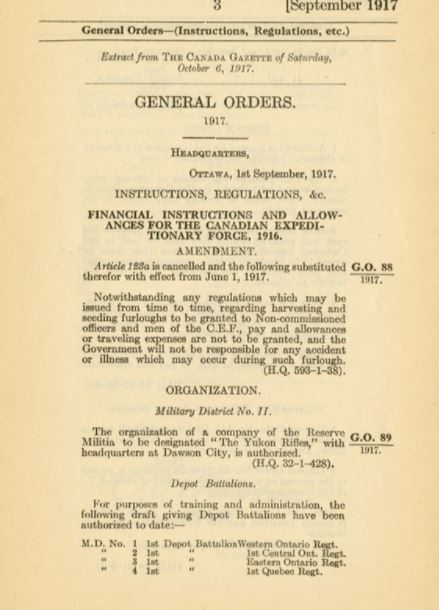
The 1st Depot Battalion, 1st Central Ontario Regiment was a unit designed not for immediate combat, but for training and preparing soldiers to reinforce front-line battalions. Depot battalions like his were formally authorized through General Orders 89 (September 1, 1917) and 57 (April 15, 1918). Around the same time, other depot battalions were established, including the M.D. 4, 1st Depot Battalion, 1st Quebec Regiment.
The primary role of these units was to train recruits and maintain them in peak condition, ready to be sent overseas as reinforcements. Émile’s battalion specifically supported the 4th, 19th, 123rd, and 208th Battalions via the 3rd Canadian Reserve Battalion. These depot battalions were commanded by Lieutenant-Colonel B. H. Belson, ensuring that men like Émile were prepared for service overseas—even if they never went directly to the front lines.
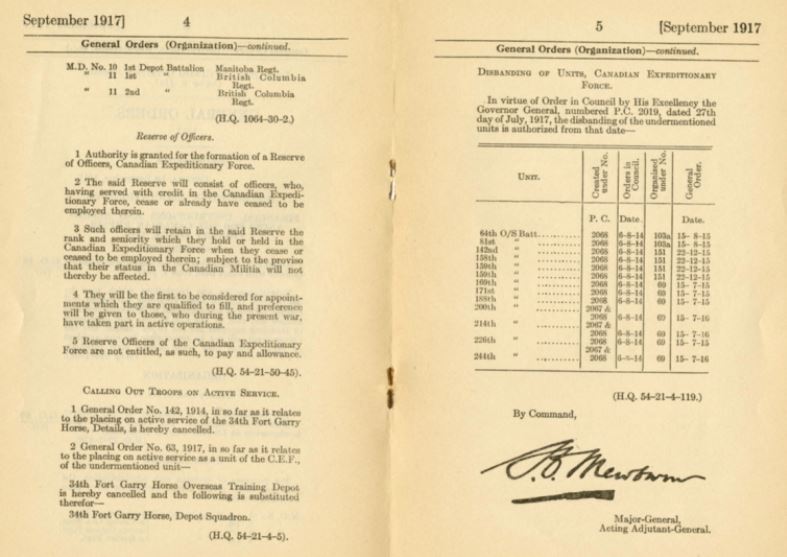
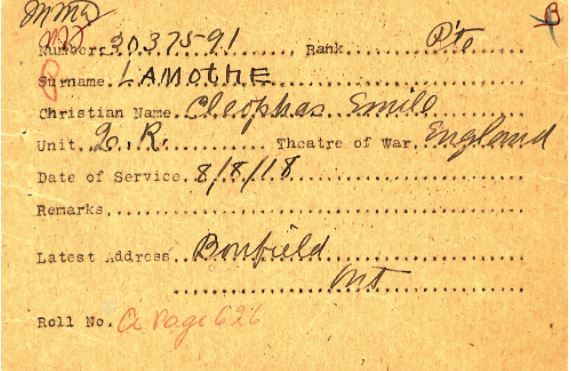
While reviewing Émile’s personnel file, I noticed that he is listed under three different regiments during his time in service:
- 1st Depot Battalion, 1st Central Ontario Regiment
- 1st Depot Battalion, 2nd Quebec Regiment
- 1st Depot Battalion, 10th Canadian Reserve Battalion
Depot battalions were training and reinforcement units, so soldiers were sometimes moved between them depending on where reinforcements were needed. Unfortunately, the records I have don’t clearly indicate exactly when Émile was “SOS” (Struck Off Strength, meaning he left one unit) and “TOS” (Took on Strength, meaning he joined the next).
In simpler terms, while we know which units he was part of, the personnel file doesn’t provide the precise timeline of his transfers. I would need to request his regiment’s war diaries or mobilization accounts to get those details, but these may be limited since depot battalions often didn’t keep extensive operational records. Even without exact dates, this shows that Émile spent his service in various training and reserve units, ready to support the battalions at the front whenever reinforcements were needed.
All WWI military records are available online, so I was able to access his WWI CEF Personnel File.
Military Summary
June 28, 1914: The event that ignited World War I occurred when a young Serbian nationalist assassinated Archduke Franz Ferdinand, the heir to the Austro-Hungarian Empire (Austria), in the city of Sarajevo. The assassin was aligned with the Kingdom of Serbia, and within a month, Austria-Hungary invaded Serbia. Due to the complex web of military alliances across Europe, the conflict quickly expanded into a full-scale continental war. With European powers holding colonies worldwide, the war soon became a global conflict.
August 10, 1914: Canada had established the First Contingent for overseas service, numbering 25,000 men. These volunteers formed the core of Canada’s initial contribution to the war effort.
1917-1918: When it became impossible to recruit enough men for infantry battalions, Canada organized depot battalions. These units trained soldiers who would then be sent to Canadian Reserve Battalions in England as reinforcements for front-line units.
November 29, 1917: Émile was examined and passed his physical fitness test.
May 13, 1918: Emile attested at North Bay, Ontario and was called up to the 1st Depot Battalion, 1st Central Ontario Regiment, assigned Regimental #3037591, and held the rank of Private. At the time, he was 20 years and 11 months old, stood 5’2.5″, and was a single farmer. Men like Émile, drafted in 1918, often faced a short period of preparation before being sent to a depot battalion.
From here, Émile would be posted to Canadian Forces Base (CFB) Valcartier, one of Canada’s oldest military training areas. Located just a few kilometres north of Quebec City. Valcartier was established as Camp Valcartier in 1914, shortly before the outbreak of the First World War. During the war, it served as the primary training base for the First Canadian Contingent, preparing thousands of soldiers for overseas service. By the time Émile arrived in 1918, Valcartier remained a key hub for training and organizing Canadian soldiers before they were sent to England.
A unique feature of Valcartier was Le Chez-nous du soldat part of the Société de Saint-Vincent-de-Paul in Québec during WWI. Founded in April 1918 at 33 d’Auteuil, it was created to help French Catholic soldiers feel less isolated while away from home. The facility offered reading and writing rooms, game rooms, entertainment, concerts, and church services, providing comfort and community for soldiers like Émile during their training. A postcard from Émile’s personal WWI collection shows his connection to this aspect of life at Valcartier, giving a tangible glimpse into the world he experienced while preparing for service overseas.
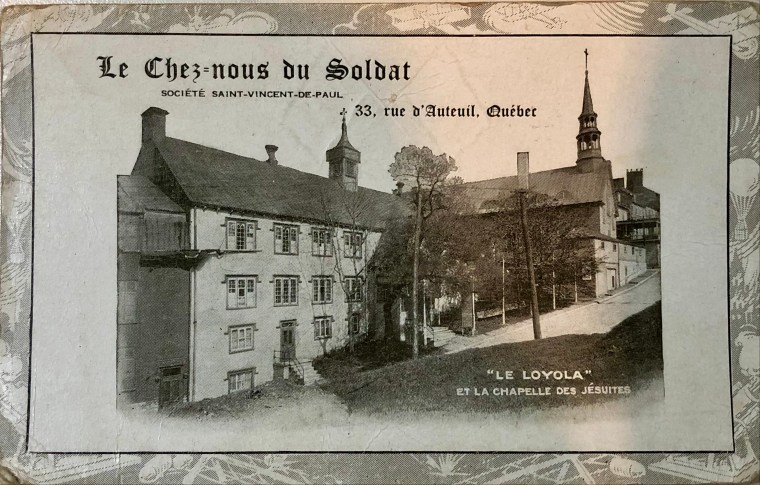
Among the few keepsakes that survived from Grand-Pépère’s time as a young soldier is a small postcard from Le Chez-Nous du Soldat, a humble support house run by the Société de Saint-Vincent-de-Paul for the boys stationed at Valcartier. I never realized what it truly represented until recently. These “soldiers’ homes” were places of comfort and refuge — somewhere a young man far from Bonfield could sit at a wooden desk, write a letter home, sip a warm drink, or simply rest his mind in the company of others who felt the same mixture of fear, pride, and homesickness. When I picture Émile there, perhaps with mud still on his boots from the training fields, tucking that postcard into his pocket before walking back to camp, it makes him feel so vividly human to me. It reminds me that before he was the quiet grandfather on the veranda with a pipe, he was once a 20-something navigating a world much larger than anything he had ever known. That little postcard isn’t just an artifact; it’s a window into the heart of a young soldier who carried both duty and longing with him as he stepped into history.
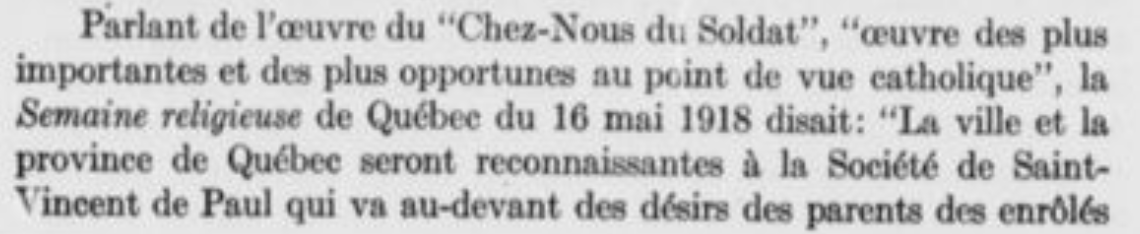
I found this from the book Le Chez-nous du soldat: oeuvre de la Société de Saint-Vincent de Paul, fondée à Québec en avril 1918:

July 21, 1918: After completing his training at CFB Valcartier, Émile embarked for Europe from the port of Québec City. The exact location in the port isn’t recorded, but this was one of Canada’s main embarkation points for troops during the First World War. Here, soldiers were organized, inspected, and loaded onto troop ships, preparing for the long journey across the Atlantic. For many men, including Émile, this marked the first time they would leave their homes, families, and the familiar landscapes of Canada behind.
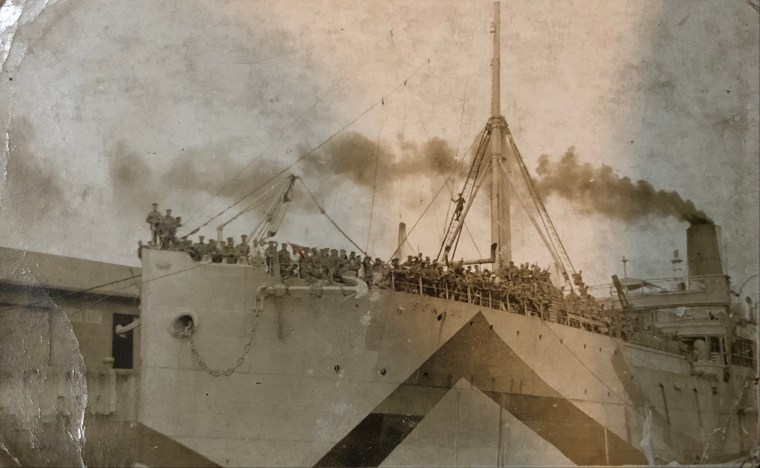
August 8, 1918: Émile arrived in London, England, aboard the H.M.S. Somali. The Somali had spent its early years as a commercial passenger and cargo vessel, travelling established routes long before the world was at war. But like so many ships of its era, it was requisitioned when conflict broke out and converted into a troop carrier. For young men like Émile, stepping aboard the Somali marked the beginning of a completely unknown chapter. The crossing itself would have been a mix of excitement and unease — packed quarters, long days at sea, and the quiet understanding that German U-boats prowled the Atlantic beneath them. Yet somehow, despite the danger and the uncertainty, that ship carried him safely across the ocean and into the heart of the war that would shape the rest of his life.
This photo is from my Grand-Pépère’s personal collection of his WWI memorabilia.
August 20, 1918: Émile was Taken on Strength at Bramshott Military Camp in Hampshire, England. Bramshott was one of the main hubs for Canadian soldiers arriving overseas—a place where thousands of young men, far from home, trained, waited, and wondered what lay ahead. For Émile, stepping onto Bramshott Common would have been overwhelming; rows of huts stretching across the heath, the constant movement of troops, the sound of drills and shouted orders, and that unmistakable mix of damp English air and woodsmoke.
Bramshott was a temporary camp, thrown up quickly to handle the massive wave of Canadians headed for the front. It was one of three main Canadian military sites in the Aldershot area, alongside the permanent camp at Bordon. This was where depot battalion soldiers like Émile waited—trained, drilled, and lived in a strange in-between space. Bramshott and nearby Witley Camp were places of transition: where boys became soldiers, where the excitement of enlistment faded into routine, and where the reality of war began to settle on young shoulders.
Life there would have been strict but safe compared to the front. Days ran on a rhythm: early mornings, drill lines forming on the parade ground, the thud of boots marching in unison, rifles slung against shoulders. Soldiers practiced marksmanship, ran physical training circuits, kept their kits in order, stood guard, scrubbed floors, and followed the endless routines that kept a military camp running. For Émile, a private in the 1st Depot Battalion, this period wasn’t glamorous—it was about readiness. His battalion existed to reinforce combat units already in France and Belgium; in his case, the 4th, 19th, 123rd, and 208th Battalions through the 3rd Canadian Reserve Battalion.
I often picture him there—just 21 years old, thousands of miles from Bonfield, adjusting to a life of orders, whistles, and inspections. The damp English air, the unfamiliar accents, the sound of boots on gravel. I imagine him lying in his bunk at night, listening to the quiet breathing of the men around him, wondering if he’d soon be called forward to the trenches, wondering how his parents were back home, and whether he’d ever return to that little white-and-green house on Yonge Street.
Because Émile was drafted late in the war (May 1918), everything for him moved quickly: the crossing, the processing, the training. And then—almost as soon as he arrived—the war ended. The Armistice was signed in November 1918, while he was still at Bramshott, still preparing for a deployment that would never come. He never fired a shot in combat, not because he wasn’t prepared, but because time simply ran out. His service was about being ready, standing by—one of the thousands of men whose training sustained the front-line battalions. Without depot soldiers like Émile waiting in reserve, the war effort could not have functioned.
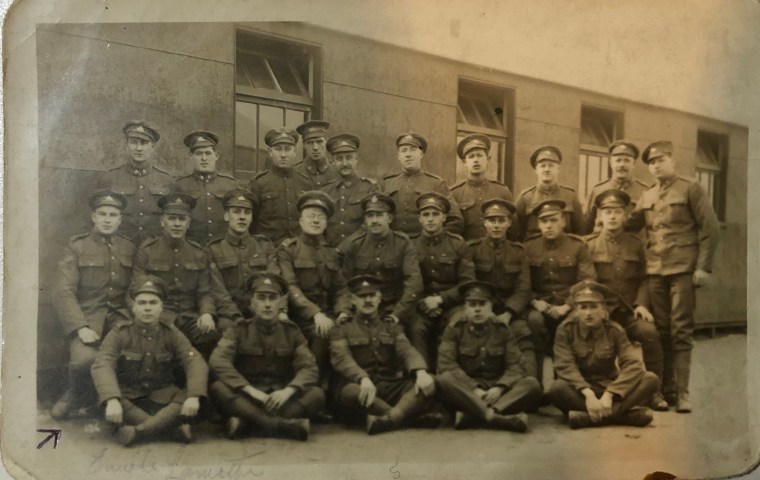
Among his personal belongings is this real photo postcard of him and his regiment. Real photo postcards were actual photographs printed on postcard paper, meant to be mailed home. But Émile’s were never sent; the backs are blank. They feel more like mementos—quiet souvenirs from a chapter of his life spent far from home. Maybe he meant to write on them and never did. Maybe he kept them as reminders of the men he trained with, the place he lived, the uncertainty he carried. Those images are one of the few tangible traces of what his everyday life at Bramshott looked like: rows of huts, men posing in formation, muddy boots, moments of laughter between drills, the kind of camaraderie that grows quickly when young men are far from everything familiar.
Through them, it becomes easier to imagine Émile—not as just a name in a service record, but as a young man standing on an English parade ground, doing his part, waiting to be called forward into a war that ended just before he got there.
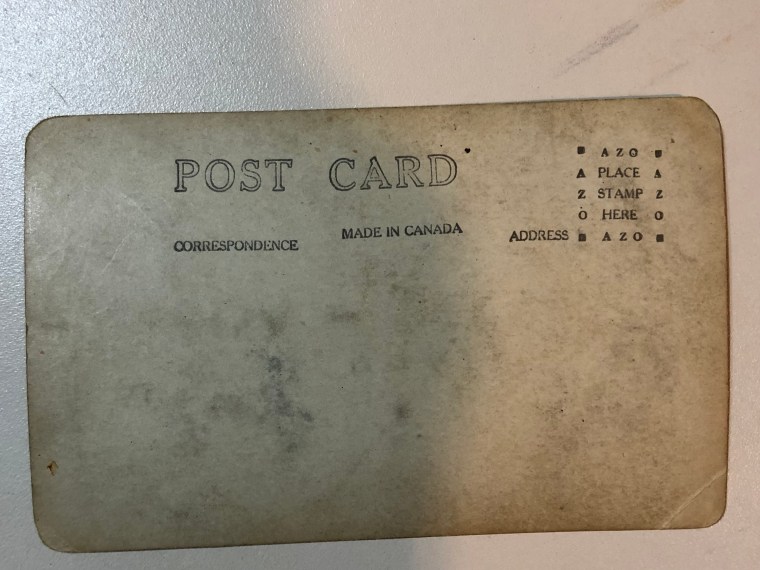
Stamp boxes are the small rectangular boxes printed on the back of some postcards where the stamp is to be stuck. One of the popular photographic papers used for printing postcards was Kodak Professional AZO Paper. This was suitable for making contact prints, rather than enlargements, for which the source of light would be much weaker.
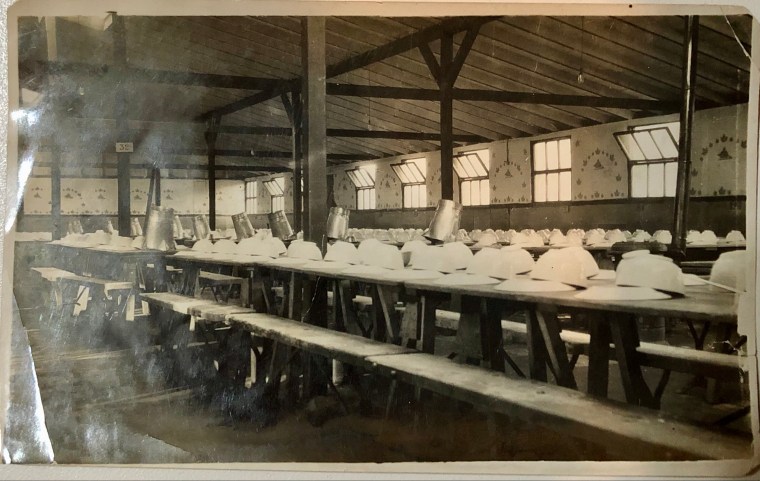
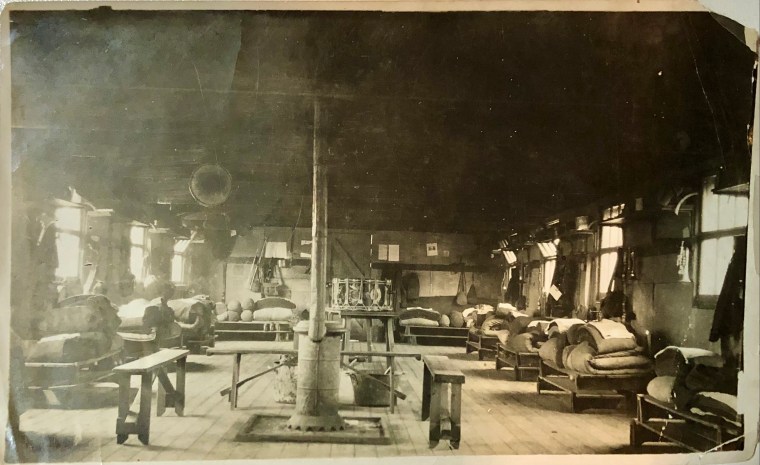
The photos below appear to be stock photos/postcards from my grand-pépère’s personal collection. I’m not certain if this is Bramshott, Aldershot or Borden (need to do some research).
November 11, 1918: The war officially ended at the 11th hour of the 11th day of the 11th month. For Émile, still training at Bramshott Camp in England, the news would have arrived not through the sounds of guns falling silent, but through word spreading quickly from soldier to soldier. I imagine a mix of relief and disbelief; he had crossed the ocean expecting to be sent to the front, and suddenly the fighting was over before he ever got the call. There were likely cheers, small celebrations, and a sense of gratitude that the killing had finally stopped.
The 10th Canadian Reserve Battalion had a long and complex history. It was originally organized at Shoreham on January 4, 1917, under Lieutenant-Colonel H. DesRosiers, formed by absorbing the 69th and 163rd Battalions. Later, it also absorbed the 178th Battalion on March 15, 1917, and the 258th Battalion on October 17, 1917. During the war, the battalion reinforced the 22nd and 150th Battalions, with the 150th absorbed in February 1918 after the disbandment of the 5th Division. In March 1918, the 10th was briefly absorbed into the 20th Canadian Reserve Battalion but was reconstituted at Bramshott on April 8, 1918.
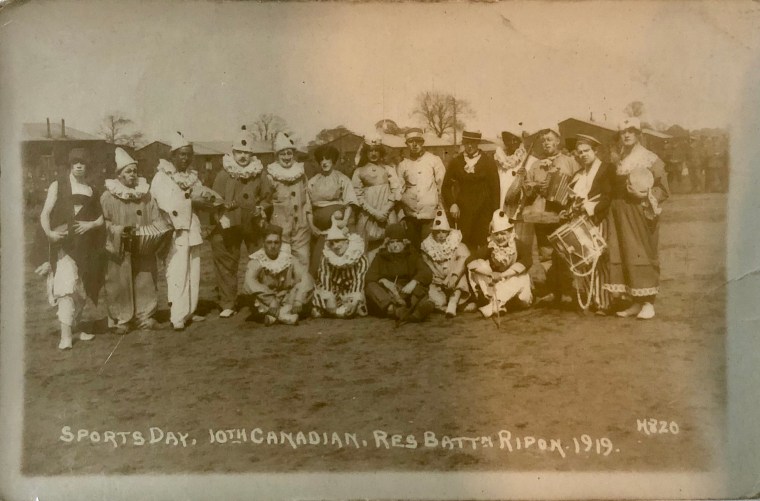
After the Armistice, the battalion moved to Ripon, England, on February 9, 1919. Soldiers like Émile spent their days performing essential post-war duties: cleaning, maintaining equipment, helping with administrative work, and generally keeping the camp running while waiting for their turn to return home. Life wasn’t glamorous, but it was necessary work, and it kept the men busy after months of training and anticipation.
February 19, 1919: In Ripon, Émile was admonished and fined 1 pound, 9 shillings, and 5 pence for losing a “scrubber.” When I first saw that in his service record, I couldn’t help but pause—what on earth was he doing after the war that involved misplacing a scrubber?
After speaking with the Genealogy Assistant at The National Archives in Ottawa, it all made sense. Even after the fighting ended on November 11, 1918, soldiers like Émile weren’t immediately sent home. The sick, injured, and those with priority needs boarded the first troop ships. The rest—able-bodied men like Émile—stayed behind at depots and reserve camps, helping with the enormous chore of shutting down an army.
They cleaned barracks and mess halls, scrubbed floors, maintained equipment, and packed up supplies that had been scattered across England during the war. In a busy post-war camp like Ripon, with hundreds of soldiers constantly coming and going, it would have been easy for a scrubber—a long-handled cleaning brush or mop—to be misplaced, borrowed, or simply lost during the shuffle of duties.
What stands out most is the fine itself. It shows just how strictly the military accounted for every piece of equipment, no matter how small. Émile’s “scrubber incident” may seem trivial today, but it gives a tiny, very human glimpse into what life looked like after the guns went silent: mundane chores, tight discipline, and the slow, restless wait to finally board a ship home.
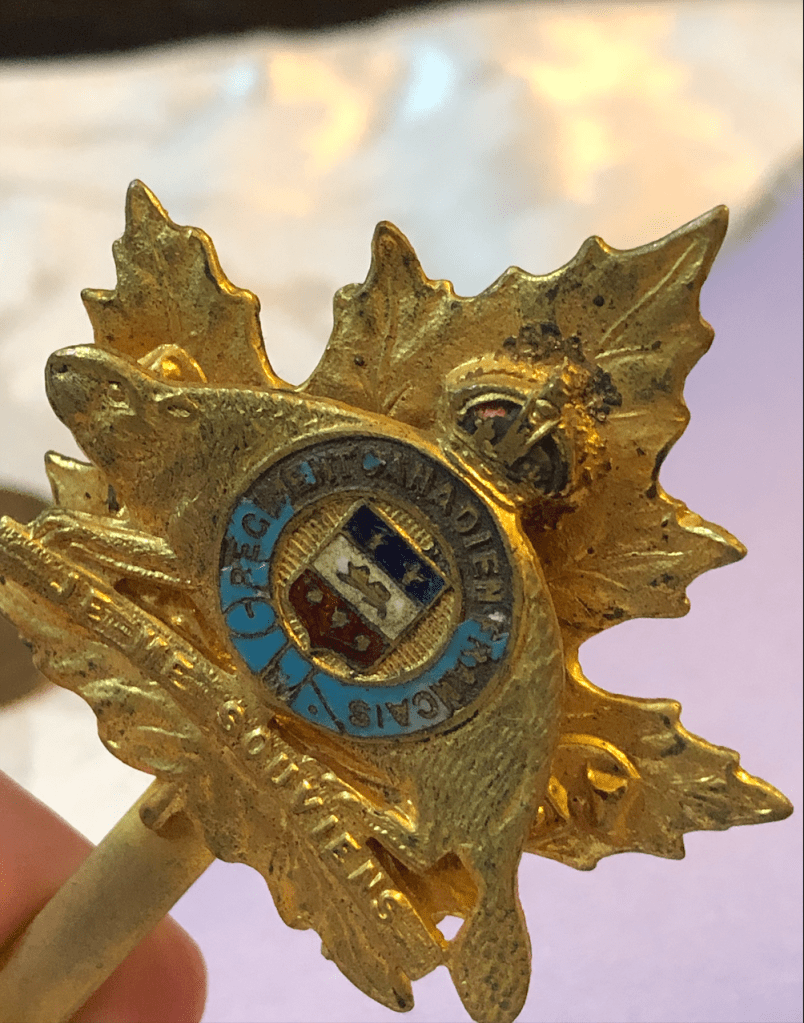
Émile’s Collar Badge – 2nd Quebec Regiment, 1st Depot Battalion
Émile’s brass collar badge is a beautifully detailed piece of military insignia, rich in symbolism. It is shaped as a maple leaf, surmounted by the King’s crown, which represents loyalty to the Crown and service in the Canadian forces. Across the top of the oval strap, the inscription reads “2EME REGT DE QUEBEC”, identifying the regiment.
At the centre of the badge, a pair of fleur-de-lis sits above a heraldic lion, which itself rests above three maple leaves—symbols reflecting French-Canadian heritage and Canadian identity. A scroll runs across the centre of the strap, passing behind the segment holding the lion. The left portion of the scroll bears the word “PREMIER”, the right “BATTALION”, marking it as the First Depot Battalion of the regiment.
Along the bottom of the strap, behind the clasp and buckle, is the motto “JE ME SOUVIENS” (I Remember), the official motto of Quebec, with “CANADA” displayed above the leaf stalk.
This collar badge would have been worn on Émile’s uniform as a mark of his identity within the 2nd Quebec Regiment, 1st Depot Battalion, signifying both his regiment and his role within Canada’s mobilized forces during World War I. For soldiers like Émile, depot battalions were training and support units, and the badge symbolized their place in the broader CEF, ready to reinforce front-line battalions if called upon.
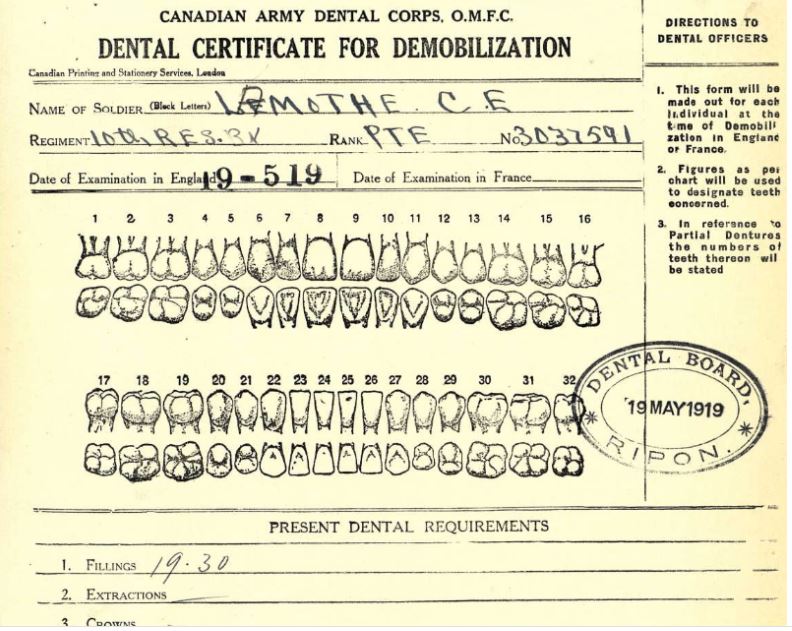
May 19, 1919: Dental Exam for demobilization in Ripon
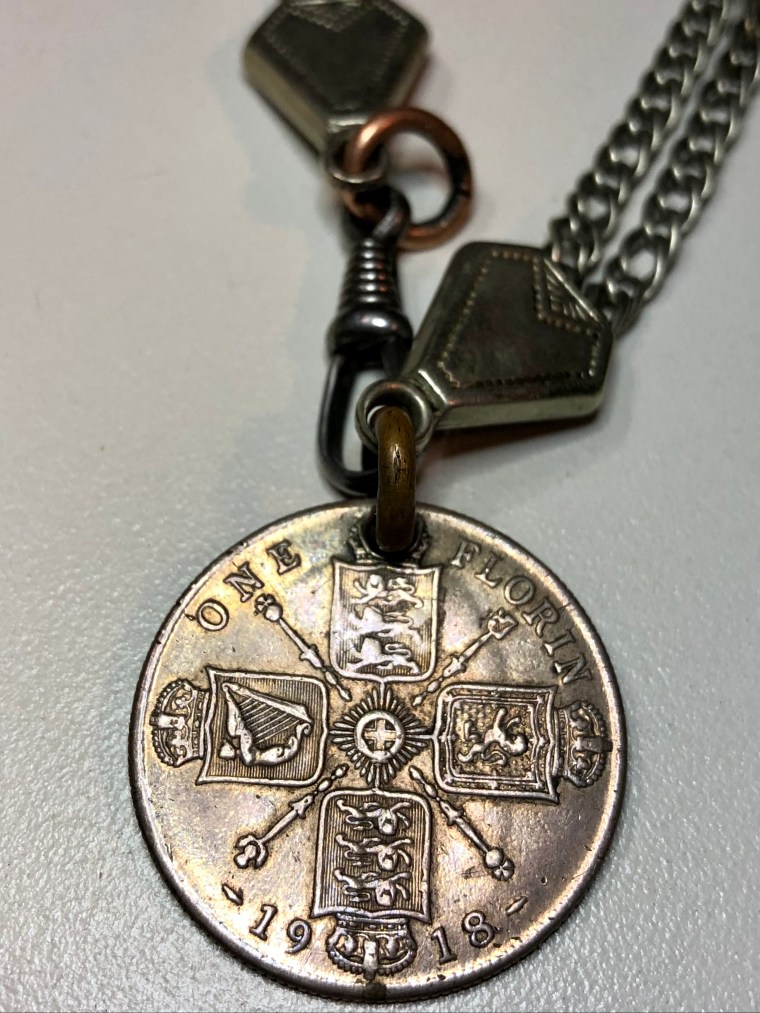
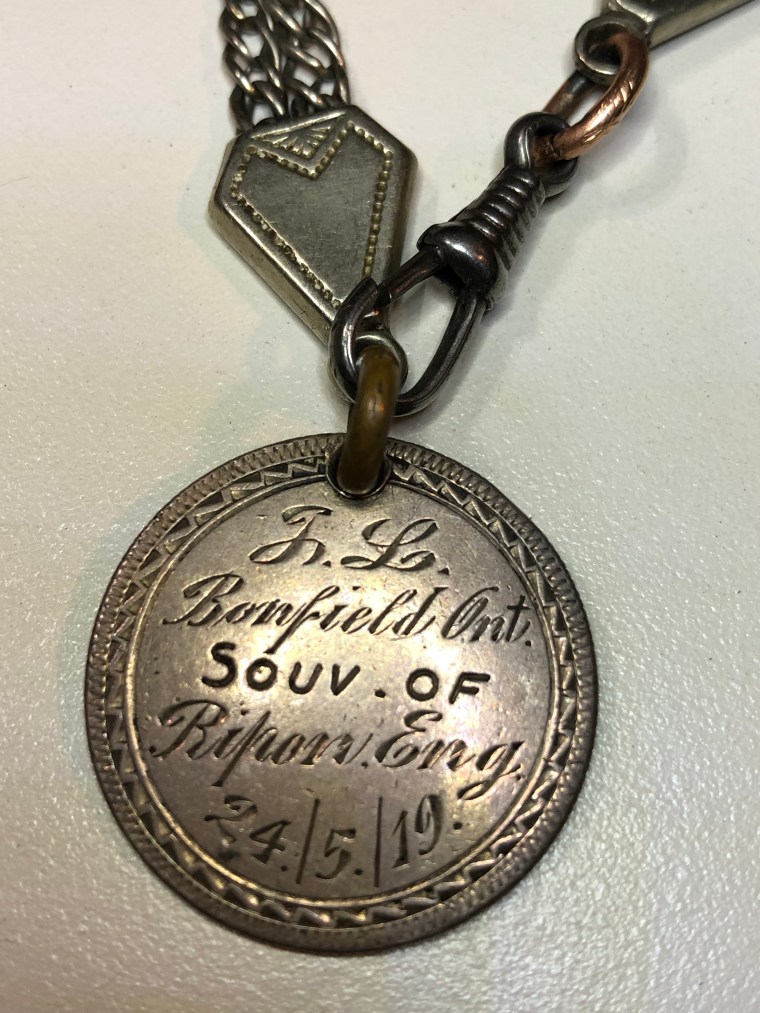
May 24, 1919: While stationed in Ripon, England, Émile had a small custom medallion made. The front mimics a British Florin coin, while the back is engraved with the initials “FL” and the inscription: “Bonfield, Ontario – Souvenir of Ripon, Eng 24/5/19.”
The “FL” remains a bit of a mystery—it doesn’t match Émile’s given names, Cleophas Émile Lamothe. It may have represented a nickname, a friend, or a private code meaningful only to him.
Soldiers often commissioned such medallions as personal keepsakes—tiny, tangible reminders of the time spent far from home. For Émile, the medallion captured a moment during the slow, long months after the Armistice, when he and his fellow depot battalion soldiers performed duties like cleaning, maintaining equipment, and waiting for their turn to return home.
This small object serves as a deeply personal memento: a connection to his life in Ripon, a reminder of service and survival, and a silent testament to the experiences he carried back to Bonfield. Even decades later, it whispers a story of a young man far from home, keeping a piece of that time close to his heart.
June 14, 1919: Émile was officially SOS at Ripon, becoming part of the 10th Canadian Reserve Battalion (Québec). By this point, many of the other depot battalions he had been assigned to were being demobilized and sent home, so soldiers were consolidated into remaining units to manage post-war duties and the careful process of repatriation.
Finally, the 10th Battalion returned to Canada on June 24, 1919, and was formally disbanded on July 2, 1919. For Émile, this marked the end of his overseas service, the conclusion of the war experience that had shaped his early adult years, and the beginning of his journey back home to Bonfield.
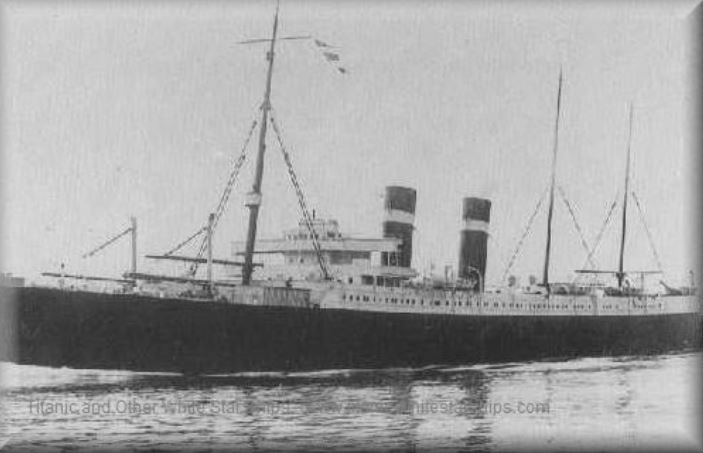
June 23, 1919: Émile embarked from Liverpool aboard the SS Belgic, a ship operated by the White Star Line. The Belgic had a fascinating history—she was originally meant to be named Ceric and serve as a passenger liner to replace the Titanic in 1914. But the outbreak of the First World War changed everything.
During construction, the ship was renamed Belgic IV. Launched in January 1914, her completion was delayed by the war, and when she finally entered service in 1917, she was no longer a luxury liner but a troop transport and freighter, carrying soldiers, supplies, and equipment across the Atlantic.
For Émile, this voyage must have been a mix of relief, anticipation, and reflection. After months of training, waiting, and post-war duties in England, he was finally headed home to Canada. The Belgic would carry him across the ocean, part of the massive effort to bring thousands of Canadian soldiers safely back after the end of the war.
July 1, 1919: Émile finally returned to Canada, disembarking at Halifax, Nova Scotia, one of the primary ports used for repatriating Canadian soldiers after World War I. After months abroad—training, waiting, and performing post-war duties—he was back on familiar soil, no doubt filled with a mix of relief, exhaustion, and the anticipation of seeing home and family again.
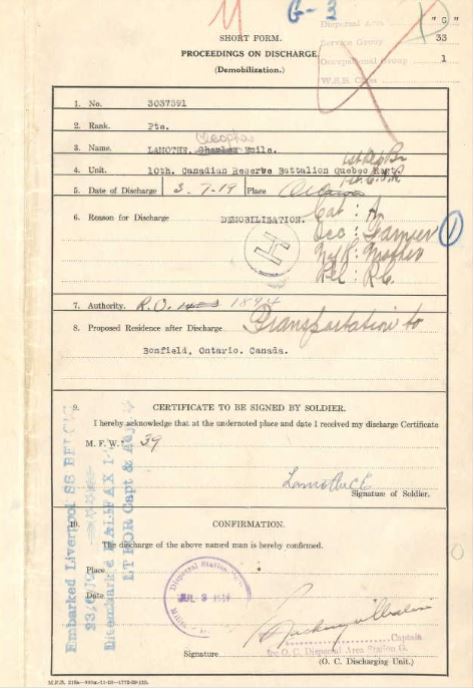
July 3, 1919: Émile was officially discharged as part of the demobilization process. He was formally released from military duty and returned to civilian life—a transition that, while celebratory, must have come with its own challenges as he adjusted back to the rhythms of everyday life in Bonfield.
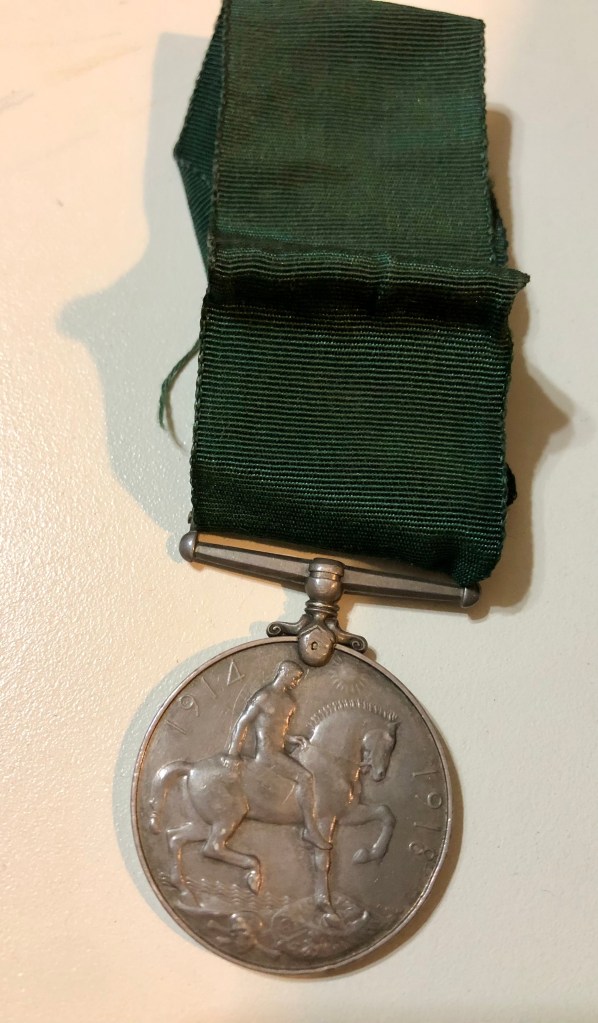
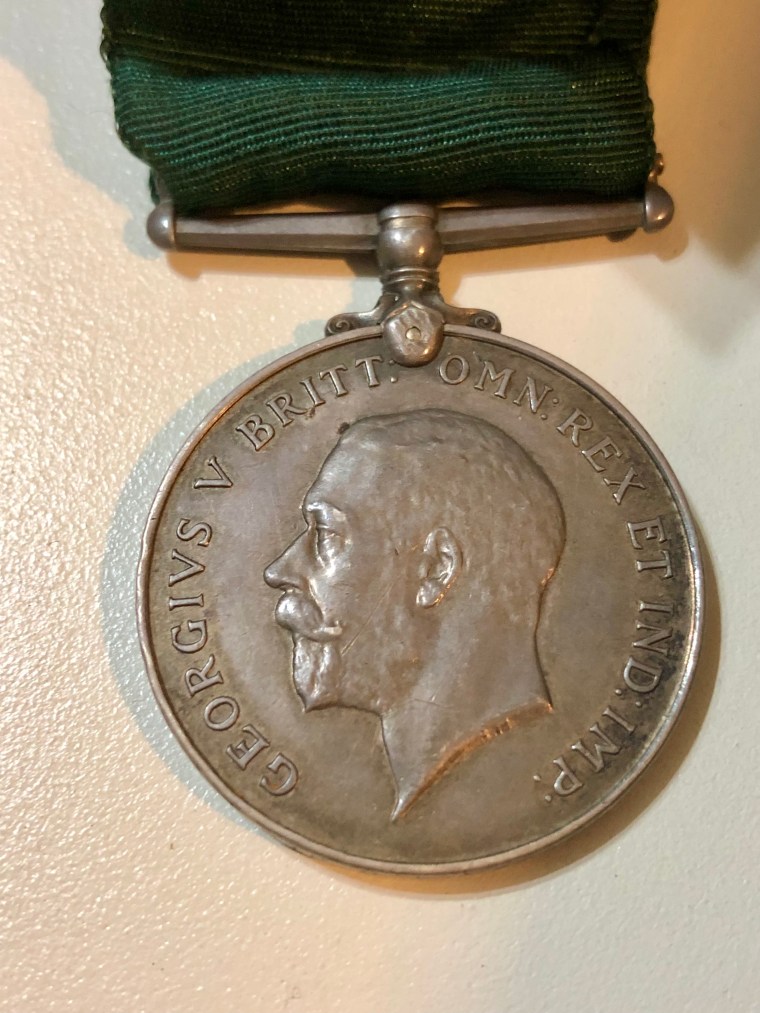
July 26, 1919: Émile was officially authorized to receive The British War Medal. This medal was awarded to all ranks of Canadian overseas forces who had served abroad between August 5, 1914, and November 11, 1918, or who had been in a theatre of war. In total, 427,993 medals were issued to members of the CEF.
For Émile, receiving this medal would have been more than just a decoration—it was a tangible recognition of all he endured and contributed, from the long months of training in Canada to the waiting, work, and preparation in England. It was a small, shining reminder of his service and the part he played in the Great War, something he could keep close as he returned home to Bonfield.
DESCRIPTION:
This circular, silver medal measures 1.42 inches in diameter.
Reverse: Depicts St. George on horseback, armed with a short sword, symbolizing the physical and mental strength required to achieve victory over Prussian forces. The horse tramples a Prussian shield and skull and crossbones, and near the upper right rim is the sun of Victory. The dates 1914 and 1918 appear in the left and right fields, marking the span of the war.
Obverse: Features King George V, bareheaded, facing left, with the inscription: GEORGIVS V BRITT : OMN : REX ET IND : IMP :
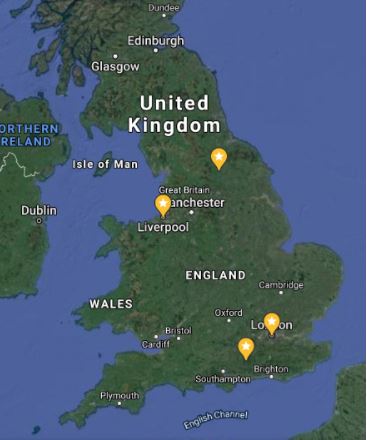
Here’s a map of where I’ve been able to locate Émile while in the UK (pinned are Ripon, London, Liverpool and Bramshott).
Below are some of his Discharge Papers:
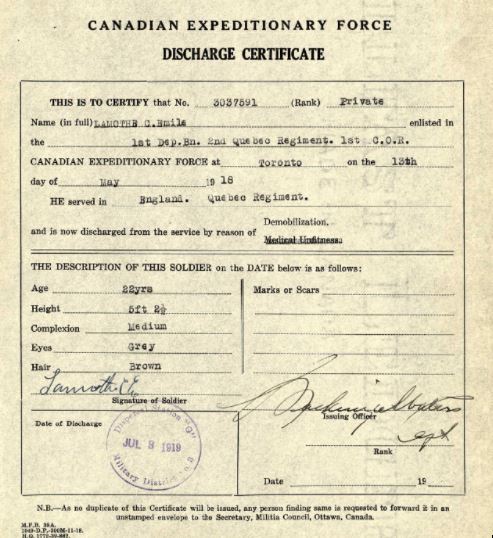
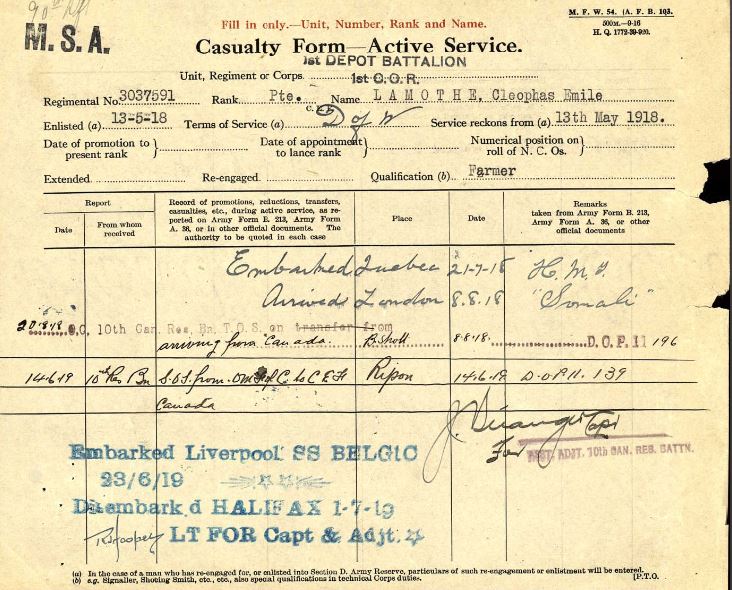
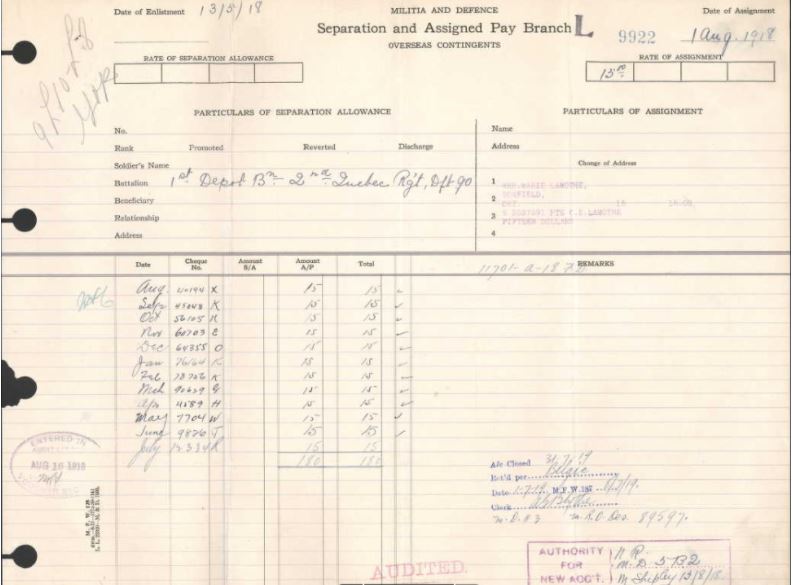
After being discharged from the military in July 1919, Émile returned to Bonfield, Ontario, resuming civilian life.
Several years later, he married Marcella Houle on September 25, 1927, beginning the next chapter of his life as a husband and, eventually, a father.
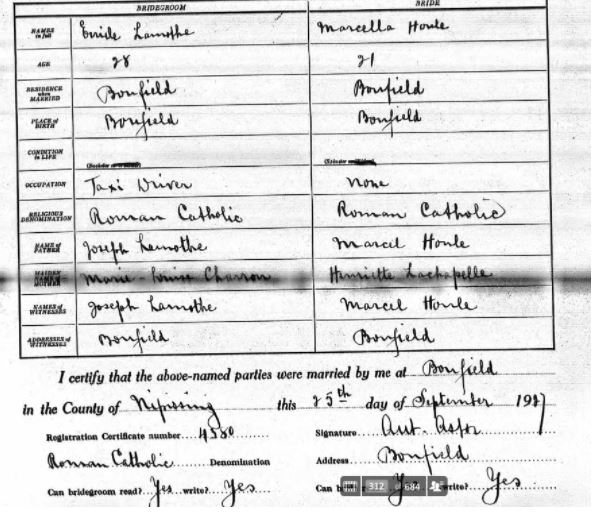
Émile and Marcella had four children: Clifford (1928–2014), Thelma (1930–present), Edward (1932–1978), and Mary (1943), who tragically lived only 2 hours and 10 minutes.
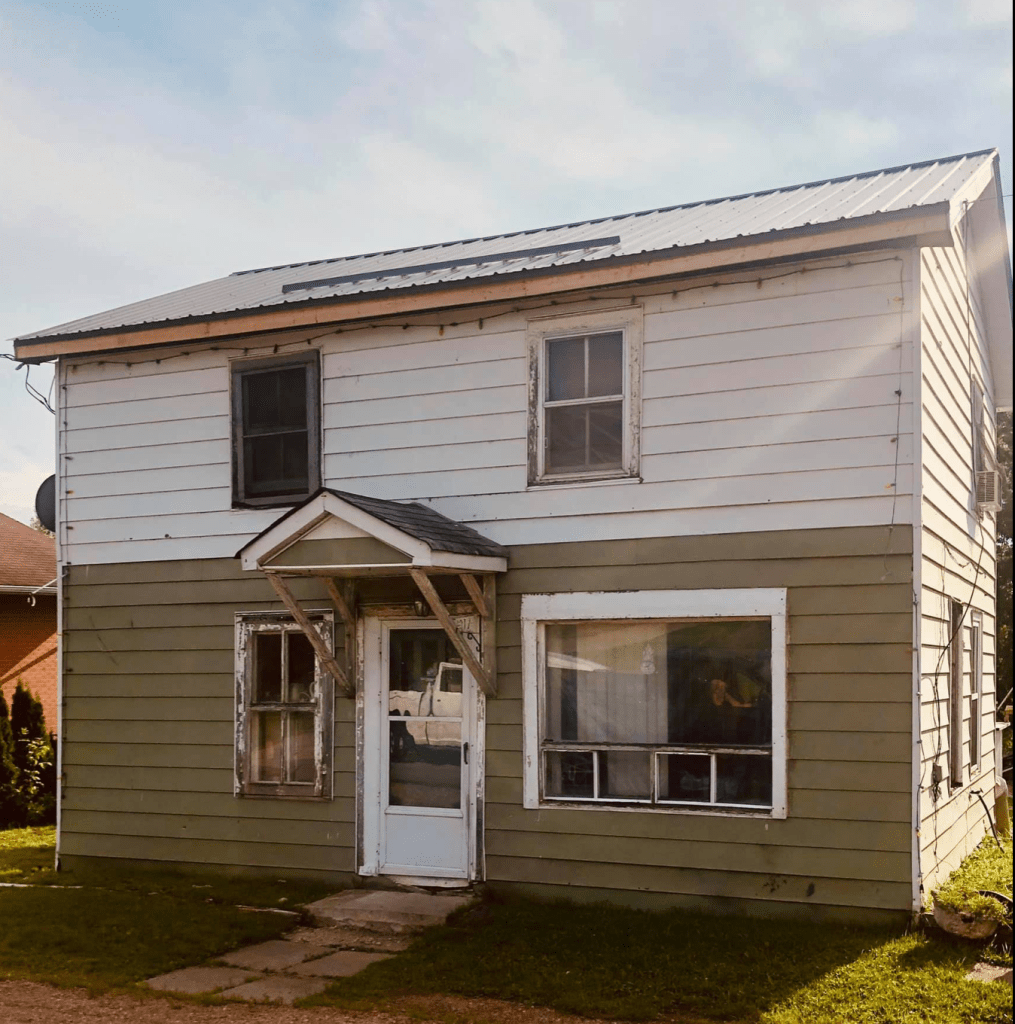
When I was young, we’d drive up from Kitchener to visit them—it was about a four- to five-hour drive. They lived at 217 Yonge Street, a white and light green house with a large wrap-around veranda. I always thought it was cool and a little creepy because it was so old. It had belonged to grand-mémère Lamothe’s parents, and she was born there.
Walking in the front door, you went straight into the living room on the left. The staircase to the second floor was straight ahead on the right, with a white railing. I remember grand-mémère rocking in her chrome glider by the window, watching her shows.
The room immediately to the right when you walked in the front door used to be a funeral parlour, and as a child, that creeped me out. Those were days when pretty much all funerals were home funerals. It was always the practice to be with loved ones as they died in our homes. Then, with their own hands, they washed, dressed, combed their hair, laid them out, and lamented. While neighbours built the coffin, others dug the grave, made a meal, or sat with the body for two or even three days. The expectation in those days that one would die and be cared for at home was such a sure thing that folks even built funeral-friendly elements into their homes. Nonetheless, it was the room that I could always envision dead people in. In my childhood years, it was the room where they’d set up their Christmas tree and where the whole lot of us would open gifts before/after midnight on Christmas Eve mass at St. Bernadette’s Parish down the road.
When you walked toward the back of the house from the entrance, I recall there being a long dining table before you stepped through a single door on the right to the kitchen. Just before you entered the kitchen, on the right-hand side, there was a cabinet, where grand-mémère would hide all the goodies and where I may or may not have snuck a few extra pieces of liquorice. The kitchen was an addition; it was big (or at least it seemed big in the eyes of a little kid) and filled with white cabinets, with silver handles. There was a kitchen table in there with a back bench, and on the back wall was a large picture hanging of The Last Supper.
The house had a small half-bath on the main floor. When I was little, there was no bathtub or shower, so we’d bathe in the kitchen sink. We weren’t allowed to flush the toilet ourselves—grand-mémère or grand-pépère would use a bucket of rainwater to do it manually.
Grand-mémère would get up early in the morning, and when we’d come down, she’d make us peach or maple soupane (French slang for porridge) and the best Map-O-Spread (Composed Sugar Spread) toasts.
The kitchen had two doors—one led to the back veranda that wrapped around toward the front of the house, and the other opened onto the old step-up laundry area with the clothesline. They never had a dryer. Grand-mémère did all the laundry by hand. They had an old-fashioned washing machine: you’d wash the clothes, feed each piece through a wringer, and it would fall into a bucket of clean water to rinse. Then she’d wring it again by hand before hanging it out to dry on the line.
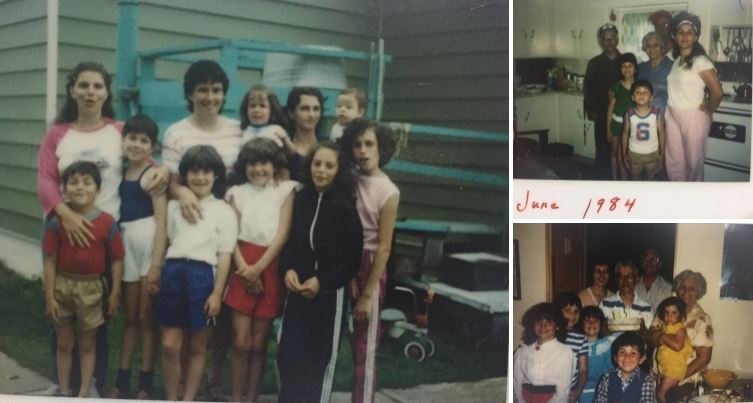
Coming from their generation, and with the house drawing water from a well, I understood they were worried it might run dry. So, at night, we had a large marmite (French for pot) at the top of the stairs if we needed to pee. Grand-mémère would empty it first thing in the morning.
I also remember that the bedrooms didn’t have doors—they had curtains. There were no closets, just hooks on the walls. The house had three bedrooms plus grand-mémère and grand-pépère’s master bedroom, which faced Yonge Street at the front of the house.
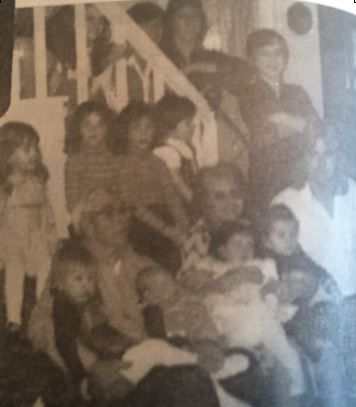
I remember Grand-Pépère fiddling around in the back tool shed. As a child, I’d go in there and think, “Wow, this place is filled with really cool old junk.” Now, as someone who loves thrifting for old relics, I would give anything to sort through it.
They had a garden out back with a rain barrel to collect water, and I remember the house wasn’t too far from the train tracks because I could hear the whistle at night while lying in bed.
It’s when I sit here and reminisce on my life that I realize how much I wish I had the same thirst for knowledge back then as I do now. The things I would have loved to ask Grand-Pépère! Imagine hearing firsthand about life at the turn of the 20th century—from 1897 all the way to 1992. He witnessed so many profound changes in the world. He saw the first Ford Model T and lived to see a Lamborghini roar down the roads. He went from coal and wood fires to electricity, indoor plumbing, telephones, radios, and televisions—all within his lifetime.
He lived through two World Wars, experiencing one of them directly as a young man in Europe. He would have seen technological marvels, social revolutions, and shifts in culture that would have seemed unimaginable to the people of his youth. Oh, the stories he could have told—the adventures, the struggles, the humour, the wisdom—while puffing on his pipe, sitting on the front veranda.
I often wonder about the little details of his everyday life, the lessons he learned, and the perspective he carried from nearly a century of living. The world changed dramatically around him, yet he carried on, witnessing it all with the resilience and curiosity that marked his generation.
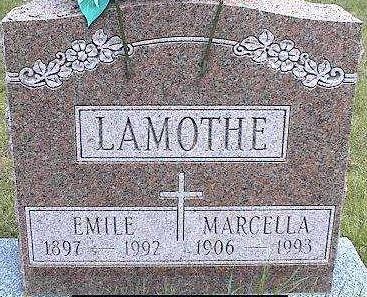
Émile passed away in his hometown on April 17, 1992, at the age of 94. Marcella followed the next year, passing at the age of 87.
Émile and Marcella are laid to rest together at Ste. Bernadette Cemetery in Bonfield, a testament to their lifelong partnership. They shared 65 years of marriage, building a family, a home, and countless memories that spanned almost the entire 20th century. Their grave marks not just the end of their lives, but a celebration of a life lived through decades of change, love, and resilience.
When I was up in Bonfield last summer, I made a point to stop by 217 Yonge Street, the house of so many childhood memories. I have to admit, it was deeply disappointing—heartbreaking, even. The house barely resembles the home I remember. Once grand and full of life, it now looks run down, dilapidated, and completely unkempt. The large white wrap-around veranda, where we spent so many summer afternoons, has been torn down. The big kitchen addition, the heart of so many family gatherings, is gone. Standing there, I felt a pang of sadness, a sense of loss—not just of the house, but of the vibrant world of my childhood that it once held. It’s strange how a place can hold so much memory, and yet, over time, the world moves on, leaving only echoes of laughter and warmth in its place.



 My Tiny World Corner
Leave a comment