I was driving to Saskatoon, Saskatchewan (try saying that ten times fast!) to visit some friends when the flat prairie landscape suddenly gave way to a small surprise. About 55 km past Yorkton, coming from Manitoba on Highway 16, a domed church roof peeked over the horizon on the right. In a landscape that’s mostly flat, anything rising above the plains is hard to miss.
As an urbexer, curiosity quickly kicked in. I turned off the highway and soon found myself at the little town of Insinger — today often described as a ghost town. Although it’s now home to very few residents, this place once had a thriving small prairie community.
The first settlers arrived in the area in the 1890s, mostly Ukrainian immigrants drawn by homesteading opportunities and the arrival of the railway in 1903. The community was originally called Lawrie when a post office opened there in 1898, but it changed its name to Insinger in 1907, named after a local settler and politician, Fredrik Robert Insinger.
At its peak in the mid‑20th century, Insinger had over 100 residents, supported by multiple general stores, a hotel, a cafe, a school, a hall, garages, and grain elevators — typical infrastructure for an agricultural town in that era.

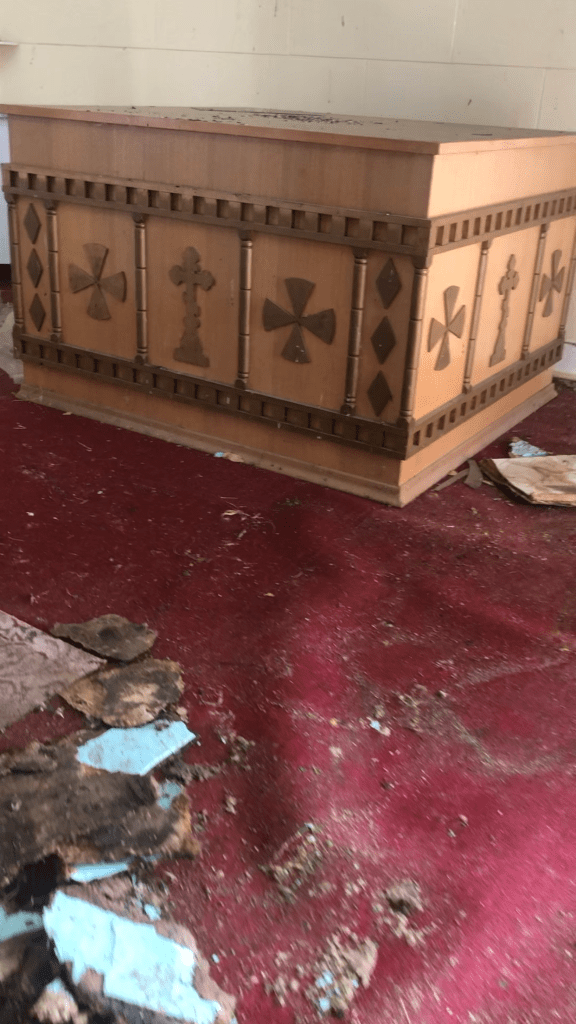
The centrepiece of my visit was the Ukrainian Orthodox Church of the Holy Ghost, built in 1942. Its distinctive domed roof hints at the Eastern European heritage of the settlers. Over time, as the population declined, the congregation dwindled, and the church was eventually abandoned. Originally boarded up and relatively intact, it later suffered vandalism and weather damage, leaving broken windows and graffiti where icons and pews once were.
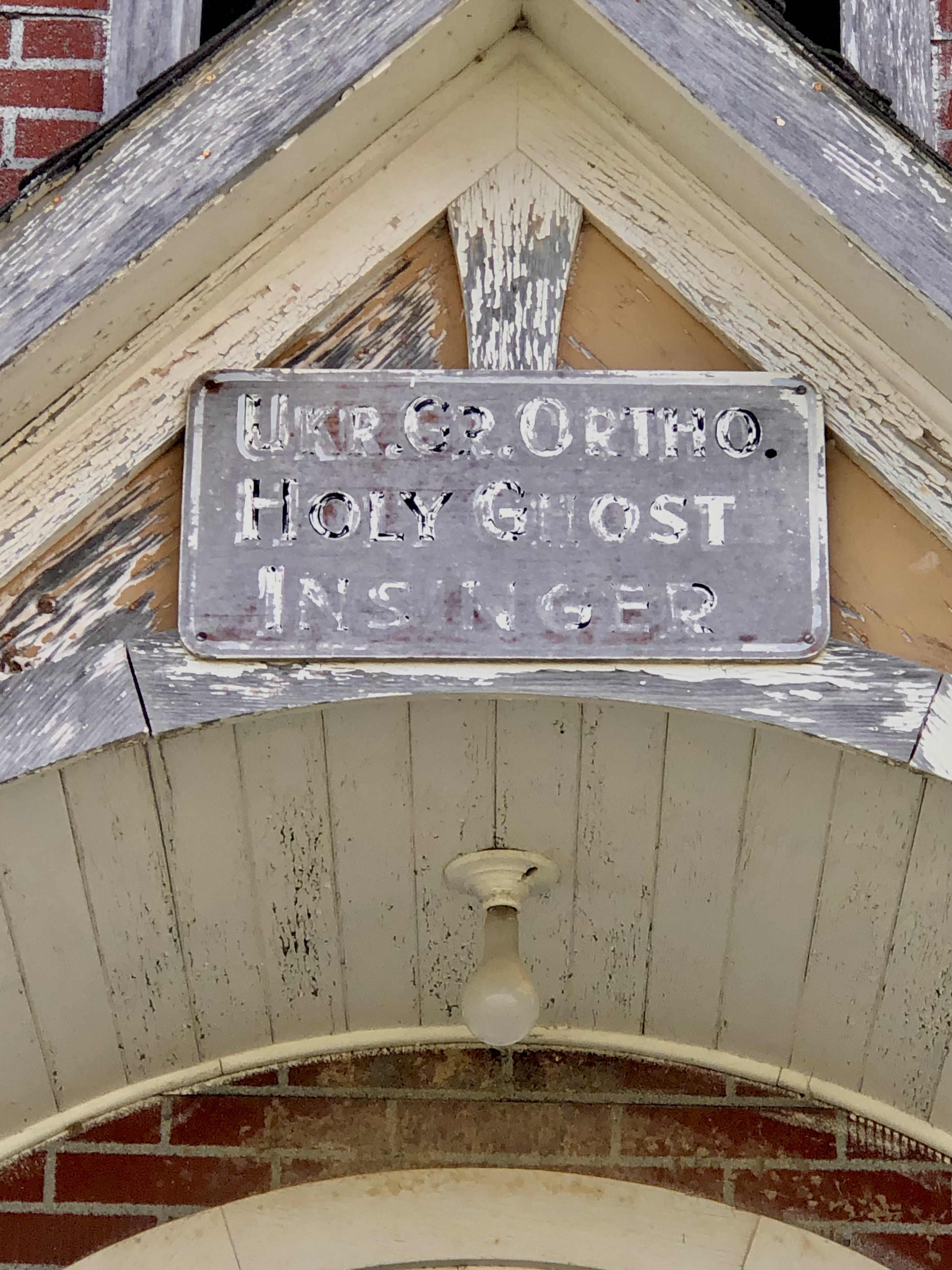
Surprisingly it’s not brick … it’s rectangles of asphalt shingles designed to look like brick.


Some of the square blue ceiling tiles have fallen, revealing squares of brown lathe behind them.


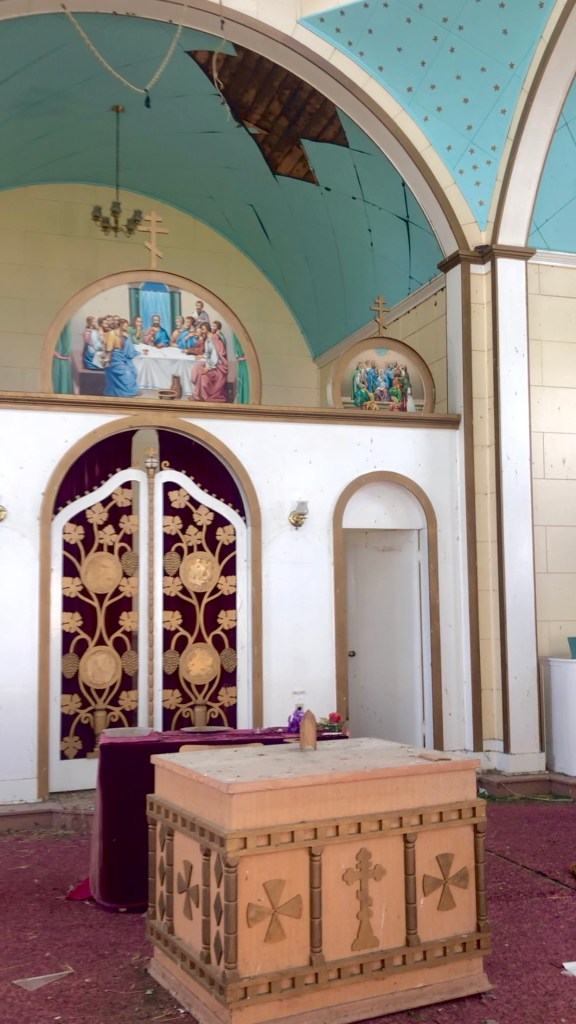
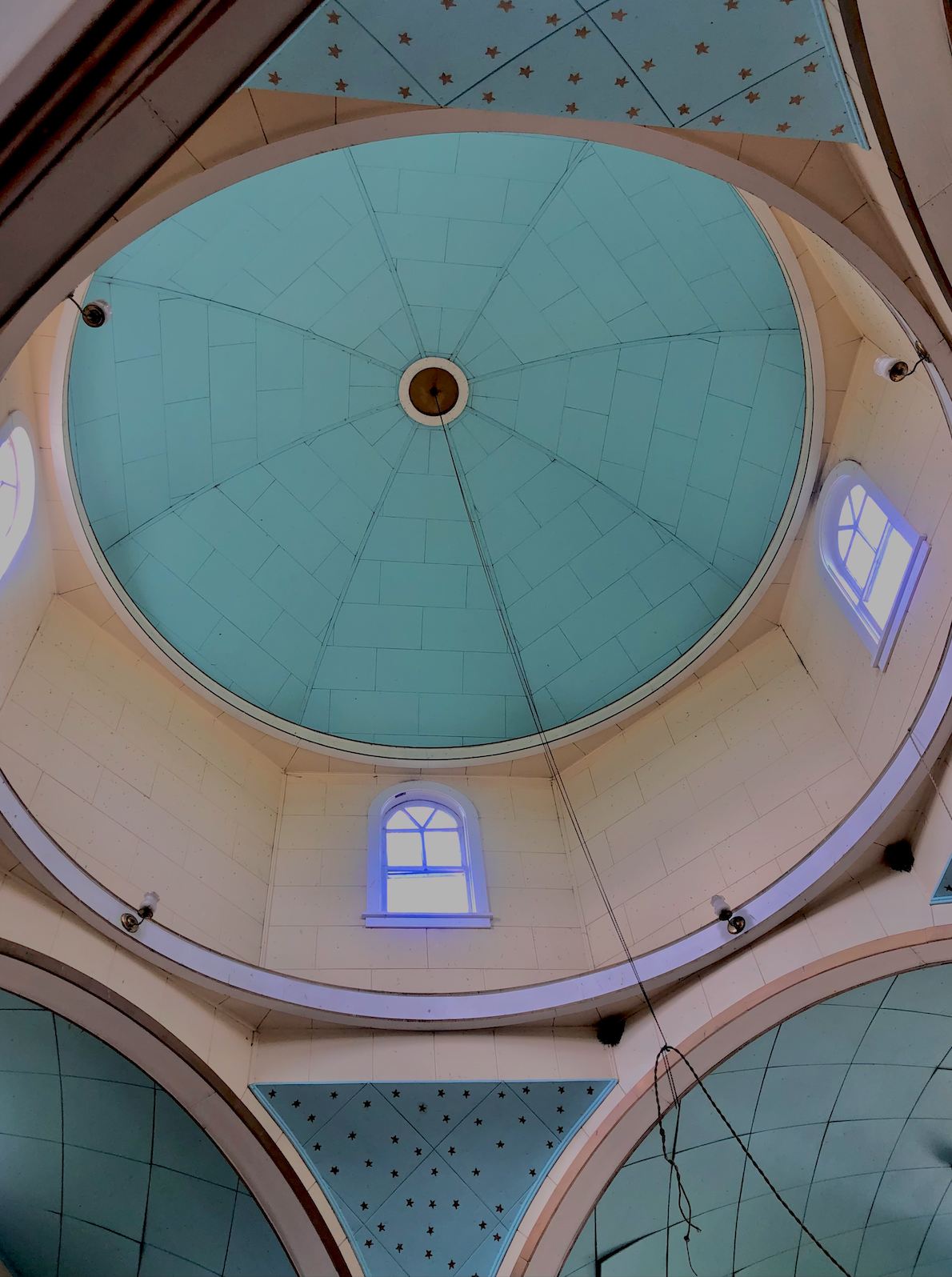
The robin’s egg ceiling dome is beautiful, and the ceiling is covered in gold stars.
The decline of Insinger, like many prairie towns, was gradual. Mechanization of farming, improved transportation to larger centres, and economic shifts led families to leave for more prosperous opportunities. The school closed in 1967, grain elevators — once the heart of prairie agriculture — were demolished in 1999, and the village eventually ceased to exist as an incorporated community.
Today, Insinger sits in the Rural Municipality of Insinger No. 275, with a tiny population — far smaller than a hamlet — and a scattering of crumbling buildings, empty lots, and silent streets.
There were plenty of other abandoned buildings to explore — homes, a school, and old business structures — but since I had a destination to reach, I couldn’t explore it all this time. Still, the brief stop was unforgettable, and I’m already planning to go back next month when I’m travelling through again on my way to British Columbia.
If you’re into ghost towns or prairie history, Insinger is a fascinating spot — a quiet yet eloquent testimony to the rise and fall of rural communities on the Canadian plains.



 My Tiny World Corner
Leave a comment