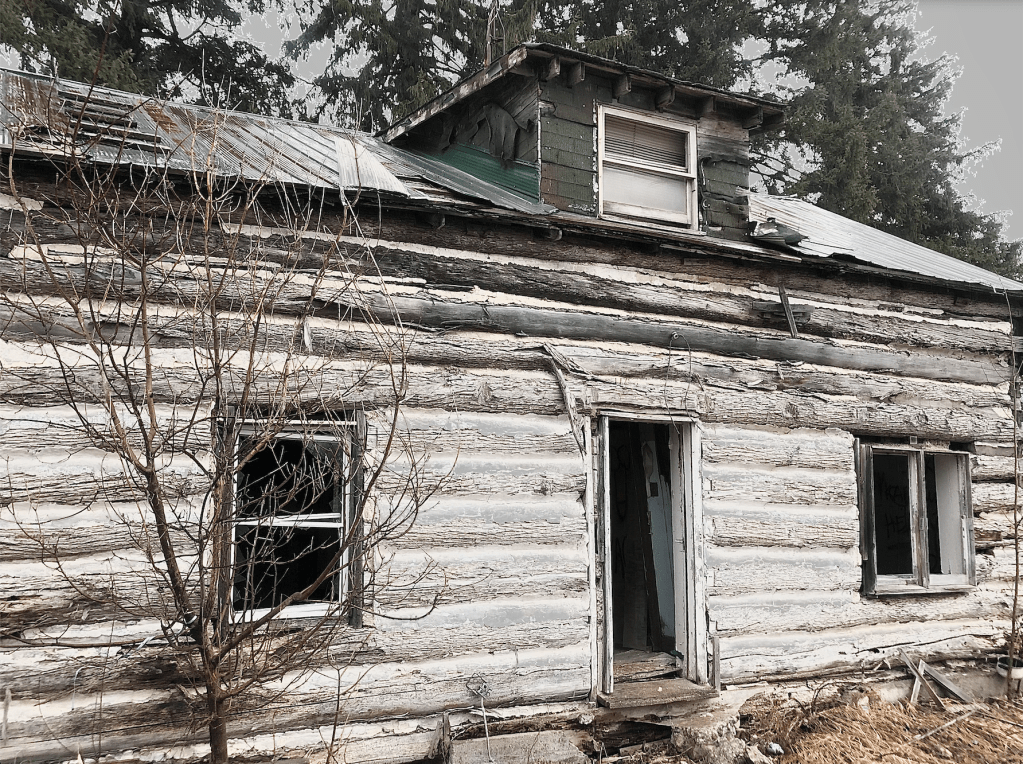
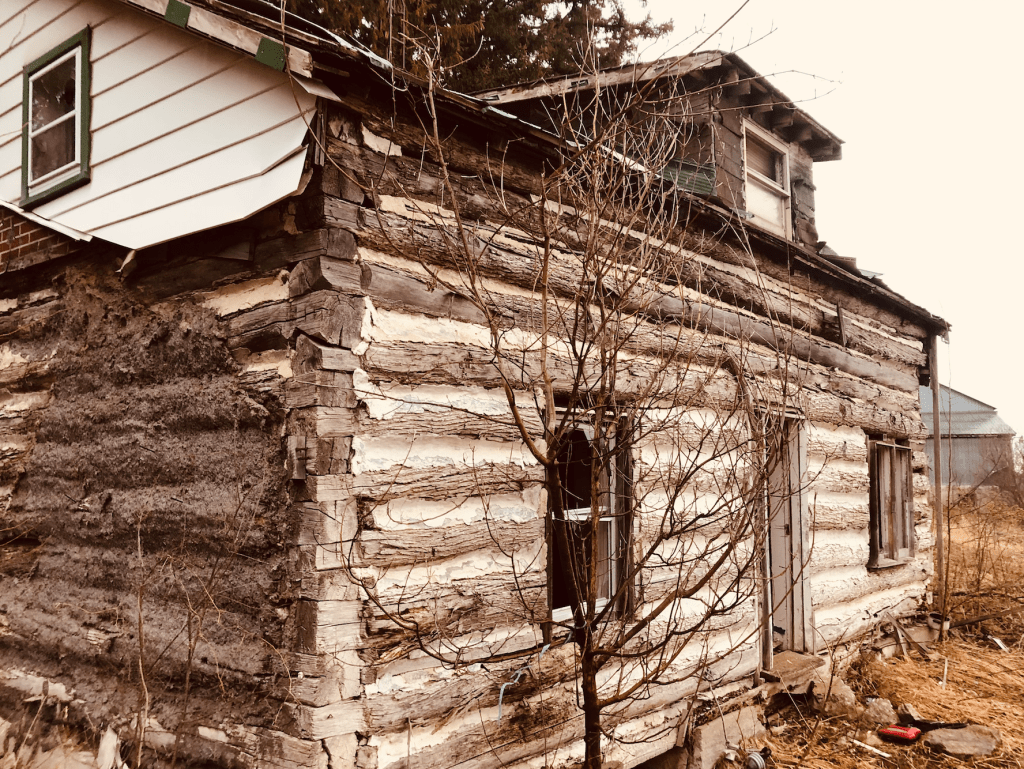
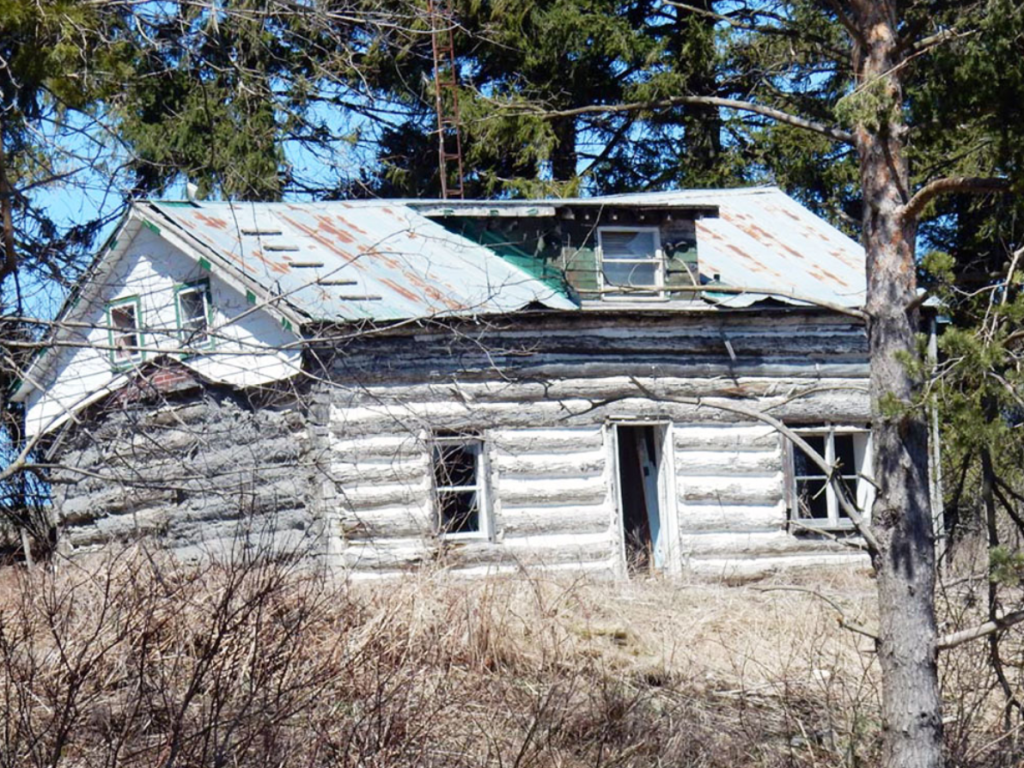
During a drive through Pilkington Township, north of Elora, we came across an old farmhouse that had clearly been abandoned for some time. Its history and construction caught our attention, and we documented the property for this exploration.
This property was added to the Centre Wellington heritage list in January 2021.
Location & Context
- Lot: 4, Concession 2, Pilkington Township
- Intersection: Northwest corner of Wellington County Road 21 and Sideroad 20
- The CN Fergus Subdivision (originally the Wellington, Grey & Bruce Railway, built 1870) ran along the northeast boundary until 1987.
- Six properties occupy the lot today; one was built on the former railway right-of-way.
Historical Background
1867 Survey – Lot 4, Concession 2:
- David Black – freeholder
- John Everett – freeholder
- John Gale – freeholder
- David Milne – freeholder
- George Milne – householder
- John Swan – freeholder
Milne & Black Families:
- David Milne and Ann Scott emigrated from Scotland in 1844.
- Their daughter Ann married David Black, linking the early farm families.
Holman Family:
- By 1906, Alex Holman lived on the property. His descendants farmed the land before relocating to Michigan in the early 20th century.
Later Ownership Timeline:
- 1920s–1930s: Robert Swan and Edward Hall
- Mid-1900s: Wright family
- 1983: Slater → Blair
- 1992: Blair → Poljanski → National Trust
- 1994–1997: Wright → National Trust → Toronto-Dominion Bank
Outbuildings
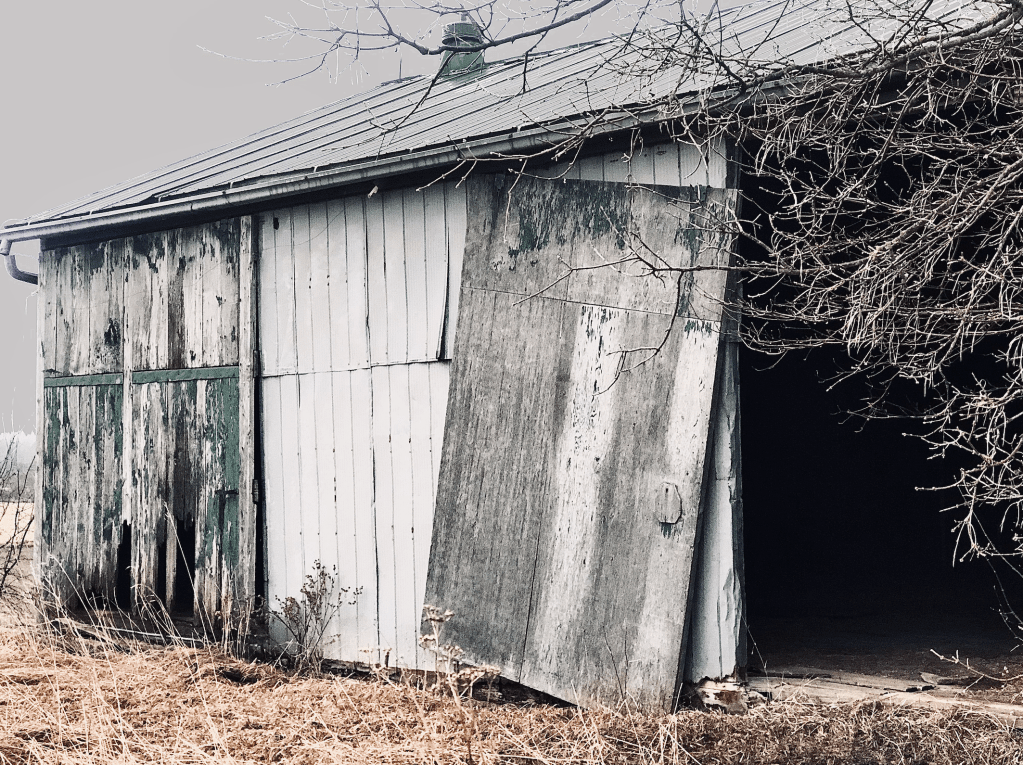
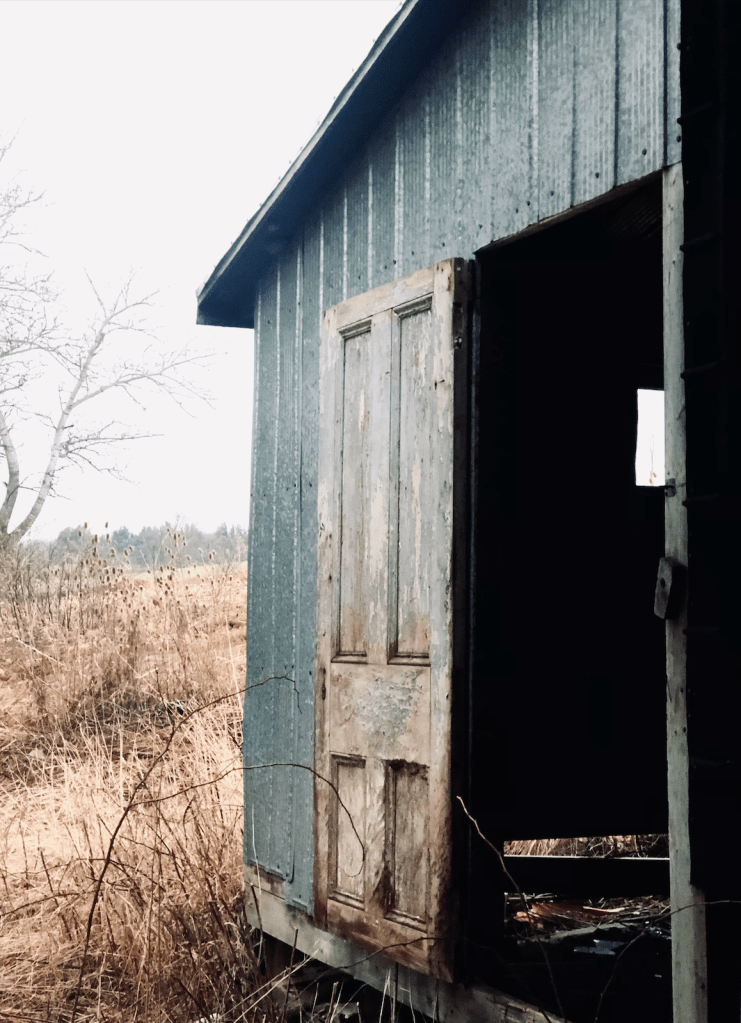
Two smaller storage/drive sheds.
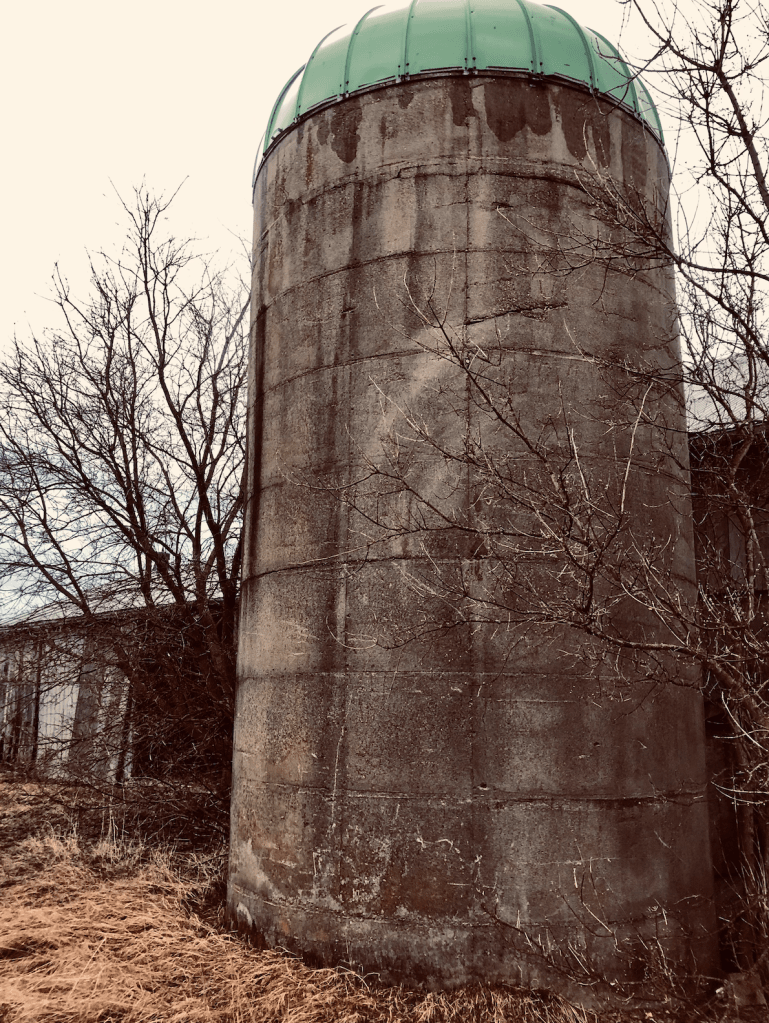
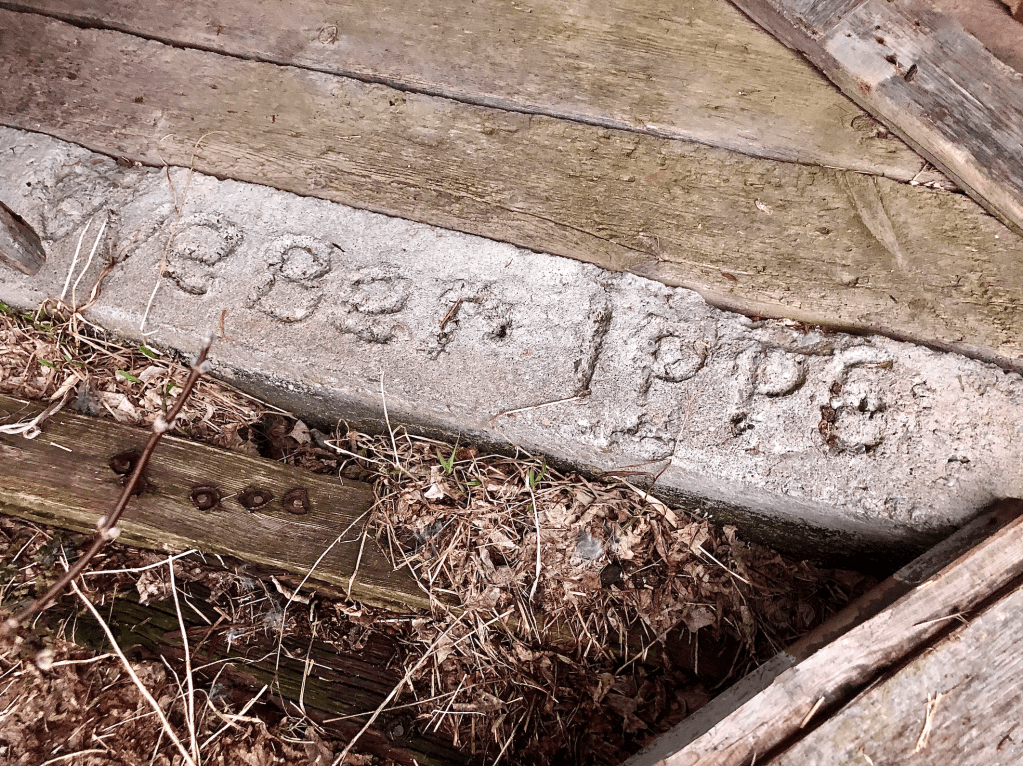
Behind the house is a large barn with a concrete slab stamped “Weber IPPE.” This type of marking is typically a contractor or supplier imprint placed into the slab when it was poured, suggesting that the barn floor (or another outbuilding pad) was installed or updated in the mid‑to‑late 20th century as part of modern renovations or agricultural use. Such slabs often included contractor identification for quality tracking.
There were also 2 what I would consider storage/drive sheds.
House Explore
The house itself was eclectic — upon entry, you have the option to go in 1 of 3 directions: left, right, or straight ahead down to the cellar.
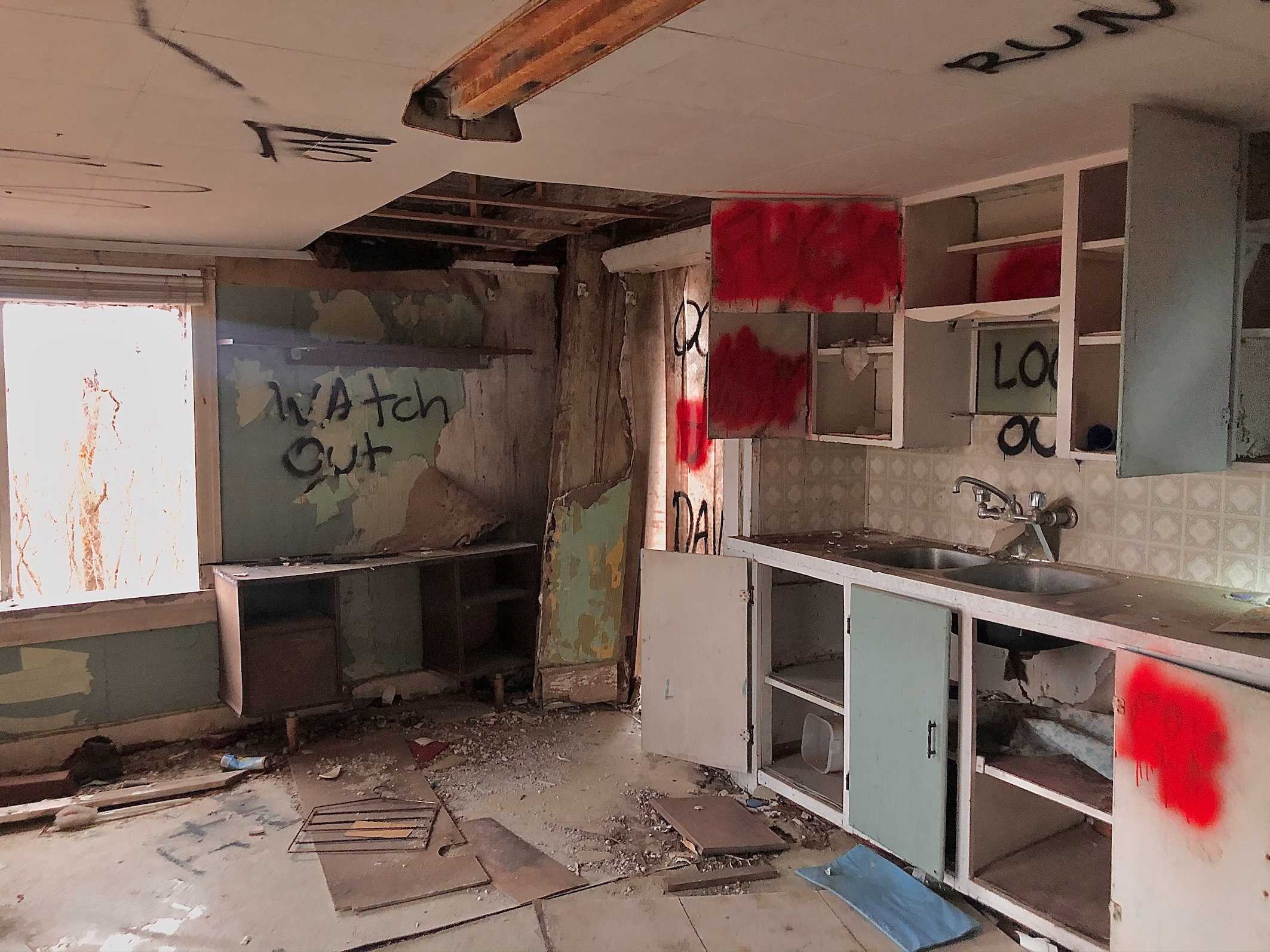
The entries to the living room and kitchen totally remind me of that crazy scene from “The Texas Chain Saw Massacre” because of the freezer strip curtains. Why on earth would you have those in a home? I suspect to keep the cold out, but seriously, it’s giving off major horror movie vibes.
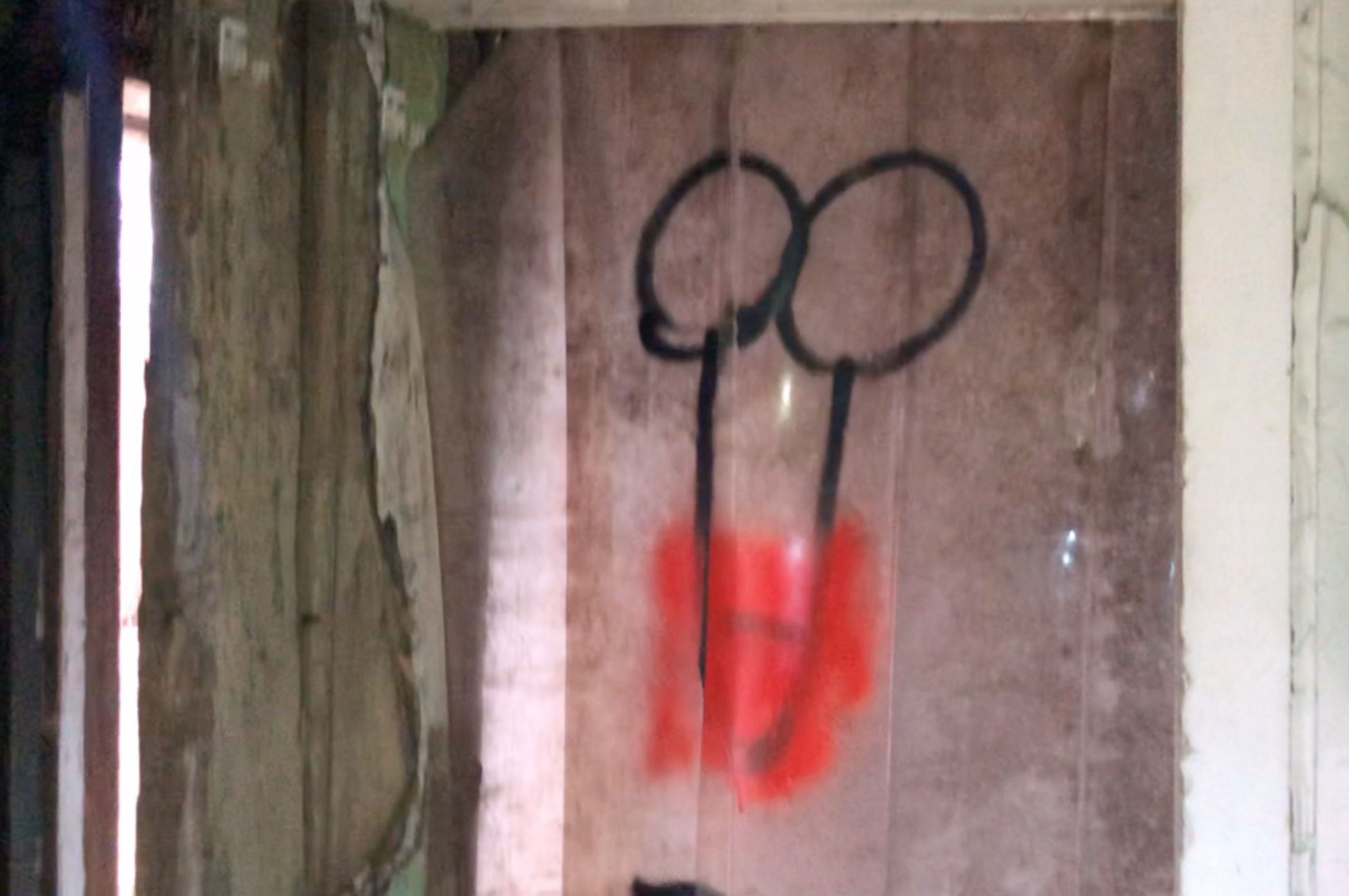
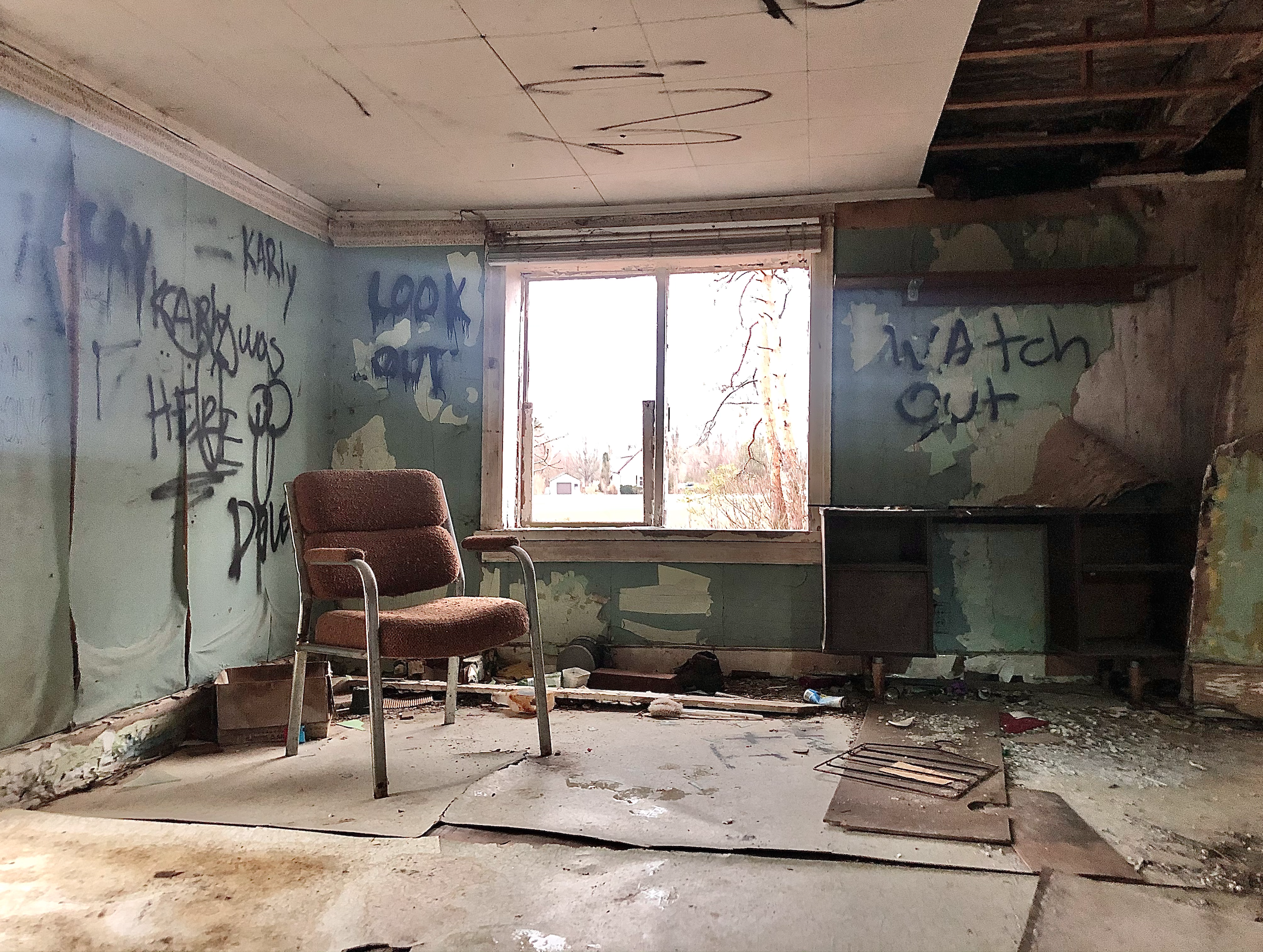
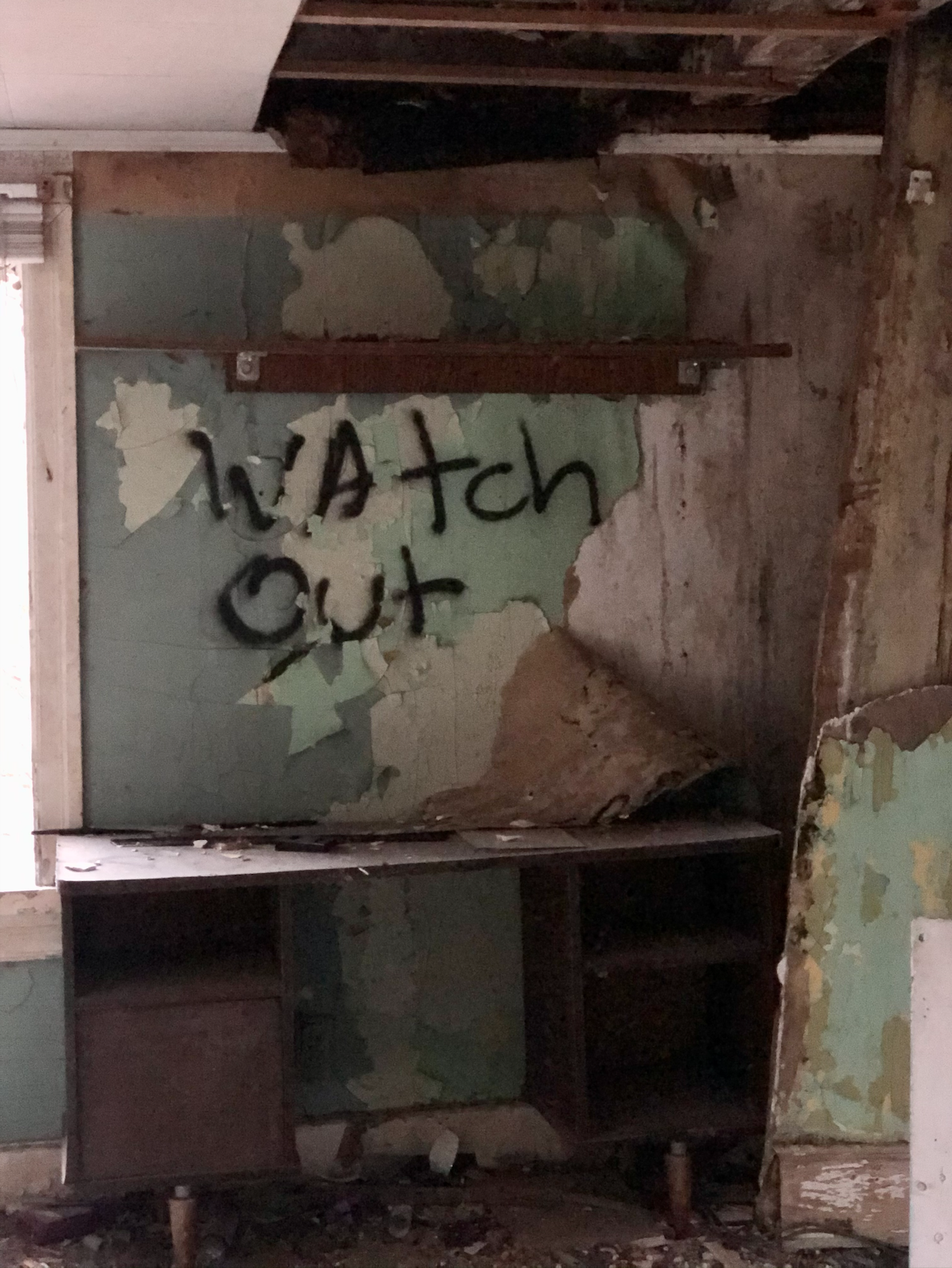
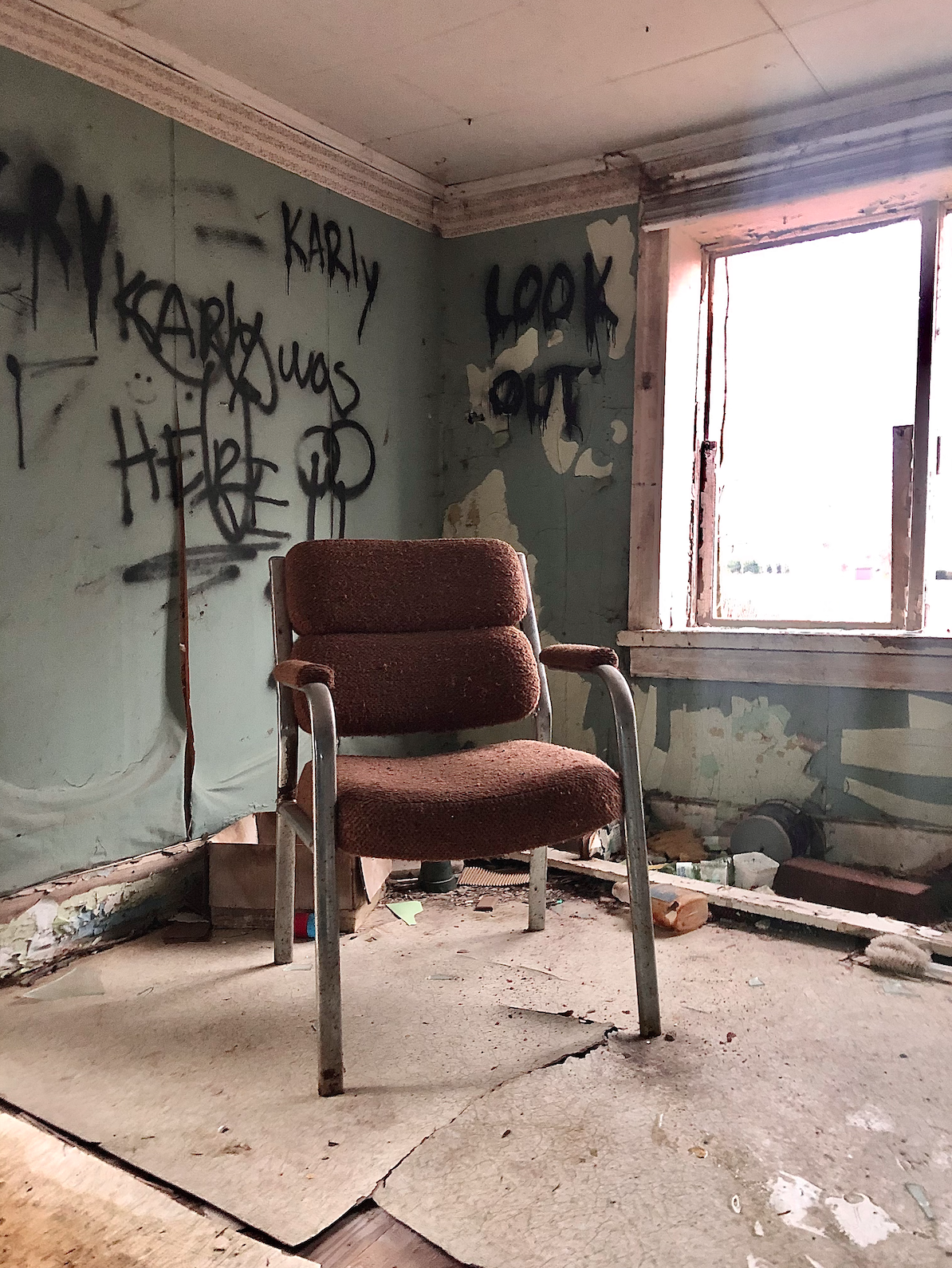
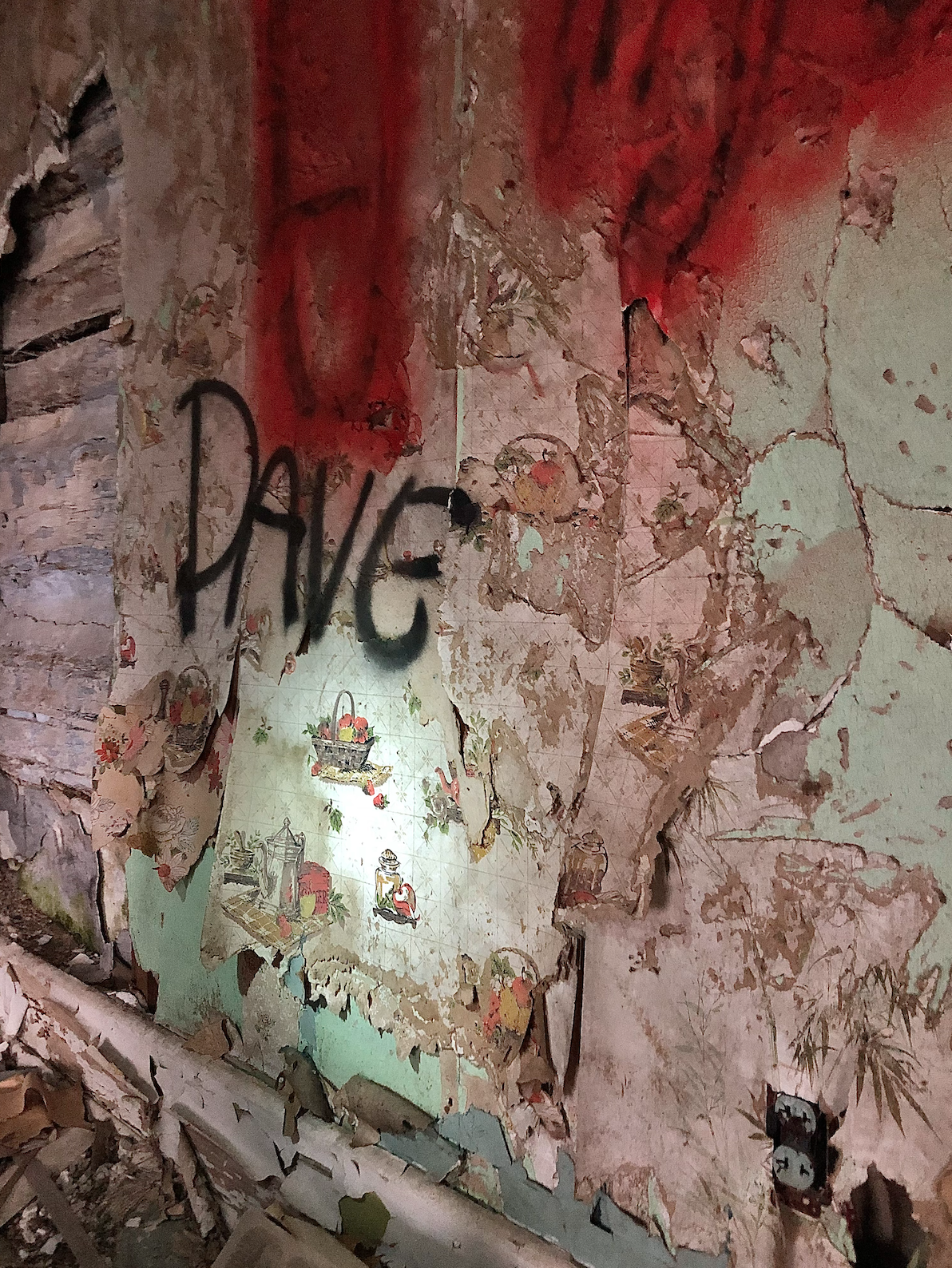
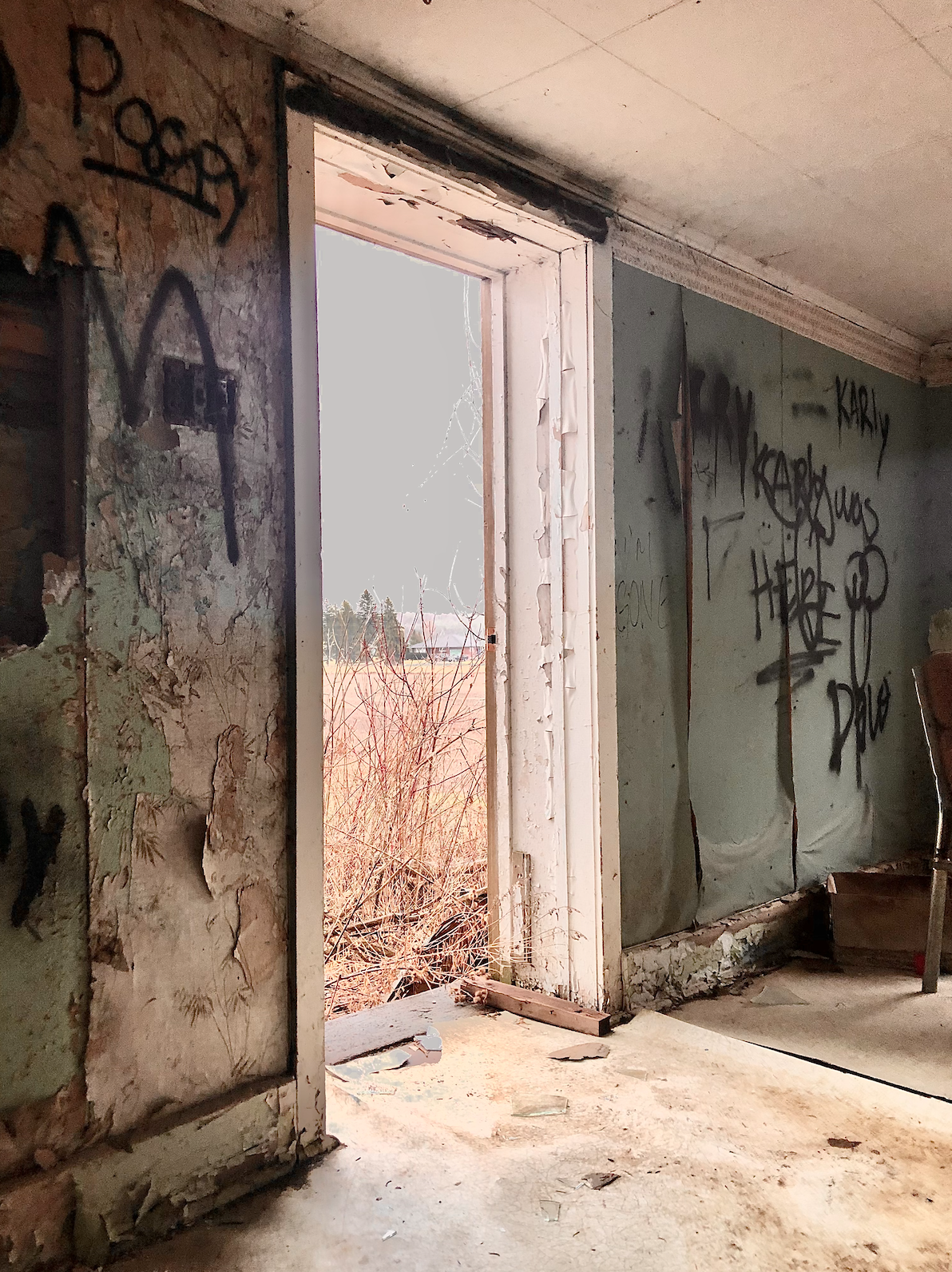
The house clearly shows decades of habitation. Many walls are covered in graffiti; one attempt to cover crude black graffiti with red spray paint was largely unsuccessful.
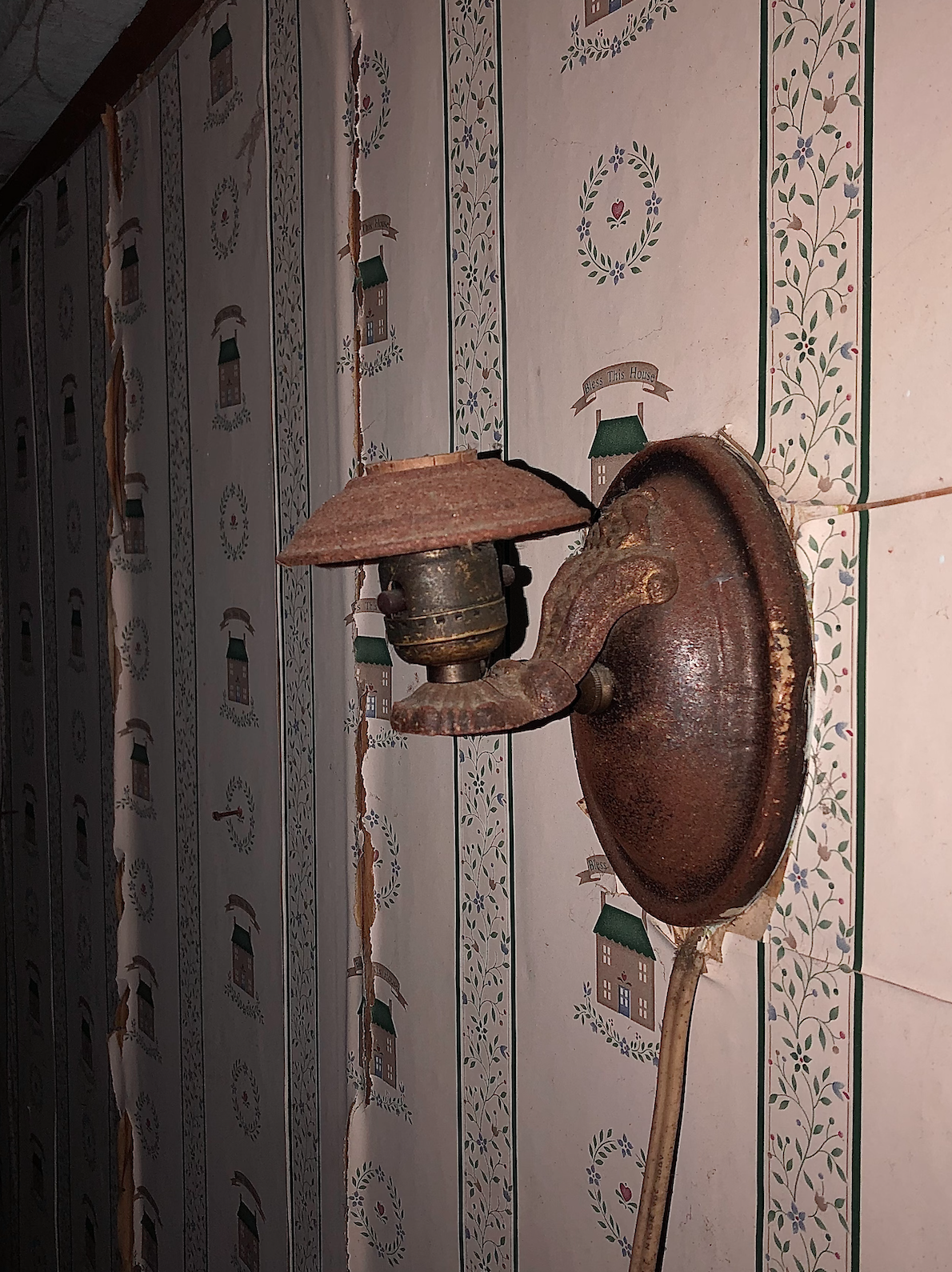
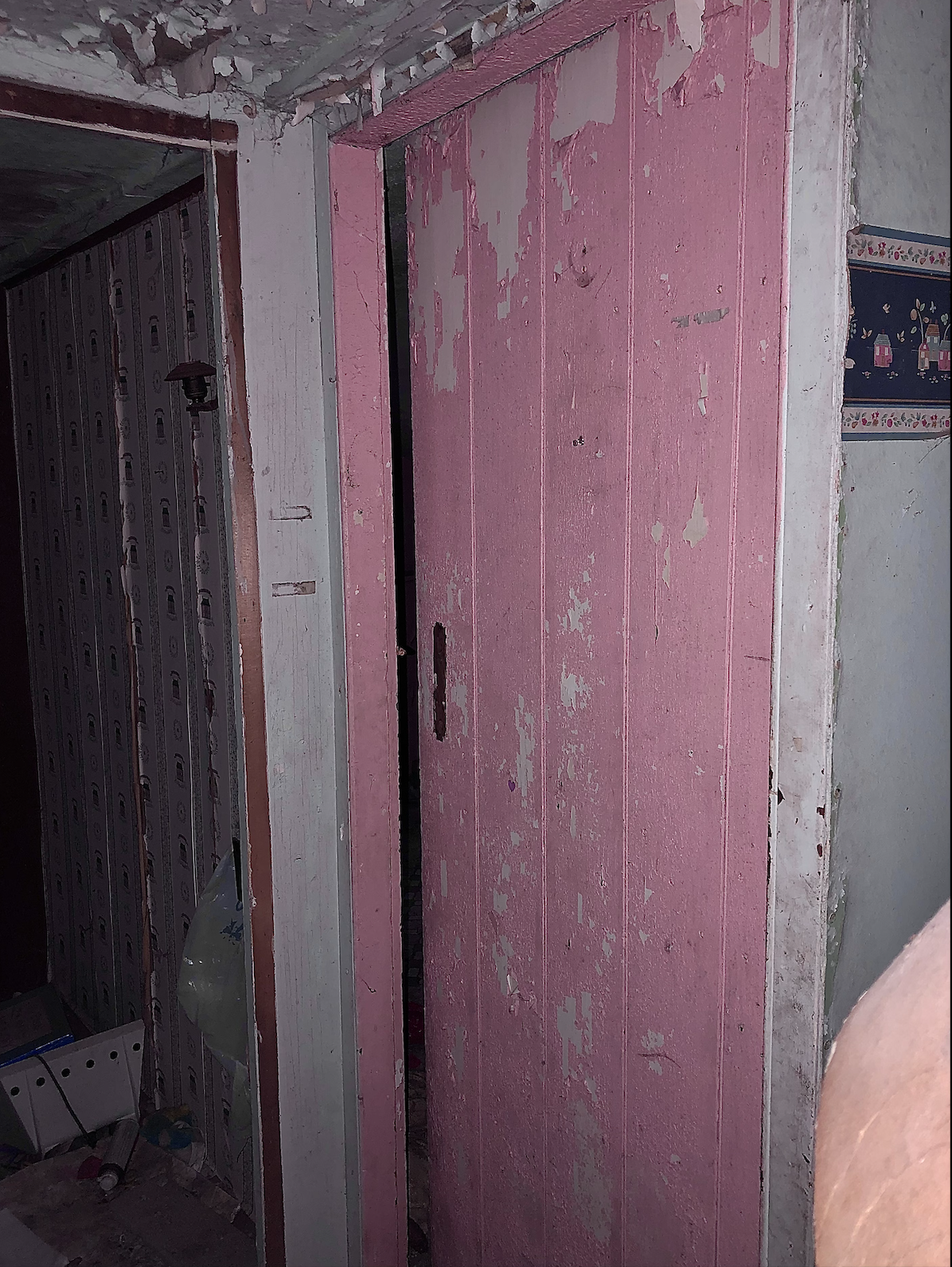
Later modifications reveal attempts to modernize the space, but they clash with the original cabin. Low ceilings would likely have been attractive, exposed wood originally. Vinyl flooring covers what was probably hardwood, and three small upper bedrooms feature 1980s–90s wallpaper, matching flooring, and colorful doors and frames.
Observations
- The logs and construction techniques suggest the house dates from the mid-to-late 19th century.
- Modifications over time show attempts to modernize while retaining the original structure.
- The property’s location and clearings suggest it was the original homestead on this lot.
- The heritage designation recognizes its value as part of local rural history.
Conclusion
This farmhouse is a solid example of rural Ontario architecture from the 19th century, illustrating patterns of settlement, generational farming, and later modern interventions. It remains an important piece of Pilkington Township’s heritage landscape.


 My Tiny World Corner
Leave a comment